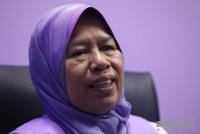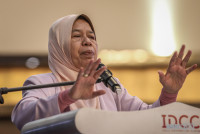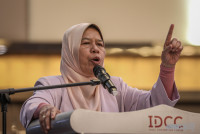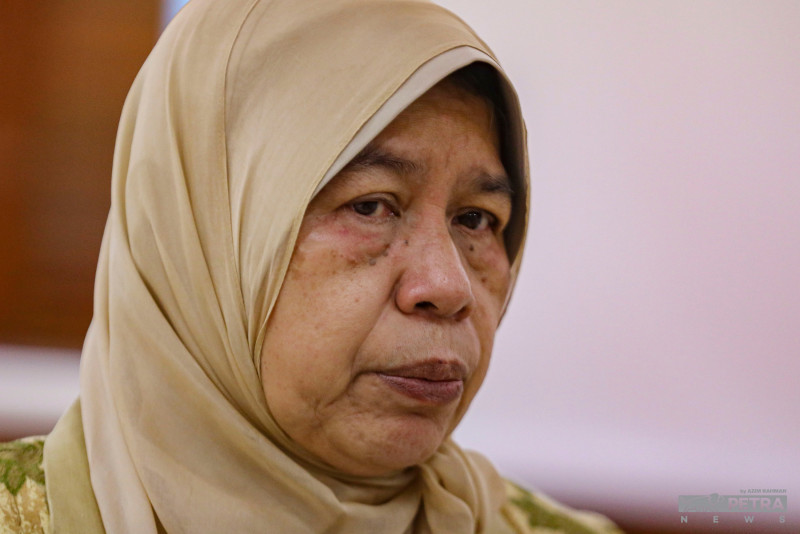

BUTTERWORTH – Malaysia calls on developed nations to stop defining ex-convicts and parolees as workers categorised under the forced labour (modern slavery) list, said Plantation Industries and Commodities Minister Datuk Zuraida Kamaruddin.
Instead, she said, the group should be seen as part of the marginalised community, who should rightfully be given a second chance to succeed in life.
The countries presently labelling those working under parole, she stressed, go against the spirit of the United Nations’ Sustainable Development Goals, which call for inclusivity and to end the discrimination of groups seen as marginalised.
Zuraida said the government’s programme so far had only allowed a number of convicts for minor crimes to be allotted jobs suitable to them.
“They are considered marginalised. The Human Resources (Ministry) is also selecting them from the best of the bunch to join the workforce.
“These people should not be defined as forced labour,” she said after participating in the National Action Plan on Forced Labour forum in Seberang Jaya, today.
The forum was held in conjunction with the Human Resources Development Corporation’s (HRDCorp) Penang open day.
Zuraida was a panellist at the event.
Other panellists included US Embassy deputy political counsellor Daniel W. Wright, International Labour Organisation national project coordinator Josh Hong Man Fatt, Malaysia HR Forum & Social Compliance Malaysia co-founder Arulkumar Singaraveloo, Responsible Business Alliance senior programme manager Khai Yau Chua, and British High Commissioner political counsellor Tom Shepherd, and the Human Resources Ministry’s principal assistant secretary (international division) Noor Haryantie Noor Sidin.
Zuraida cited the instance of Sime Darby Plantation Bhd, which was censured by the US Customs and Border Protection for instances involving forced labour.
She expressed her views that the instance was unfortunate and there were elements of miscommunication and wrong narrative among others.
The Malaysian public-listed company was slapped with a withhold release order, which is currently being appealed by the Plantation Industries and Commodities Ministry.
Zuraida attributed the ban on Sime Darby’s palm oil and downstream products to a miscommunication as the local employer had yet to implement the pilot policy to hire ex-convicts and parolees as it was still under consideration.
“We need to improve on our communication outreach and to ensure our companies along the supply chain are not adversely affected by the wrong interpretation of hiring ex-convicts or parolees.
“We need to close the gap,” said Zuraida.
Zuraida said that Malaysia is a relatively small nation with a population of 32 million, but it must compete with the likes of Indonesia and China when it comes to international labour policies.
Saying that it was unfair that the country was punished for the perceived abuse of workers, she opined that most of the blame should be accorded to the countries outsourcing the labour where many of the agents and sub-agents are operating from.
“But Malaysia is serious about addressing forced labour, hence the move to make migrant workers feel welcome is an ongoing process.
“We want such workers to have a sense of belonging with us,” she added. – The Vibes, March 10, 2022