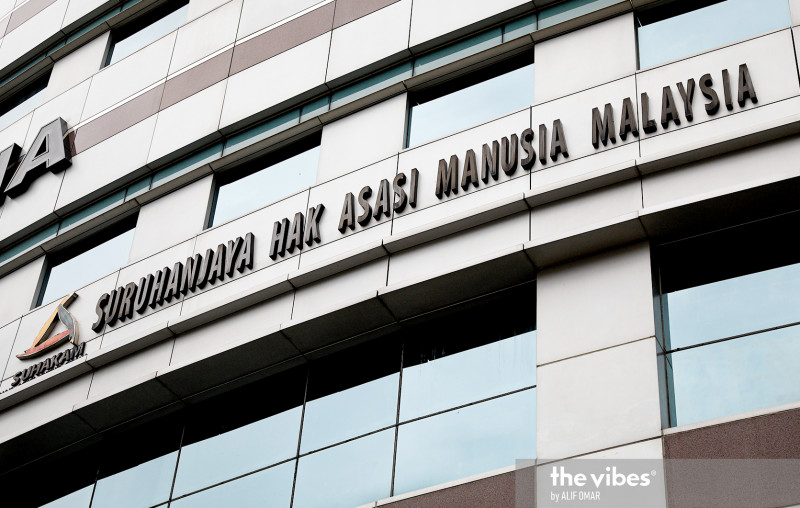

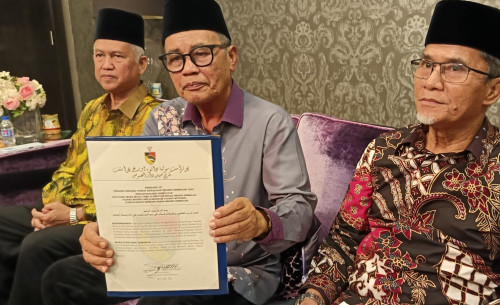
KUALA LUMPUR – The Human Rights Commission of Malaysia (Suhakam) has renewed its memorandum of understanding (MoU) with two other human rights institutions from neighbouring countries in an effort to encourage ongoing collaborative partnership on the issue of statelessness in Sabah.
The MoU was signed virtually by representatives from Suhakam, the National Commission on Human Rights of Indonesia, and the Commission on Human Rights of the Philippines today.
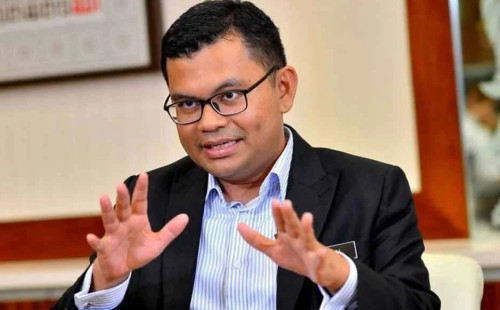
In his opening remarks of the signing ceremony via Zoom, Suhakam chairman Tan Sri Othman Hashim noted that while the MoU had previously expired in December last year, all parties had continued to carry out schemes outlined in the action plan of the MoU.
With the renewal of the MoU and the relaxation of standard operating procedures by the government which include the reopening of borders, Othman expressed his hopes for parties to resume the planned activities as a combined force.
He added that the Suhakam office in Sabah had registered an upward trend in the number of complaints regarding documentation issues, a situation recognised by the state secretary and deputy chief minister II.
“Based on Suhakam’s engagements with key stakeholders, it is generally acknowledged that major factors contributing to the issue of statelessness in Sabah are related to documentation and lack of data among the stateless population,” he said.
Othman also pointed out that besides stateless individuals in Sabah being among those most affected by the Covid-19 pandemic, they continuously face multiple human rights violations.
According to him, such transgressions include infringement on their rights to nationality, work, education, healthcare, and equality before the law.
“In order to effectively address the issue of statelessness in Sabah, close cooperation among various stakeholders and parties is urgently needed,” he said, adding that while the MoU is a step in the right direction, more serious endeavours must also be put in place.
Efforts, he said, should be mobilised not just by national human rights institutions but also through government ministries and agencies, civil society organisations, academicians, and the affected community themselves.
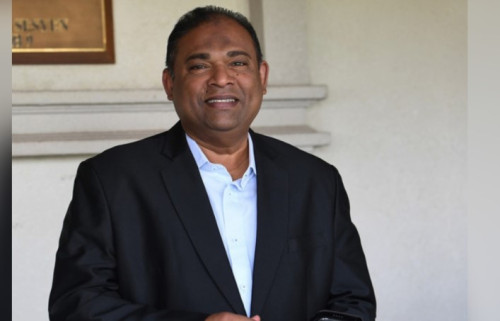
Suhakam commissioner Jerald Joseph, who was also in attendance at the ceremony, pointed out that systems currently in place for late birth registration and court proceedings are “burdensome” due to a lack of access.
“Boat rides from islands to the mainland are very expensive, with tickets averaging at about RM400 for a one way trip and most cases require follow-up visits,” he said, adding that the commission is looking at improving the mobile court programme in Sabah.
Besides that, Jerald also said that throughout the various meetings held between the commission and Sabah enforcement agencies, it was admitted that the lack of documentation of people in the area complicated the ability of officials to carry out their jobs.
“All enforcement agencies, such as police and army, agreed that they cannot properly do their jobs if they do not know how many people exactly are in their care,” he said, adding that authorities are then left “guessing in the dark” about the number of people in their territory.
It was also announced that Suhakam has appointed a team of researchers from Universiti Teknologi Mara Sabah to put together a compilation of research, proposals, findings and recommendations on statelessness in Sabah.
The research is expected to be completed in April this year and will suggest ideas that will hopefully inspire some form of change at the state level. – The Vibes, March 22, 2022







.jpeg)