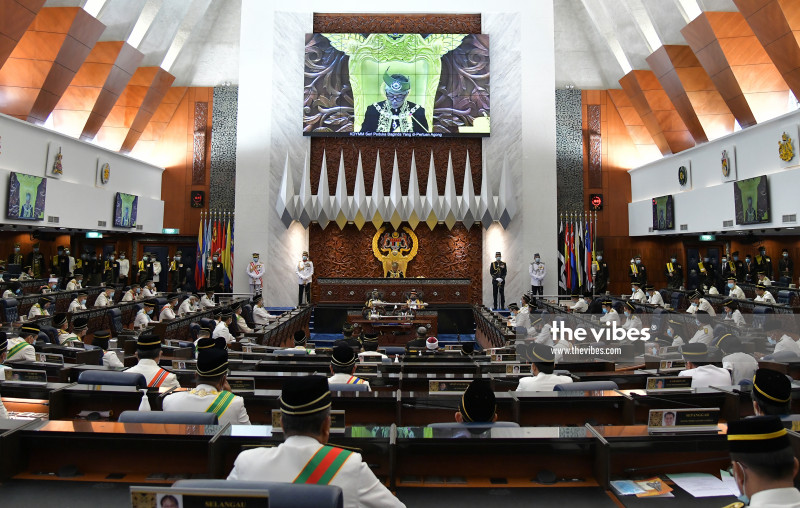

KUALA LUMPUR – The ongoing debate on how to best tackle the culture of party-hopping among Malaysian politicians has since prompted questions on the most feasible method, with one side of the divide pushing for recall laws while the other puts their hopes on anti-hopping laws.
Political analysts, likewise, are taking varied stances on the matter, with one claiming that alterations to existing constitutional laws will be more workable than creating new laws, while others refrained from supporting any of the proposed solutions.
Last week, MCA secretary-general Datuk Chong Sin Woon had reiterated his calls for a House of Representatives Recall Act, claiming that anti-hopping laws fail to consider motivations behind party-switching.
Universiti Kebangsaan Malaysia’s Kartini Aboo Talib said that instead of putting together new laws, MPs should focus their efforts on amending Article 48 of the federal constitution, which deals with the disqualification of an MP.
By amending existing laws, they have a foundation to work from instead of creating a new law, which will require rigorous procedure and debates,” she told The Vibes.
“They can push to add another section in the act whereby MPs will be disqualified if they decide to change their political party before the end of their term.”
Kartini criticised lawmakers for being “not serious and just liking the drama” surrounding the issue, adding that the proposed anti-party hopping bill set to be debated in the Dewan Rakyat next week seems to go against existing articles in the constitution.
“The anti-hopping law is not the best solution. It appears to contradict Article 10, which enshrines the right to freedom of speech, assembly, and association,” she said.

Kartini’s call to amend existing laws, however, was dismissed by Universiti Sains Malaysia’s Azmil Tayeb, who told The Vibes that he was against modifying Article 48, and did not support a recall act or the anti-hopping law.
Azmil said recall elections were “non-viable” due to the amount of resources required, and instead suggested that voters take control of the situation by organising grassroot mobilisation efforts.
“Voters might support the politician as an individual and not the party they are part of, so politicians might even switch parties to reflect the changing trend in their constituencies.
The best way to punish politicians who are seen as betraying the public trust is by taking to the polls and kicking them out of their office,” he said, adding that voters can rally behind an incumbent’s opponent prior to an election.
Azmil said both the proposed recall or anti-hopping law require fine-tuning, not only as neither provides a comprehensive solution but also to make sure that they do not go against the constitution.
Singapore Institute of International Affairs senior fellow Oh Ei Sun agreed that recall elections would be expensive, as those initiating a recall would need to secure a certain percentage of signatures from voters before a by-election is triggered.

“Under recall laws, a by-election is not automatically triggered, since a signature-gathering effort, which costs money, is needed beforehand to incite it,” he explained.
Oh also pointed out that the implementation of the act might be impeded by voters not taking their political rights seriously.
“A recall act would work well in a highly mature democracy where citizens would proactively seek to call out MPs who they think are not doing proper jobs or have violated voters’ mandates.
As such, the act would probably be somewhat effective in local urban and suburban constituencies where political awareness is higher, but looking at the recent trend of low voter turnout, even that is a bit doubtful,” he said.
Oh said it would be unfair to disqualify an MP for shifting their political allegiances, as their decision could be due to irreconcilable ideological differences with party leadership.
Last year, former Dewan Rakyat deputy speaker Datuk Seri Azalina Othman Said had proposed a recall elections act to prevent elected lawmakers from defecting to other parties after they are voted in by their constituents.
The legislation, the Pengerang MP said, would allow voters to withdraw their mandate to elected representatives who have turned their backs on them. – The Vibes, April 5, 2022