
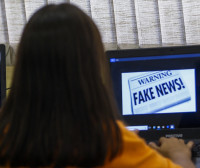
KUALA LUMPUR – The government has reiterated that it will use existing laws to stem the spread of false information, the Dewan Rakyat heard today, after talk of a possible revival of the Anti-Fake News Act 2018.
Deputy Education Minister Datuk Mah Hang Soon said the laws are Act 574 of the Penal Code, Act 301 of the Printing Presses and Publications Act 1984, and Act 588 of the Communications and Multimedia Act 1998.
“The government will continue to identify the most effective and sustainable approach to curb the spread of fake news, to ensure that the people receive legitimate and updated news and reports.
“At the same time, the ministry urges all citizens to act against the spread of fake news that could cause unrest and threaten public order. If you’re not sure, do not share (the news).”
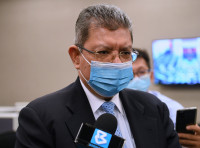
The reply, in relation to Datuk Seri Shahidan Kassim’s (BN-Arau) question to Communications and Multimedia Minister Datuk Saifuddin Abdullah, was read out by Mah.
Saifuddin and his deputy were not present in the Dewan Rakyat this morning due to health issues.
Shahidan, in response, requested a written reply to a supplementary question on the possible “strengthening of the Special Affairs Department” to curb fake news.
“Also, I would like to ask whether the government agrees that Malaysia’s lack of a strict law against fake news has put it in a worse position compared to other states that have specific laws to deal with fake news.
“For example, Singapore has the Protection from Online Falsehoods and Manipulation Act, called Pofma. Because this question requires a lengthy answer, I request that the minister issue a written reply.”
Malaysia’s anti-fake news law was scrapped in 2019, a year after an initial attempt to repeal the legislation was blocked by the opposition-controlled Dewan Negara.
The Anti-Fake News Act was passed by the Barisan Nasional government led by Datuk Seri Najib Razak just weeks before the May 2018 general election, a move that critics said was designed to stifle dissent. – The Vibes, November 16, 2020














.jpeg)