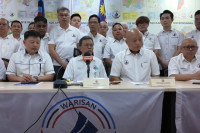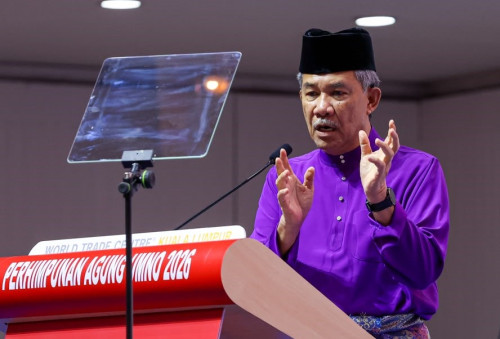
KOTA KINABALU – Allegations by Parti Bersatu Sabah (PBS) that a Barisan Nasional (BN) component was involved in Project IC saw several Umno leaders busy defending the party at a recent coalition convention here last weekend.
While political mud-slinging has subsided, much of the debate has moved to social media and with it the resurfacing of the 8-year-old royal commission of inquiry (RCI) report on immigrants in Sabah.
The RCI was announced on June 1, 2012, by then prime minister Datuk Seri Najib Razak and subsequently formed on August 11, 2012.
The 363-page document, which was presented to the then Agong on May 14, 2014, was the summary of the nine-month RCI proceeding held between January 14, 2013, and September 2013.
The proceedings were disrupted in February and March 2013 during the deadly Lahad Datu incursion led by some claimants to the Sulu sultanate.
A total of 211 witnesses were called by the RCI and 5,000 pages of evidence, including charts, photos, statistics, letters, official directives, commentaries and articles were presented.
While the RCI report did not include evidentiary documents, it has 361 memoranda, 177 exhibits and 211 witness testimonies.
Interestingly, Project IC is mentioned 35 times, and a single mention of “Project Mahathir”, referring to former prime minister and Umno bigwig Tun Dr Mahathir Mohamad, who first helmed the country between July 16, 1981 and October 31, 2003.
What is Project IC?
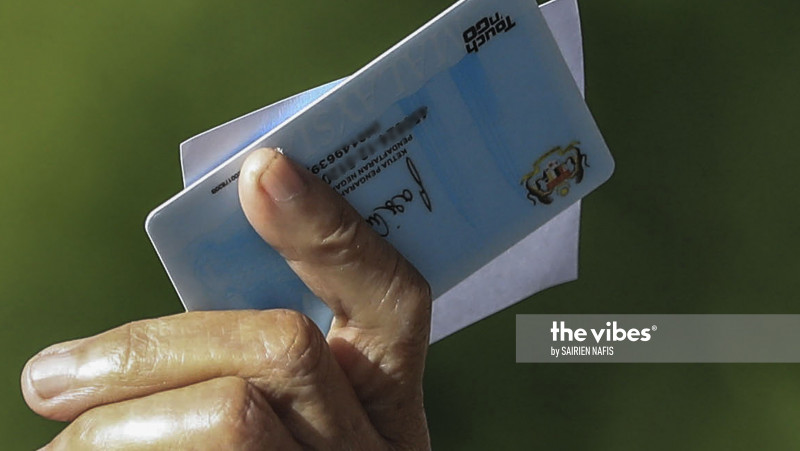
According to the RCI report, Project IC is a term used to refer to a secret programme of issuing identification documents to irregular migrants that was carried out in the 1980s for at least a decade, involving high-ranked individuals in politics and government.
It allegedly had two purposes – firstly, to increase the population of Muslims in a largely Christian Sabah, and secondly, to topple the then PBS state government that was described as Christian-dominated.
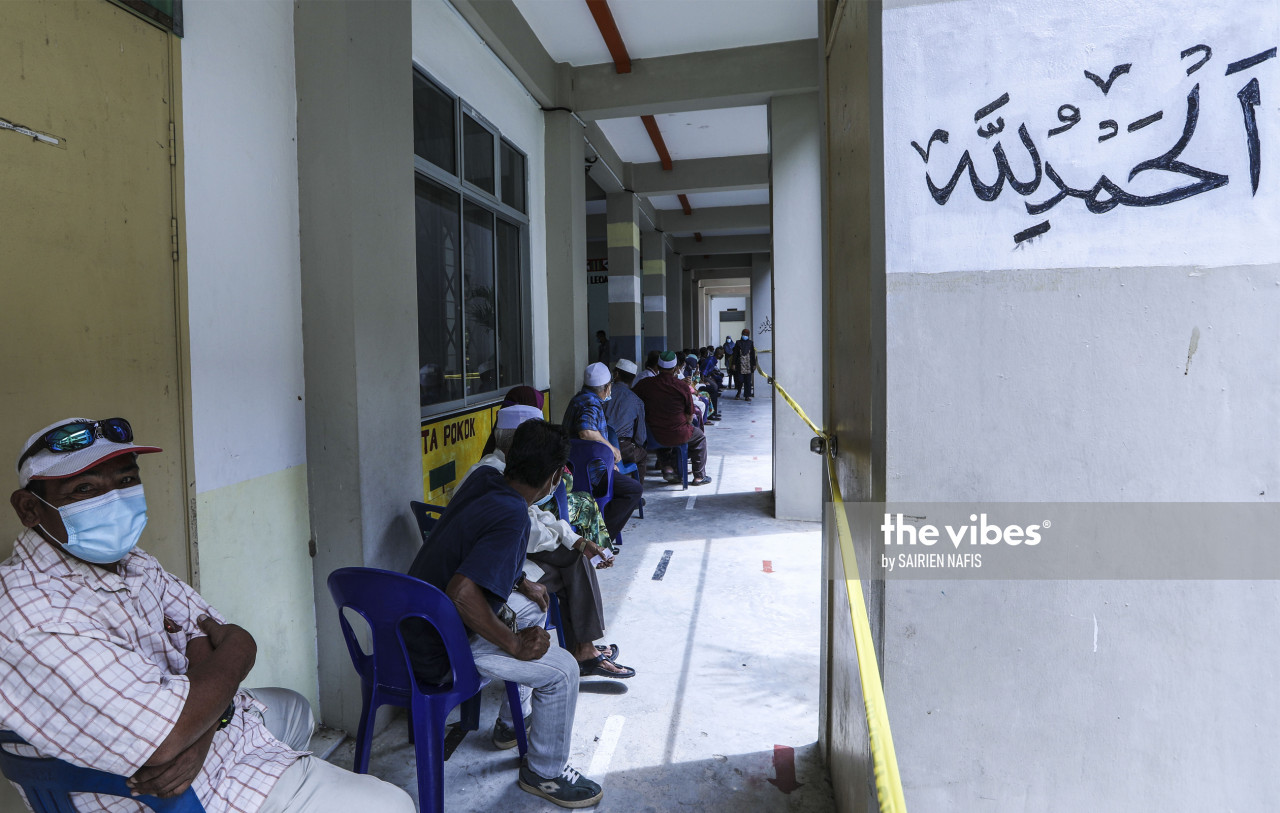
PBS had won the state in 1985, but the victory resulted in riots and political defections, followed by a snap election a year later. The party won the snap polls and even the 1994 state election, but was finally forced out of power following several defections by its elected representatives.
It also popularised the derogatory term “katak” (frogs), which is used to describe party defectors.
The players and their ‘dirty’ deeds
RCI witness Hassnar M.P. Ebrahim testified that he was told to sign 500 blank copies of the HNR10 forms, which were statutory declarations (SDs) used to apply for identity cards (ICs) when he was Sandakan’s district chief, to be submitted to the National Registration Department (NRD).
The HNR10 form is an SD under the NRD Regulations 1972 used to support IC applications by Sabahans.
However, this was no longer accepted from April 1, 1987 onwards.
Hassnar also alleged that when PBS ruled the state, he attended meetings chaired by (the late) deputy home minister at the time, Tan Sri Megat Junid Megat Ayub, and was asked to prepare a working paper on strengthening and increasing Muslim voters in certain state constituencies with a view to recapture them from PBS.
This strategy came to be known as Project IC, involving migrants from the southern Philippines, Indonesia and Pakistan. They were then inserted into the electoral roll and directed to vote against PBS candidates in the elections, the report said.
Several former NRD officers corroborated Hassnar’s testimony and admitted their involvement.
They were Mat Swadi Awi, former NRD deputy director (IC section) Mohd Nasri Sungip, former Sabah NRD director Ramli Kamarudin, former NRD registration clerk Kee Dzulkifli Kee Abdul Jalil, former assistant registration officer Asli Sidup, former Tamparuli NRD head Akob Damsah and former Sabah NRD director Datuk Abdul Rauf Sani.
Rauf was detained under the Internal Security Act (ISA) for issuing fake ICs for profit, but he said the documents were not fake, just issued illegally.
He also testified to instructing his officers to carry out “special tasks” in Kuala Lumpur at a government house in Kg Pandan – believed to be the residence of Tan Sri Abdul Aziz Shamsuddin, the political secretary to Dr Mahathir.
Based on the report, Nasri was detained under the ISA in 1995 for allegedly issuing ICs to undocumented migrants on the orders of Ramli. Part of the former’s “job” boosted the number of Muslim voters by around 16,000 in Sabah.
Changing voter types
In the two years he was Sabah NRD director (1993-1995), Ramli was tasked with identifying Muslim voters and persuading them to vote for certain parties.
Two weeks before the 1993 Sabah election, Ramli met with Megat Junid, who instructed the issuance of NRD receipts to migrants so they could be in the electoral roll for certain areas in the state.
“They would coach on how to vote, etc. The receipts were issued just for the purpose of voting, and they had to surrender them after voting,” said the RCI report, adding that 200 such receipts were issued and up to 10 state seats were involved.
Ramli was also detained under the ISA from 1995 to 1997.
Kee Dzulkifli, meanwhile, was arrested under the ISA in 1994 and was part of a task force called G17 headed by Rauf in 1990.
More than 100,000 of such ICs were issued at the time. Also concerned in issuing birth certificates to illegal immigrants. All under the instruction of his superiors. About 200,000 birth certs were issued essentially to Muslim immigrants from the Philippines and Indonesia,” the report said.
Akob Damsah was detained in 1996 and testified that he had to categorise ICs as Blue, Red or Green.
He was involved in the exercise since 1990 and probably issued at least 100,000 of such documents, as well as signing up to 40,000 ICs at the Kg Pandan house. Recipients were told to vote for Umno in Sabah.
The RCI report also included the figures from the Position Paper, or the so-called Upko (United Progressive Kinabalu Organisation) initiative, which showed the Muslim Bumiputera population in Sabah increased by 631% – from 141,840 in 1960 to 1.03 million in 2000.
“(Human Rights Commission) Suhakam indicated that there were at least another 750,000 foreigners said to have genuine ICs without such approval or possessed false or expired documents or did not possess any documents at all,” the report said.
DAP lawmaker Ong Kian Ming, who was a member of the Malaysian Electoral Roll Analysis Project (Merap), told the RCI that problematic IC holders in Sabah were classified as P1 and P2.
P1 referred to an IC with the same number registered to two or more persons, while P2 referred to ownership change and the same person given a new IC with a different number and different date of birth.
P1 holders numbered 51,300 and 62,550 are under P2. Of the total of 113,850, 49,000 were on the electoral roll at the time.
“20% of those groups under P1 and P2 were registered before 1990. The bulk of these voters (53.9%) were registered between 1990 and 2000,” Ong was quoted as saying.
Denials, denials
On the contrary, Dr Mahathir denied any knowledge of Project IC and said he did not give directives to Megat Junid to form a task force on the matter. Former Sabah chief minister Tan Sri Harris Mohd Salleh maintained he had no knowledge of Project IC while Aziz Shamsuddin denied involvement.
Datuk Mohamad Yahya Lampong, a former Sabah Umno leader, claimed he too had no knowledge or involvement in Project IC.
But the RCI collected statements from 10 police personnel, mostly Special Branch officers and interrogated 94 suspects, of which 24 were from the NRD.
All indicated the issuances of ICs were for profit.
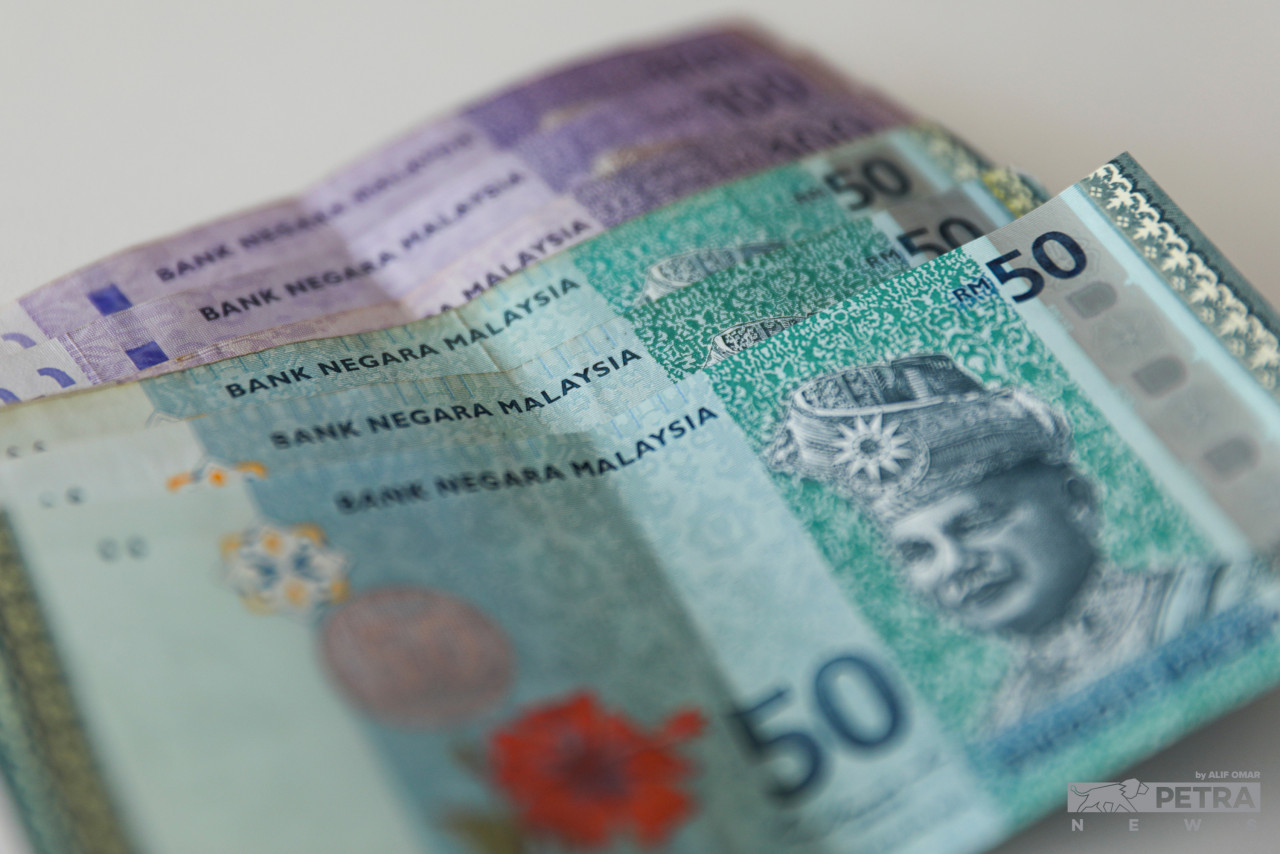
Special Branch officer Datuk Ibrahim Zakaria, who was assigned to interview the ISA detainees, was told that 6,305 illegal ICs made RM177,300.
In April 1996, another Special Branch officer Badaruddin Ismail said Ramli informed that the Sabah NRD issued 16,000 lost IC receipts to Philippine, India and Pakistan nationals – amounting to RM1 million.
Special Branch officer Ahmad Fauzan Mohd concluded a syndicate had involved Sabah NRD officers.
One IC allegedly cost from RM50 to RM1,400. The total involved was about RM11 million,” said the report, indicating it was not political.
For political gain or just for money?
The report concluded that based on the evidence of five witnesses, there was a clandestine exercise involving senior state NRD officers who acted under orders from their political superiors.
“The clandestine exercise involved illegal activities relating to the processing and issuance of Malaysian identification documents to the illegal immigrants in pursuit of a political agenda.
“The names mentioned by some of the witnesses have included Harris Salleh, Aziz Shamsuddin, Dr Mahathir and the late Megat Junid.”
However, the report said the Special Branch officers were “apparently satisfied solely on the basis that the said activities were conducted for financial or monetary gain… they did not seem to find it necessary to go beyond the financial motive to determine whether there were other motives involved.”
“In the circumstances, we take the view that there is some credibility in the evidence of the five witnesses in question. However, none of the witnesses were subjected to cross-examination, as would have been the case in a trial.
“That being the case, and given the denials against the allegations, we can only conclude that it was more likely than not, that Project IC did exist, as reflected in the evidence of the five witnesses aforesaid. In short, there is a probability that such a project did exist at all material times,” it said.
PBS complaints fall on deaf ears
PBS leader Datuk Radin Malleh indicated to the RCI that he raised the matter in Parliament in 1995 and subsequently to former prime minister Tun Abdullah Ahmad Badawi after the party rejoined BN in 2002.
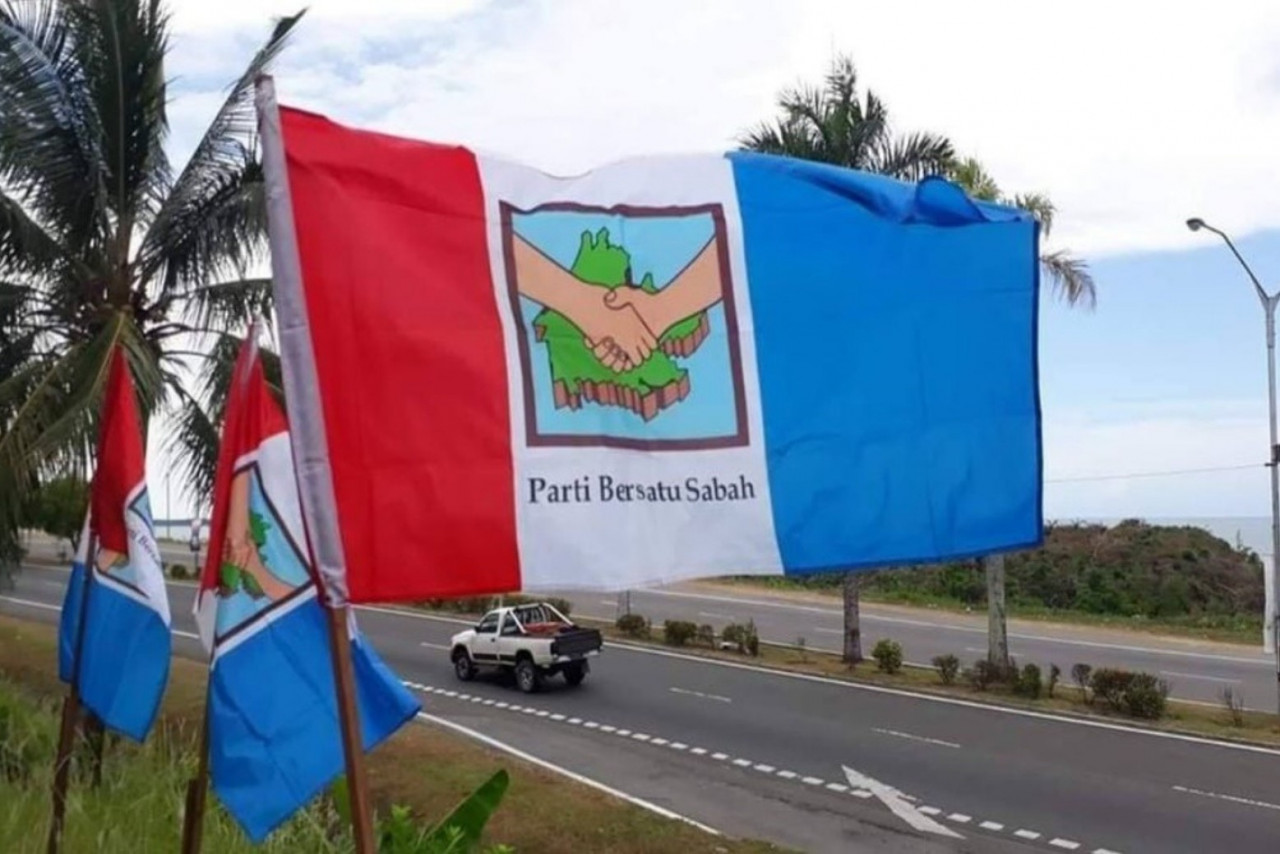
Also, many police reports were lodged and letters to the NRD and the Election Commission were sent, but replies were not received.
PBS had countered that the state population increased by 301% from 1970 to 2000, while the RCI report stated that the biggest increase was 78% in 1991. PBS was still in power at the time and Umno had just made its entry into Sabah following the dissolution of Usno, a party led by the late Tun Mustapha Harun.
The party cited Statistics Department data collected from 1970 to 2000, which showed a 1,552% increase in the Malay population in the state, while the Bajau and Iranun groups increased by 344%, with the Kadazan-Dusun Murut community seeing a 162% jump.
The RCI report stated that in the absence of any evidence to the contrary, these figures could be perceived as credible even though no officials from the Statistics Department were called in.
The RCI panel was headed by former Sabah and Sarawak chief judge Tan Sri Steve Shim Lip Kiong. The panel members were former Universiti Malaysia Sabah vice-chancellor Datuk Prof Kamaruzaman Ampon, former Sabah deputy chief minister Tan Sri Herman Luping, former state secretary Datuk K.Y. Mustafa and former Malaysia Crime Prevention Foundation president Datuk Henry Chin.
The panel’s secretary was then Domestic Trade, Cooperatives and Consumerism secretary-general Datuk Seri Saripuddin Kasim. – The Vibes, July 10, 2022
Additional reporting by Rebecca Chong