KUALA LUMPUR – Pressed by escalating costs due to the ongoing economic crisis, chicken rice sellers in the Klang Valley appear to have been forced to pluck at their profits and barely survive, potentially placing their entire businesses on the brink.
Many face an intense dilemma with hiking up their own prices as they fear a backlash from customers who may stop patronising them.
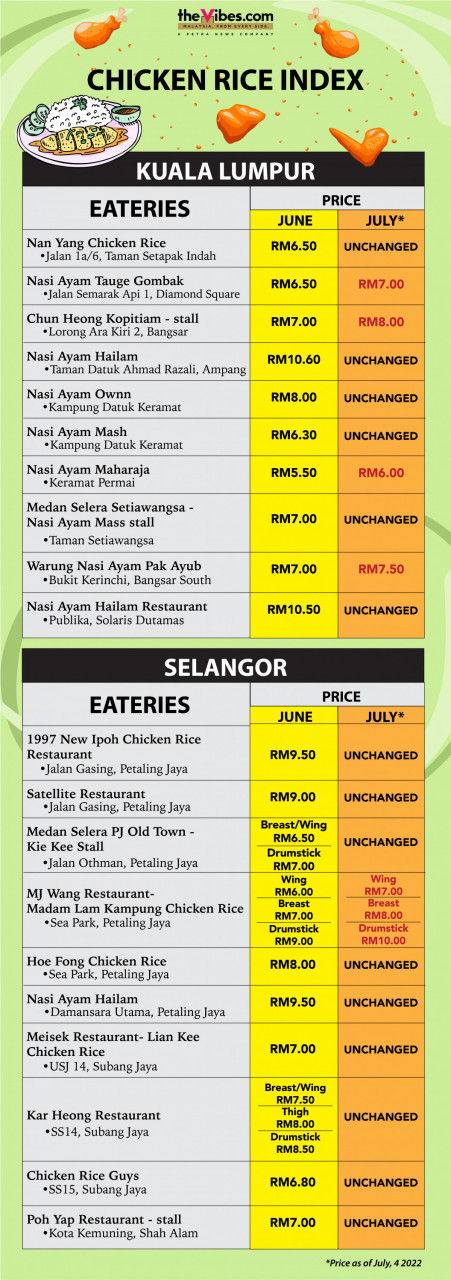
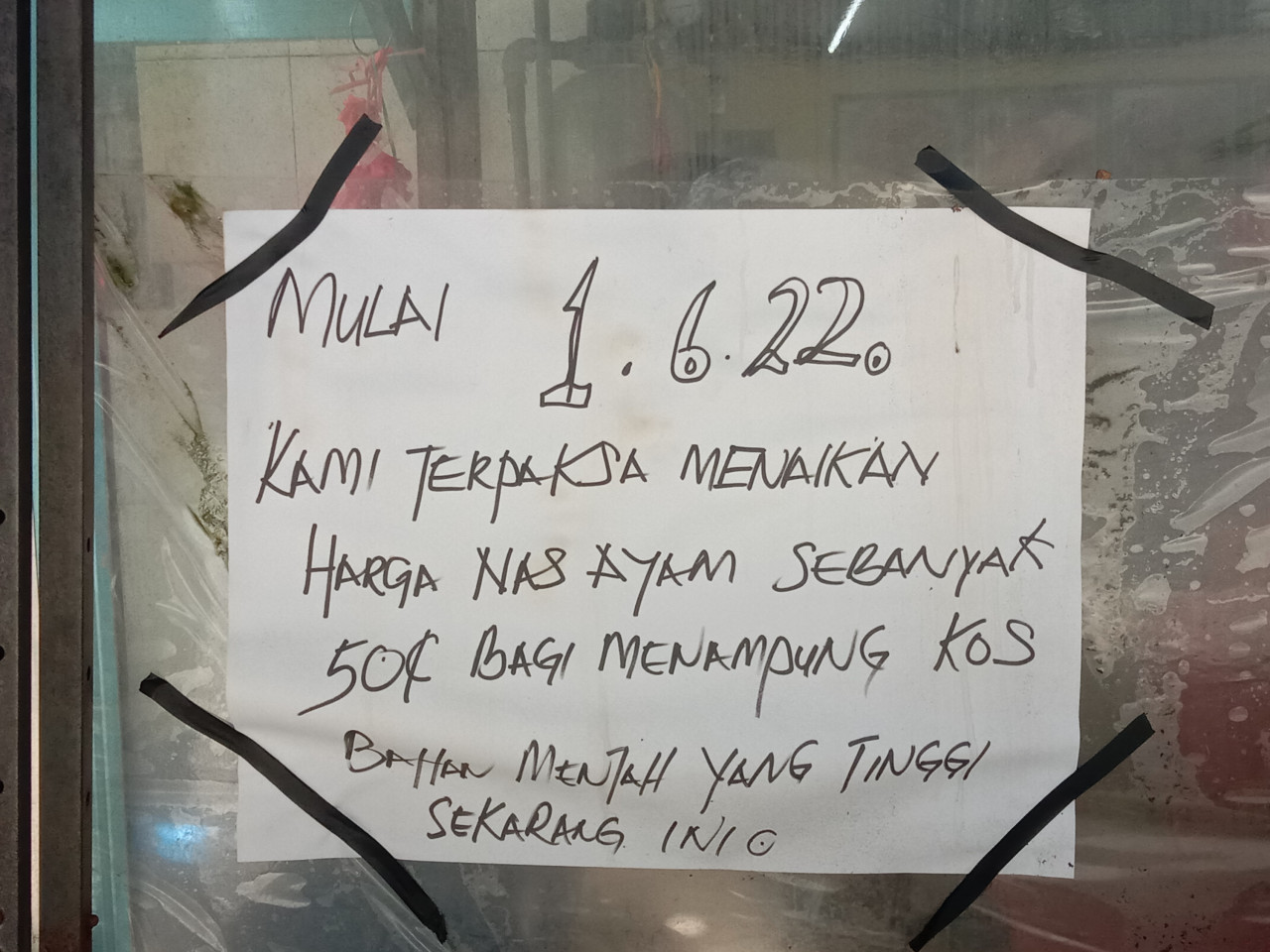
In a survey conducted by The Vibes, only five out of 20 chicken rice establishments in the area reported that they had taken the step to increase the prices of their wares in the face of rising raw materials costs.
The others said that while they have yet to raise prices, they will probably succumb to doing so if the costs of vital ingredients such as oil and chicken continue their upward trend.
A common theme among both groups of traders was that they are conscious of customers’ receptivity to such a move.
The former have opted to bite the bullet and risk the wrath of customers – who are also feeling the pinch of increasingly troubling financial hardships – and the latter are unwilling to face such uncertainty from the consumer base they are dependent on.
A trader at Warung Nasi Ayam Pak Ayub in Bangsar South, who has hiked prices up to RM7.50 from RM7, lamented that – while he would prefer not to charge customers more – he is forced to do so in order to be able to pay his workers and also rake in meagre profits.
We are not raising prices willy-nilly. Circumstances have pushed us to this corner. I am grateful for whatever small profits I can make,” said the trader, who asked to be known only as Pak Ayub.
He claimed that much of his business’s modest earnings are spent on purchasing foodstuffs, which have nearly doubled in cost. He added that he has been struggling to pay his employees’ salaries for the past two months.
“I used to spend roughly RM5,200 on raw materials but now I fork out close to RM5,700. No matter how expensive the raw materials are, I still have to buy them and try to make a living,” he said.
He added that patrons, most of whom are loyal visitors to the eatery, have been sympathetic with his predicament despite also suffering adversity in the face of rising costs of living.
Expressing similar sentiments, a chicken rice stall operator in Chun Heong Kopitiam, Bangsar pointed out that besides raw foodstuffs becoming more expensive, takeaway containers and disposable cutlery have also seen an uptick in price.
“I used to buy a pack of plastic takeaway packages for RM13.80, but the price has since gone up to RM16,” she lamented.
She said that her increased price of RM8 from RM7 for an average plate has been relatively well-received by customers who are also frustrated with inflation-related issues.
Unwilling to compromise servings or portions
Meanwhile, Hoe Fong Chicken Rice Restaurant trader Toh Chin Sing said that while he has been able to keep selling his chicken rice at RM8, surging costs of material goods have put him in a tough spot as he tries to balance retaining customers and keeping his business afloat.
I cannot risk fixing a higher price. A lot of regular customers will complain if I start charging even 50 sen more,” he rued, adding that he normally goes through two bottles of 5kg cooking oil and around 20 chickens in a day.
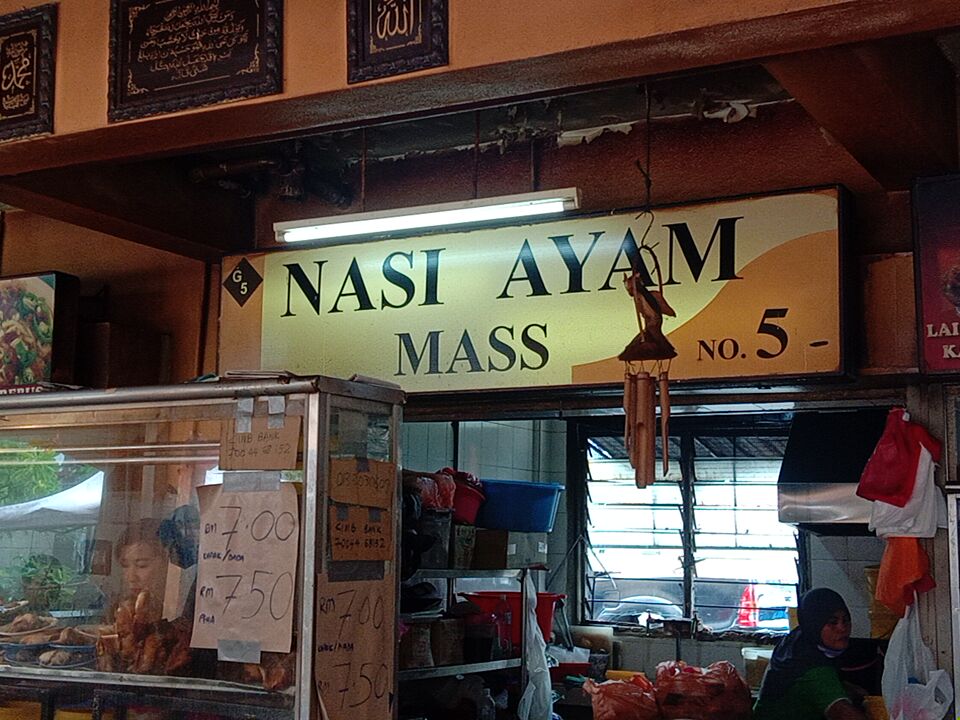
Toh is not alone in his woes, with an operator of the Nasi Ayam Mass stall in Medan Selera, Taman Setiawangsa echoing his grouses.
“If I raise my prices, customers can always choose to bring their business to my competitors and I don’t want to take that chance,” he said.
Asked if they will have to reduce serving sizes to make up for their unchanged prices, all the sellers stressed that they would never consider reducing their portions as they believe that product consistency is key to ensuring the return of customers.
Several traders who are attempting to ride the inflation wave without upping their prices also said that they had recently increased their prices after Hari Raya Aidilfitri and are waiting to see how the situation is after Hari Raya Aidiladha before they decide on their price list.
On June 29, Prime Minister Datuk Seri Ismail Sabri Yaakob announced the formation of a special inflation task force, even though there is already a National Action Council on Cost of Living, to address the increased cost of living.
On the same day, the government made an about-turn on the removal of ceiling prices for chicken, instead setting a new ceiling price of RM9.40/kg for standard chicken in Peninsular Malaysia. The move, which entailed a 50 sen increase, took effect July 1.
Politicians, students and youths have since taken to the streets to vent their frustration over the rising cost of living. Amanah leaders and some 200 disgruntled people held a gathering at Masjid Jamek in Kg Baru on July 1, while a coalition of youth activist groups assembled at the Pasar Seni LRT station the next day.
Getaran, The Vibes’ Bahasa Malaysia sister portal, had earlier reported that chicken traders in Kajang would rather risk trouble with the law than rat on their suppliers who are selling above the set ceiling price, forcing traders to pass on the price increase to consumers.
The Vibes had also previously produced a roti canai and teh tarik index that documented the price of the local favourites at Indian Muslim (mamak) restaurants across the nation.
Various eatery operators approached by The Vibes bemoaned how they had been forced to raise the prices of the popular menu items to ensure the continuance of their business. – The Vibes, July 11, 2022