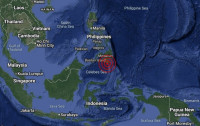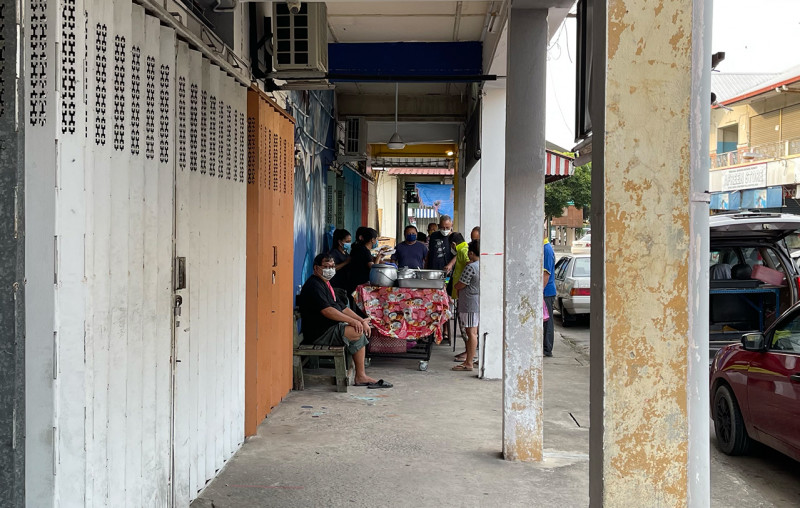
KOTA KINABALU – A parliamentary constituency in Sabah known for its “Brunei culture” is set to be a major battleground featuring national versus local forces in the forthcoming 15th general election.
Papar, an important district along the Pan Borneo Highway, has been under Umno and Barisan Nasional (BN) since 1986.
But voters in the last election gave Warisan a slim majority win amid growing calls from among the community for the Malaysia Agreement 1963 (MA63) to be implemented and state rights to be observed.
According to freelance worker Elbert Kipol, Papar folk remain steadfast on these very sensitive local sentiments.
“MA63 and state rights matters remain in the hearts of the local communities. They also want local parties to work together like how Sarawak is now seeing with the Gabungan Parti Sarawak (alliance),” he said.
It is their hope that the local parties can settle their differences and work together,” Kipol said.
He further asserted that many in the district have now refused to be under a national party like Umno.
In the 14th general election (GE14) in May 2018, Warisan’s Ahmad Hassan won the Papar federal seat with a narrow 325-vote majority, denying Umno’s Rosnah Abdul Shirlin from retaining his seat.
However, according to Steve Mositun, youth chief of Parti Bersatu Sabah’s Limbahau branch, Papar will still see a multi-cornered fight.
He predicted that Umno and Bersatu will go head-to-head in Papar as well and that MA63 has now become apolitical and a multi-cornered fight can emerge.
Papar has seen multi-cornered fights before. In GE14, Umno went up against three local parties – Warisan, Sabah Star, and Parti Cinta Sabah.
This means that Papar could see a five-cornered fight with Bersatu now coming into the picture, said Mositun, who is also the Kadazandusun Cultural Association’s youth council chairman.

Ratio of ethnic Sabahan voters may drop
Added to this scenario is a new layer of drama, due to the inclusion of the new group of voters – those aged below 21, given the lowering of the voting age to 18 under the Undi18 policy approved by Parliament.
“It is clear that many want MA63 to be realised. But there’s just no telling what Undi18 might do,” he said.
There are over 43,000 voters in Papar, who largely comprise Sabah Bumiputeras (76%), followed by Malays (11%) and Chinese (15%).
Political observers claim that the number could change significantly with the inclusion of 18-year-old voters.
A rough estimate given by Kipol is that the Malays may see their ratio surge to 60%, and the Sabah ethnic groups lower to 30% and others to just 10%.
However, Mositun expressed concern that the young voters may not be like their seniors, who are driven by the pressing long-standing matter of state rights.
For the Kadazan and Dusun (KDM) ethnic groups, like in the Limbahau area, they want more infrastructure. The Chinese, they just want to progress in business.
“The Muslim (Malay voters) want more changes in leadership style. They had enjoyed more infrastructure development when BN took power in the 90s,” he said.
Mositun pointed out the racial divisions in the Papar federal constituency are quite obvious. For example, the KDMs are mostly located inland in the Limbahau and Pantai Manis state constituencies, which they share with other races.
He said these communities are closer to the ongoing Pan Borneo Highway construction.
The Malays are mostly coastal communities and populate the Kawang constituency where the current main road leading to Kota Kinabalu lies, he said.
Bad roads, long jams, water disruptions
Media personnel Syikin Roslan also supports Mositun’s views on the young voters, saying there’s no telling who and which party they will vote for.
“They are very silent. It cannot be determined what the 18-year-old voters want.
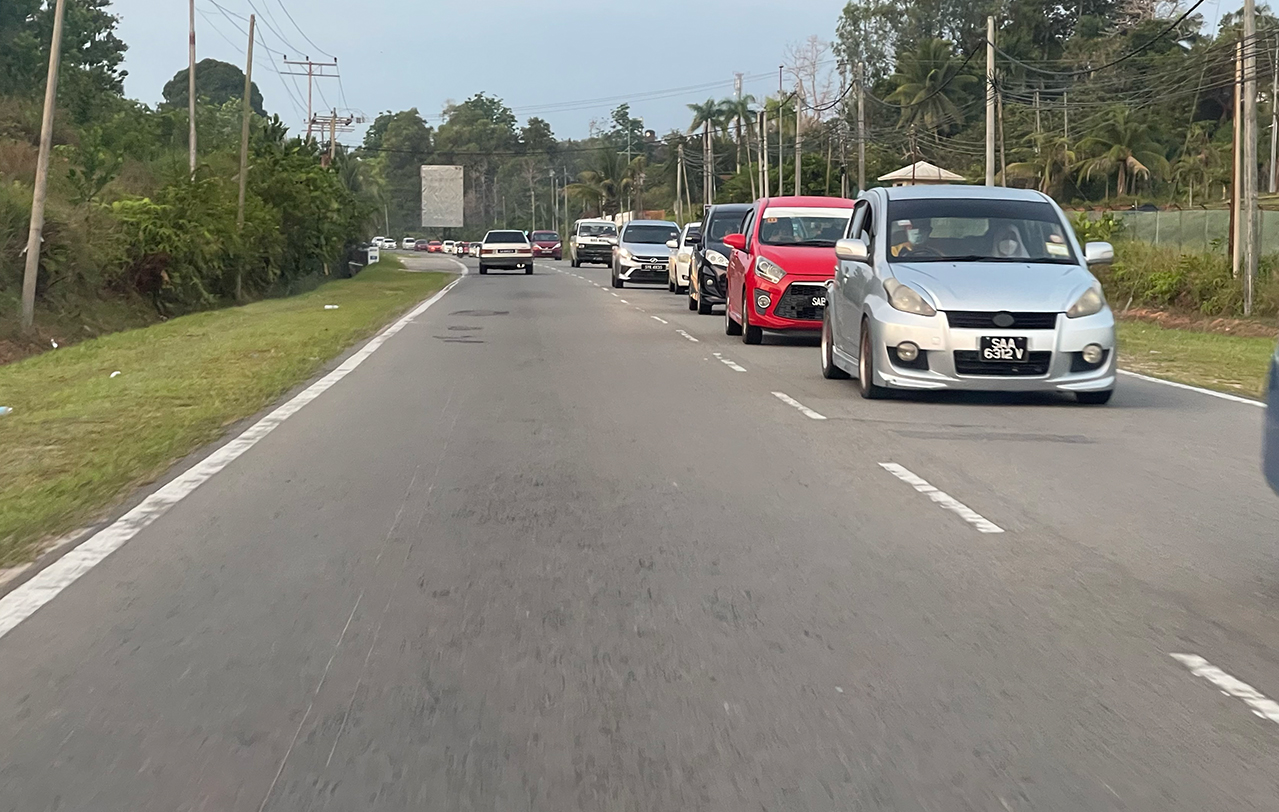
“But they are quite clear on the problems faced in Papar. Bad roads, traffic jams, water supply problems, and also bad internet connections,” she said.
The Vibes found that traffic jams in Papar can stretch up to 16km from Beringgis to Lokkawi in the district, especially during the morning rush hour.
The particular road stretch, called Jalan Pengalat-Lokkawi, is situated in the Kawang constituency.
But Syikin said finding a solution to the traffic jams is a must, as the majority of Papar folk work in Kota Kinabalu and Penampang, especially in public sectors.
“Many are now waiting for the Pan-Borneo Highway to be opened, which many say will cut travel by a lot in the future,” said Syikin.
She added that driving to Kota Kinabalu would take only ten minutes once the major highway project is completed. The driving time between Papar and Kota Kinabalu is about an hour at present.
Syikin also noted the regular water disruptions in some parts of Papar would affect the chances that the ruling Gabungan Rakyat Sabah (GRS) and BN will capture Papar.
None of the water disruptions happened during Warisan’s time. It all started when the GRS-BN government came to power.
“But this could all be a ploy to push for the local communities to accept the construction of the controversial water dam in Kaiduan,” she said.
The Kaiduan Dam has been a long-standing problem for the past three Sabah governments.
Internet, education access, and employment
Syikin said the internet is also an important issue in Papar and youth, especially those in the semi-urban areas, have been quite affected by the poor service.
“This is especially so for students still in school who are dependent on the internet for learning. This could also affect how the parents vote in the future,” said Syikin.
He added that the 18-year-old voters are not quite aware of the demands for MA63 like their parents are.
As for Ahmad, the existing Warisan MP, Syikin said he has done quite well and is constantly on the ground and meeting people.
She however said that she cannot speak the same for politicians from Umno and BN, who have barely held any functions but may have gone directly to the constituents to aid them.
A mechanic in Papar, Reezal Azlan, said that there had been numerous developments over the past five years in Papar, such as the Bandar Benoni project and other nearby commercial centres.
While job opportunities are now available in Papar, many still prefer to go to the cities to find better-paying jobs, he said.
Perhaps in a few years to come, many will begin finding work around here. But not now. The pay is not that good here.
“Most of these developments happened due to the construction of the Pan Borneo Highway, and mainly to cater for the workers at the moment.
“Many of the local folk still head to the city for work and shopping, except for groceries,” he said. – The Vibes, August 2, 2022