
KOTA KINABALU – Studies on Sabahans’ voting pattern show that more voters are deciding on who to cast their ballots for based on issues, rather than party or candidate.
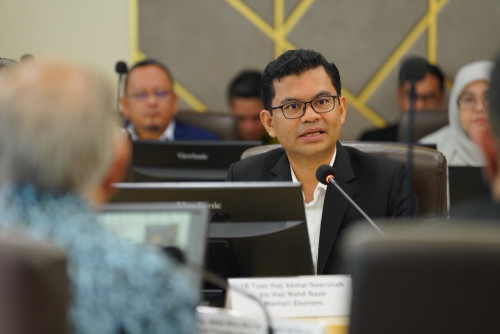
Sabah Institute for Development Studies chief executive officer Assoc Prof Ramzah Dambul said that the percentage of those who vote based on current issues has grown from between 10% and 15% to between 40% and 60% in five years.
Speaking during a forum about Sabah’s voters’ supremacy organised by Bersih here today, Ramzah said the percentage of those who vote based on party and candidate has now reduced to about 15% from about 30% five years ago.
He revealed that the number of fence-sitters has also increased from less than 15% five to ten years ago to over 40%, and that this rate is growing.
Although we may be still far from mature politics, changes in the voting pattern in Sabah in the past five to ten years show that voters’ supremacy should be taken seriously,” he said.
Ramzah said that based on studies on voters’ sentiments, it was found that the majority of voters do not care what happens within and between political parties. What people really want is that after a government is formed, they can see development.
“The best method to achieve this is that after the government is formed, the government and opposition must work together to ensure political stability, thus creating an efficient public service machinery that will serve their best,” he said.
Sadly, he said, this is not happening in Malaysia, as political parties are still fighting to be in power even after the government had been formed after the election.
He said power tussles between parties create instability, which has a huge impact, making the public service inefficient and cannot be delivered to the people.
That is why, the people on the ground actually like the approach of having a memorandum of understanding (between Pakatan Harapan and the government), and they also like the Sabah government (Gabungan Rakyat Sabah – Barisan Nasional)’s approach that is more accommodating and focused on development,” he said.
Ramzah opined that politicians should take this seriously, and focus on serving the people by engaging in stable politics after a government is formed so that the public servants can deliver their best to the people.
Meanwhile, he questioned if it is fair for Sabahans working in Peninsular Malaysia to be forced to change their addresses to avoid bearing travel expenses to vote in their hometowns.
Ramzah said that there should be a system in place to facilitate people to vote.
He opined that more people should be allowed to undertake postal voting, and this should not only be restricted to those working in security agencies.
He added that one should have the right to decide whether he wants to vote in their place of work or their hometown – whichever that he would associate with the most.
Also present as panellists at the forum were PBS’ Kiulu state rep Datuk Joniston Bangkuai, DAP’s Kota Kinabalu MP Chan Foong Hin, PHRS’ Kukusan rep Rina Jainal, and Freeda Madius from the Wisdom Foundation. – The Vibes, August 13, 2022