-TNB_Genco_pic.JPG)

CAMERON HIGHLANDS – Improper waste disposal not only leads to land and water pollution but also affects the amount of electricity generated for the entire country through hydroelectric dams, Tenaga Nasional Bhd (TNB) said.
Its power generation unit TNB Power Generation Sdn Bhd (TNB Genco) said it had lost about 50% of stored energy in dams in Cameron Highlands, Pahang due to severe river pollution.
Each year, TNB Genco spends RM40 million on maintenance to clear out pollutants and sedimentation accumulated in the dams such as sand, and agricultural and logging wastes, which can take up half the reservoir’s capacity.
“When we completed these dams 59 years ago, the reservoir was at full capacity, meaning it could contain water at 100%. But now, we are at 50%.
“Because of that, we’ve lost half of the energy as the sediment fills up the other 50%. That is our opportunity cost,” said TNB Genco chief operating officer Datuk Roslan Abd Rahman during a recent media tour of its hydro dams in Cameron Highlands.
Sedimentation is TNB Genco’s biggest challenge and maintaining the dams is also vital to controlling river levels to prevent overflowing.
-TNB_Genco_pic.jpg)
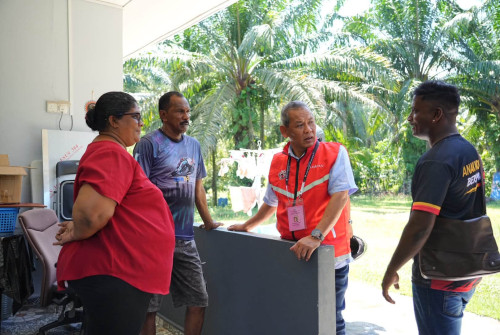
Cameron Highlands Power Stations general manager Sa’aidan Abu Hassan agreed with Roslan, adding that the dam now can be run for just four hours a day.
After that, the reservoir level will drop fast to the minimum level whereby the turbines cannot run anymore.
“If there is heavy rainfall, the water will rise quickly due to heavy sedimentation that has filled up the reservoir, and we would have to release the water downstream of Bertam Valley.
“Before the mud flood incident in 2013 at Cameron Highlands Bertam Valley, the downstream river capacity was only five cubic metres per second, but now it has expanded to 220 cubic metres per second.
“This is due to habitations and encroachment of river reserves by people,” Sa’aidan said.
TNB Genco has been collaborating with the Malaysian National Water Research Institute on waste disposal programmes to educate people who live near riverine areas.
The power generation unit has also constructed sediment traps to tackle waste at the source before it gets into the reservoir.
“If we only focus on our sediment problems within the reservoir, they will never be solved. So, we need to tackle the source.
“We need collaboration with all relevant agencies such as the local council, the Irrigation And Drainage Department, Forestry Department, and Agriculture Ministry,” added Sa’aidan.
-TNB_Genco_pic.JPG)
TNB Genco has three hydroelectric power plants in Malaysia, and they account for 10% of the electricity generated in the country.
The biggest plant is in Sg Perak, which generates 1,249 megawatts (MW), followed by Sultan Mahmud Kenyir in Terengganu, which produces 665MW, and the 662MW plant in Cameron Highlands.
The Cameron Highlands dams – Sultan Abu Bakar, Susu, Jor, and Mahang – were not only built to generate electricity but also to act as flood control mitigation during the monsoon season.
“If we can stop the flow of pollutants into the river, then we can reduce our costs.
“For the time being, the maintenance cost has not yet affected our revenue because we have been managing our expenses, but it would be best if we could get the cost reduced as much as possible,” Roslan added. – The Vibes, August 14, 2022







.JPG)