SANDAKAN – Albeit slow, the increase in the population of Sabah’s Bornean bearded pigs has given conservationists in the state a glimpse of hope after the native species faced a serious threat following an outbreak of the African swine flu (ASF).
Non-governmental organisation Bringing Back Our Rare Animals (Bora) executive director Datuk John Payne said between March to July, this year, camera traps set in the Tabin Wildlife Reserve revealed images of bearded pigs consisting of young adults in healthy condition.
Payne pointed out that this is a sign that the population is slowly but surely recovering.
“A Tabin camera trap image taken in March showed four males and eight almost mature sows who quite possibly are siblings from one litter, each of which potentially produces around eight surviving piglets by early next year.
“These are probably the most healthy-looking wild pigs we have seen in Sabah.
“Presumably, this is linked to low numbers of pigs at the present and no competition for food,” he told The Vibes.
In March this year, The Vibes reported that bearded pigs in Sabah are under threat as their numbers have dwindled significantly since December 2020.

Payne shared that Bora staff living at Tabin Wildlife Reserve has also made an interesting observation that all the wild bearded pigs found dead from ASF – at least several dozen – in late 2020 to 2021 were all adults; no young wild pigs were encountered.
Most remarkably, he said, no young wild pigs were seen at all in the earliest months of ASF being in Sabah.
“It seemed they moved rapidly away from sick pigs. Only dead and dying adult wild pigs were discovered during the initial months.
The only possible explanation for these observations is that most or all of the young wild pigs were aware of the sickness in older pigs and moved away into the central forest reserve.
“It must also be that, like Covid-19 in humans, older pigs were susceptible to infection and severe symptoms of the ASF virus, and young ones with a stronger immune response were much less so,” he said.
For this reason, Payne said Sabah could expect the population of bearded pigs in Sabah to recover sooner than expected if they are not hunted by locals.
However, since it is still not ascertained if ASF is gone, it is important for the authorities to confirm the matter from wild pigs’ samples.
“Before ASF, wild pigs were hunted in many parts of Sabah, including in oil palm plantations around Tabin, and taken to Western Sabah, where they were roasted and sold at roadside stalls.
“This became a Sabah specialty and could potentially be restarted. It helped to control wild pig numbers. However, at present, we have no idea if the surviving wild pigs are carriers of ASF. Finding out is a priority need,” he said.

Sightings merely show scant improvement?
Meanwhile, in Kinabatangan, Danau Girang Field Centre director Prof Benoit Goossens who, in March, estimated that the bearded pig population in Kinabatangan may have depleted by 90%, has now said that there is still not much improvement in the area.
“There are still very few camera trap pictures and sightings. However, I would think that the surviving bearded pigs now are safe from the ASF,” he told The Vibes.
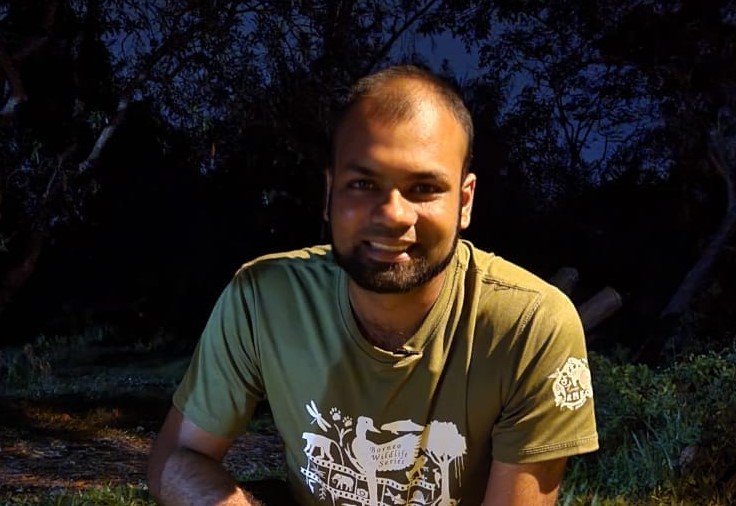
Environmental group 1StopBorneo Wildlife founder Shavez Cheema said from information on the ground, there have only been several sightings of bearded pigs in Sabah, including in Membakut (two) and Penampang (a family).
It is possible they are recovering and coming back, but the golden question is, ‘Is ASF in the air still?’
“If yes, could it strike again even though we see glimpses (of the pigs) now?” he questioned.
ASF was first discovered in Sabah after more than 30 bearded pig carcasses were discovered on the state’s east coast between January and February last year.
Fatal to pigs, harmless to humans
The state declared its first ASF outbreak on February 20 last year after domestic pigs in Pitas were found to carry the disease.
The International Union for Conservation of Nature categorised the Bornean bearded pig as “vulnerable”, which means that in Sabah, licenced hunters are still allowed to capture the animal.
Three sinalau bakas (smoked wild boar) sellers in Kota Kinabalu confirmed that they had stopped selling wild boar and are now using domestic pork instead.
They said that the hunters had been unable to renew their hunting licences, thus halting the supply of wild boar since the pandemic in 2020 to date.
Even if hunters can renew their hunting licences, they doubt that there are sufficient wild boars to be hunted,” one of the sellers said.
A Sabah Wildlife Department director, who spoke on the condition of anonymity, confirmed that the department will not be issuing hunting licences for at least another year.
“The population of wild boars is still very low. The department will monitor the population and decide when we can issue hunting licences,” he told The Vibes. – The Vibes, September 6, 2022