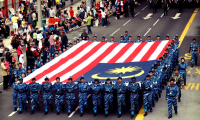
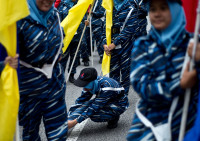
KUALA LUMPUR – The government’s proposal to revive the National Service Training Programme (PLKN) has drawn mixed reactions, especially with the country still fighting the Covid-19 pandemic.
Some have suggested that PLKN be improved should it be reintroduced, but there are also those who oppose its revival, saying the government should focus on resuscitating the economy.
PLKN was introduced in December 2003. The programme, which had a three-month training module, saw the participation of between 85,000 and 95,000 trainees a year, and cost RM600 million annually.
It was halted for a year in 2015 due to budget cuts, but returned the following year as PLKN 2.0 with only about 20,000 trainees a year. It was abolished in August 2018.
Former National Service Training Department director-general Datuk Abdul Hadi Awang Kechil, who served from 2007 to 2014, said economic development should be the priority in view of the high unemployment rate amid the pandemic.
However, he said, PLKN should not be abandoned as the National Service Training Act 2003 still exists.
The government could first conduct a study to determine the suitability of reintroducing the programme without incurring huge costs, he said.
“The government should prioritise economic opportunities, employment, but at the same time, PLKN can be revived with minimum cost by using existing facilities and the old module. This will not involve large expenses.”
He said the programme remains relevant, especially in instilling in youth a sense of love for the country.
A 2010 study on PLKN’s effectiveness, involving 61,950 former trainees, parents, employers and the public, found that the programme succeeded in cultivating loyalty and love for the country, with an achievement rate of 83.86%, he said.
“To say that PLKN failed is baseless. Only those who went through it, know.”
Defence Minister Datuk Seri Ismail Sabri Yaakob this week told Parliament that the ministry will present to the cabinet a proposal on PLKN’s reintroduction.
Malaysian Youth Council secretary-general Hasnul Haniff Harun said PLKN should be rebranded if it is to be revived, with Rukun Negara principles made the basis of training.
The module should be based on PLKN 1.0, which was more impactful, and the training period extended to six months for better implementation, he said.
However, he added that the priority now should be the Covid-19 response, including economic recovery, as almost 800,000 people have lost their jobs due to the virus crisis.
Siti Nurwani Mat Rais, 38, who was a PLKN coach for 10 years, welcomed the proposed reintroduction of the programme.
She said PLKN has been used as a model by several countries for their youth development programmes. – Bernama, November 26, 2020