![[UPDATED] Authorities should have prevented torture, death of smuggled migrants: Wang Kelian RCI report](https://media.thevibes.com/images/uploads/covers/Feb_2021/_large/wang_kelian_human_trafficking_2015_afp_pic.jpg)
KUALA LUMPUR – The torture and death of over 130 smuggled immigrants should have been prevented by local authorities, according to a recently declassified royal commission of inquiry (RCI) report on migrant camps found in Wang Kelian.
The 184-page report which was published on the Home Ministry website recently detailed the investigation into the existence of the camps, border control, and overall enforcement agencies’ response to the discovery of the mass graves and transit camp in Wang Kelian, Perlis, near the Thai border.
The report concurs with witness testimonies from police that the unfortunate fate and tragic death of the immigrants could have been prevented.
“The torture and deaths of the illegal immigrants should have been prevented by the authorities taking a more proactive step in border control. It did not require any extraordinary effort to detect what had happened in Bukit Wang Burma as indicated by S1 (the RCI’s first witness, police’s Mat Ten).
“What is required among enforcement officers is dedication, commitment, and innovation in carrying out their duties,” said the report.
The report also detailed the weakness of border control and cross-agency coordination including interdepartmental communication within police towards the discovery of the camps.
“There were weaknesses in the Royal Malaysian Police’s internal coordination in carrying out operations, which was demonstrated through the workflow and information channelled between departments/units in regard to the discovery of the camps and graves.
“In addition, there were gaps in the transmission and sharing of information where reviews were conducted several times before subsequent action was taken.
“This was seen to have caused delays in the implementation of proper action,” said the report.
The report also stated that the authorities failed to take note of, analyse, and understand the incoming trend of undocumented migrants in the years prior to the discovery of the camps in 2015.
“They also did not view seriously the continued entry of these illegal immigrants on a large scale from 2012 to 2015. The large-scale and continued entry trend of illegal immigrants should have appropriately been a clear warning and sign to enforcement agencies at the state and national levels. The matter should also have been raised at the policy-maker level.
“At the state level, the Royal Malaysian Police, National Security Council, Immigration Department, and Aksem (Border Security Agency) knew about and were aware of this pattern and flow of entry, but did not take any action to halt the entry of illegal immigrants in the areas that were often breached.
“Regular and comprehensive inspections should have been conducted along the Malaysia-Thailand border without exception,” said the report.
Site of crime left unguarded
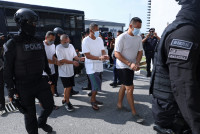
The RCI report was made known by human rights group Fortify Rights which had earlier urged the government to prosecute officials involved in the Wang Kelian migrant camps and alleged mishandling of the investigation into the matter.
News of the mass grave including the bodies of 139 migrants was first reported by veteran journalist Datuk Arulldas Sinnappan in 2015 when he was reporting for the Malay Mail.
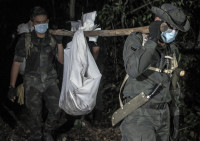
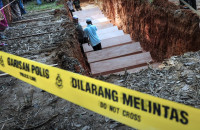
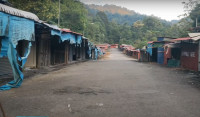
The RCI was established to probe the Wang Kelian human trafficking case, following the discovery of over 100 makeshift graves and 29 temporary detention camps in 2015, deep in the jungle of Bukit Genting Perah and Bukit Wang Burma, just a few hundred metres from the Malaysia-Thailand border.
The probe concluded in June 2019, before it was submitted to the Yang di-Pertuan Agong Al-Sultan Abdullah Ri’ayatuddin Al-Mustafa Billah Shah in September.
The RCI lasted for 17 gruelling days spanning over two months, which saw 48 witnesses being questioned, including high-profile names like former inspector-general of police Tan Sri Khalid Abu Bakar and former Perlis police chief Datuk Zul Aznam Haron.
The RCI report also detailed that the authorities had not followed up immediate investigation following the discovery of the camps despite there being enough indication for a criminal investigation.
In this case, the discovery of the camps and graves should have raised suspicions that a criminal offence had been committed. Immediate follow-up action should have been taken to investigate the incident location so that any evidence would be preserved and undisturbed.
“Unfortunately, the said incident location was left unguarded. Immediate action was not taken to inspect, search and carry out detection at areas in close proximity, such as at Genting Perah, after the discovery at Bukit Wang Burma.
“Follow-up action was only taken almost two months late,” the report stressed.
“The commission finds that the issue was merely discussed in the monthly state chief of police meeting. A specific meeting to handle this issue was never convened.
“At the National Security Council level, the issue was not raised immediately after the discovery in January 2015,” said the report. – The Vibes, October 18, 2022