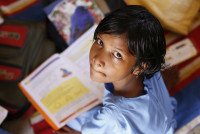

KOTA KINABALU – The Sabah government will set up a temporary shelter to house stateless children seen begging on the streets here by the end of this year.
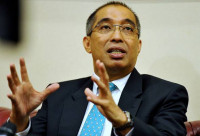
Assistant Minister to the Sabah Chief Minister Datuk Abidin Madingkir (Paginatan-Sabah Star) told the state assembly today that the state government has allocated RM250,000 to renovate an unused government house in Kota Kinabalu for this purpose.
He said it will be a pilot project to stop stateless children from begging on the streets, which have been tarnishing the image of Sabah and Malaysia in the eyes of foreign tourists.
“Most of these stateless children are from the Palauh (Bajau Laut) who traditionally live along the coastal area and islands (along) Sabah’s east coast.
“The government will continue to find a solution to this issue. The Kota Kinabalu City Hall (DBKK) and local authorities will work with other relevant agencies, such as the welfare and immigration departments, police, National Security Council, health department, and others,” he said.
Abidin was responding to Datuk Ewon Benedick’s (Kadamaian-Upko) question on the government’s efforts to address the problem of stateless children begging on the roads and near traffic lights around here.
Responding to a supplementary question from Phoong Jin Zhe (Luyang-DAP), Abidin said there were 1,326 stateless persons living in 228 houses in Pulau Gaya.
He explained that the temporary shelter will house stateless children beggars for a maximum of three months.
The children will be enrolled in a special programme to instil basic self-management and community living skills, as well as an unofficial spiritual programme.
The safety of the centre will be handled by Rela, and the health department will evaluate the children’s health before they enter the shelter.
The children will then be returned to their parents or guardians, but they will be warned to obey the rules and the law.
“Many people blame DBKK when seeing stateless children begging on the street, but I assure the assembly that DBKK has been doing a lot. They have been taking action by stopping these children, and those who cannot be stopped will be brought to the DBKK office.
“DBKK personnel would then collect money to buy them food,” he said.
When Datuk Yusof Yacob (Sindumin-Umno) asked about the government’s actions on stateless children offering services such as carrying goods at the market and selling food, Abidin said they would not be doing such activities if the public did not pay them.
“We as Malaysians should not be entertaining their activities. If we don’t need their services, surely they will not be doing it. When we buy food from them, it will only encourage them to sell.
“It is important that society at large should also play a role,” he added.
Abidin added that the project in Kota Kinabalu is a pilot project; if successful, will be adopted in other districts such as Tawau, Sandakan, and Lahad Datu.
He said the initiative is in line with the Children’s Rights Convention 1989 (Geneva) which stressed children’s rights to receive protection from dangerous conditions that expose them to exploitation, as well as Article 17(k)(i) and (ii) of the Children Act 2001.– The Vibes, November 28, 2022