
SANDAKAN – Chief Minister Datuk Seri Hajiji Mohd Noor has denied that developing forest plantations in Sabah will involve deforestation, as claimed by certain parties.
In fact, he said, the development of Sabah’s forest plantations is certified and approved by the Forestry Department in accordance with comprehensive guidelines in terms of environmental protection.
“The claim that developing forests in Sabah would include the process of deforestation is inaccurate. They (certain parties) should study the facts and understand the context of forest management in Sabah.
“The Sabah government has identified a small portion of a forest reserve that has degraded, about 400,000ha for the purpose (development), as stated in the Forest Plantation Development Action Plan (2022-2036),” he said in his speech today.
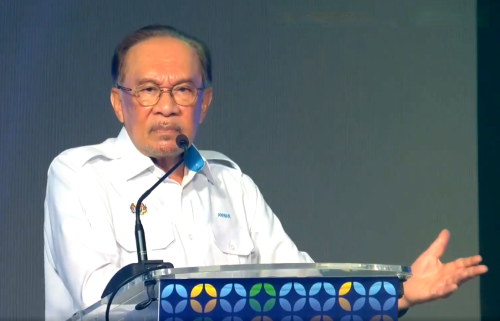
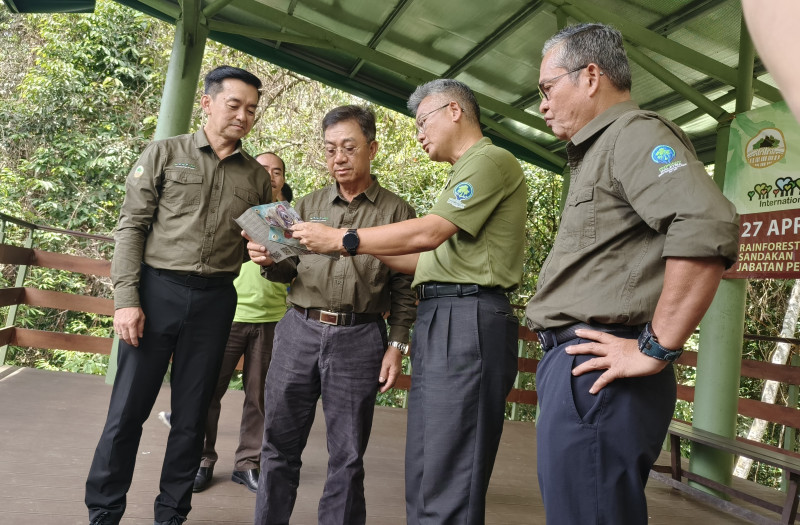
Hajiji’s speech was read by Deputy Chief Minister II Datuk Seri Joachim Gunsalam during the launching ceremony of the state-level International Forest Day 2023 at the Rainforest Discovery Centre (RDC) here, today.
He said if seen from a positive angle, the development of forest plantations is one of the strategies implemented for sustainable forest management that could recover forest productivity that has been depleted, reducing the local timber industry’s dependency on logs from native forests, and ensuring sustainable sources of raw materials.
In the aspect of forest management, Hajiji stressed that the Sabah government is committed to maintaining 50% of the state’s total area as forest reserves, in line with the Sabah Forestry Policy 2018.
He said Sabah is now still maintaining its 64% forest areas, with 848,597ha or 52% gazetted as a forest reserve and other protected areas.
He added that Sabah has gazetted up to 1.9 million ha (26.4%) of land as totally protected areas (TPA), and the target is to achieve 2.2 million ha (30%) of TPA by 2025.
Hajiji stressed that the Sabah government strives to rationalise the use of land in Sabah to achieve a balance between socio-economic development and environmental conservation.
In order to achieve balance, he said, the Sabah Forestry Department is now drafting the Statewide Forest Master Plan to provide action plan guidelines on forest resources management for the coming 25 years for forest plantation areas in Sabah.
“Through this master plan, the Sabah government will ensure that all ecologically sensitive areas will continue to be protected, and at the same time ensure sustainable socio-economic development for the wellbeing of the people in Sabah.
“This is in line with the Sabah Maju Jaya direction plan, which among others includes the development of infrastructure connection and green development,” he said.
As a manifestation of the balance between socio-economic development and natural resources protection, Hajiji said that the Sabah government with the collaboration of the United Nations Development Programme and Global Environment Facility will initiate the Food Systems, Land Use and Restoration Impact Programme.
The programme would see integrated landscape management involving 2.1 million ha of forest plantation area, where the involved parties will coordinate plans and management on the land use in Sabah to curb the effects of palm oil production while maintaining a high conservation value to benefit the environment and development.
The programme will be implemented in 12 districts in Sabah and is expected to benefit about 56,000 rural folk.
Hajiji said that as an alternative to generating new income, the Sabah government has explored initiatives that could support forest conservation programmes through potentially generating income that is not based on timber from Sabah’s forests.
This includes recreational activities based on forests, payment for forest ecosystem services, and carbon trading through the implementation of the Reducing Emissions from Deforestation and Forest Degradation Plus Project.
For instance, he said, the development of the Visitor’s Complex in RDC has attracted visitors from in and out of the country who like forest-themed recreational activities.
“The RDC Visitor’s Complex was completed in 2022 with technical and financial assistance from the Energy and Natural Resources Ministry amounting to RM7 million.
“This has added the value of the Sabah government’s efforts to empower the forest recreational sector with the concept of environmental education and public awareness,” he added. – The Vibes, April 27, 2023