
GEORGE TOWN – The Health Ministry’s new leadership has acknowledged that the country cannot go on with the healthcare system in the present form, which is focused on being more reactive than preventative, in light of the challenges that have emerged from the pandemic.
The ministry’s newly appointed director-general Datuk Dr Radzi Abu Hassan says there is a need for reforms and to fine-tune the system, which should now be geared towards prevention rather than curative elements.
He said that the system should be geared on prevention based on the “womb-to-tomb” principle to ensure the country does not slip into another public healthcare crisis.
Hence, there is a great need for the ministry to produce a health white paper (HWP), which is scheduled to be tabled in Parliament soon, he said.
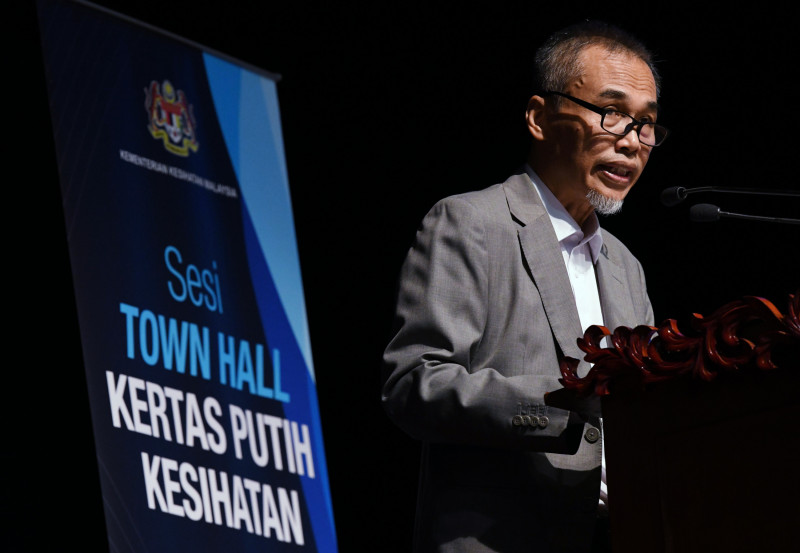
Dr Radzi was addressing a northern region town hall session at Dewan Sri Pinang here, where he stressed on the need to calibrate the public and private healthcare systems to suit the present needs of Malaysians.
The session today drew lively engagement from doctors and other medical practitioners here.
Dr Radzi said that grouses aired by the Malaysian Medical Association over the need to revise the consultation fees for general practitioners (GPs) can be considered, but it should be done after the completion of the HWP.
He said that the ministry recognises the crucial role played by the GPs in the primary care of Malaysians.
Dr Kanthan Murugiah, an attendee at the session, called for the fee structure to be revised because it has not been looked into for the past 25 years despite the country undergoing a rapid rise in living costs.
GPs who generally see patients with non-communicable diseases can only charge a maximum of RM80, despite the high cost of managing their respective clinics.
Former Batu Uban assemblyman Dr T. Jayabalan caught the attention of the HWA advisory panel, which included former health minister Tan Sri Dr S. Subramaniam, Kuching MP Kelvin Yii, and the ministry’s planning division director Dr Rozita Halinda Hussein.
The practising doctor implored them to adopt a financial system which caters to all Malaysians, not just the rich.
He said that there is a grave need to ensure that good healthcare is made affordable.
Dr Jayabalan said 70% of the best specialists are in private practice, while the public sector caters for 70% of the patients in the country, including those who are wealthy.
“We need to correct such imbalances,” he said.
Other points raised included using the China model, where children from primary schools have to undergo physical exercises for one to two hours daily.
He said that non-communicable diseases such as diabetes can best be treated with strong wellness principles from a young age.
All the state-of-the-art facilities to treat diseases such as cardiovascular ailment are in vain unless the focus is on prevention, said a doctor.
“Therefore, it is best to start early, when they are children.”
Meanwhile, Dr Rozita said that the HWP will also look into care for senior citizens, as the ministry’s data shows that the elderly spend two to three times more on healthcare expenses compared to a normal working adult.
She also said that the white paper will take into account environmental conditions, as it is proven that factors like heatwaves and droughts can negatively affect public healthcare. – The Vibes, May 2, 2023