
PETALING JAYA – The recent attempt at reptile smuggling to India via a flight from Kuala Lumpur has highlighted the prevalence of wildlife trafficking in Malaysia and the need for improved action against the crime, wildlife organisations say.
Ecotourism and Conservation Society Malaysia (Ecomy) founder Andrew J. Sebastian said the incident serves as a “wake-up call” that the country has much progress to make before curbing wildlife smuggling.
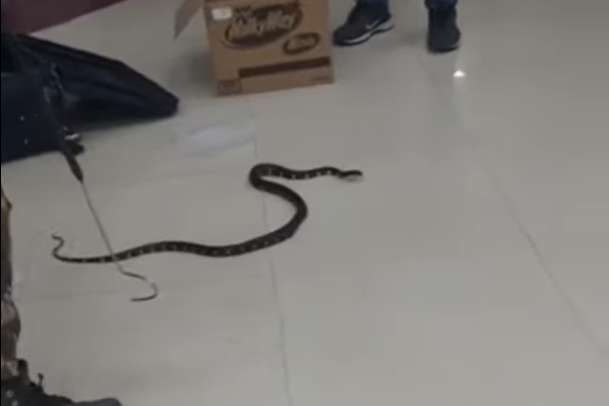
Based on video clips of the incident at Chennai Airport, Sebastian speculated that among the reptiles contained was a pit viper, one of the most venomous snakes in the country.
This indicates that the safety of the passengers and flight crew could have been jeopardised.
How can live animals be brought into a plane, in this day and age especially?” he asked.
“We must look seriously into our countermeasures at airports, as well as points of entry and exit,” he added.
Moving forward, Sebastian hopes stronger measures would be implemented in national parks, forest reserves, and airports to counter wildlife trafficking.
He also called for the Indian authorities to take action against the woman who allegedly smuggled the snakes, as a precedent to deter people from participating in such a crime.
Regarding the seized snakes, if any belong to local species found in Malaysia, Sebastian said they should be brought back to their original forested areas.
This move, he claimed, could be a win-win situation for both the wildlife animals and national authorities.
“This exercise to bring wildlife back in protected areas can be used as an educational and media tool to show that authorities in Malaysia and India are serious in curbing wildlife smuggling,” he said.
Similarly, Elizabeth John, communications manager of anti-wildlife trafficking organisation Traffic, said the incident demonstrated the need for much greater vigilance in Malaysian airports.
Following the endemic phase of Covid-19, she expressed worry that wildlife traffickers will likely exploit the ease of movement via international air travel and resume their illegal activities.
However, Elizabeth said the onus to curb wildlife trafficking should not fall on one authoritative body and should involve all parties that facilitate the movement of people and goods through airports.
“Apart from various enforcement agencies, this means airlines, courier services, freight forwarders, and all other logistics operators – based in or using air transport – should also be concerned, and get involved in efforts to stop illegal wildlife trade through Malaysia,” she added.
Elizabeth also noted that this issue is not specific to Malaysia, as there have been cases in other countries in Southeast Asia where authorities have seized wildlife either hidden in the luggage of passengers travelling between Southeast Asian points and India or in air cargo shipments.
Meanwhile, the Royal Malaysian Customs Department said in a statement that the agency inspects only hand-carry luggage.
As the woman’s baggage was registered as check-in, it said the inspection was instead under the full purview of the Aviation Security Division.
Last week, a woman travelling from Kuala Lumpur was intercepted at Chennai Airport. Upon examination of her luggage, local customs found 22 snakes of various species and a chameleon packed in transparent plastic containers. They were seized under customs and wildlife protection laws. – The Vibes, May 5, 2023