
GEORGE TOWN – The National Water Services Commission (SPAN) will propose that local industries utilise wastewater for production instead of depending on treated water, which is being currently supplied to residential and commercial sectors.
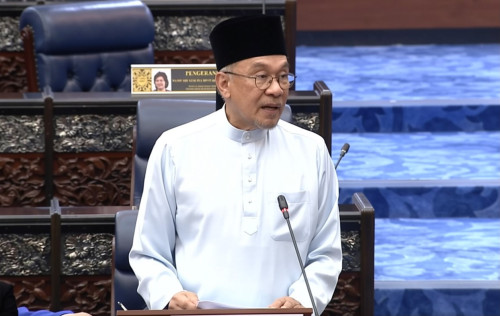
SPAN chairman Charles Santiago said that he will recommend this to the respective state water authorities as part of a conservation effort, in view of water supply issues arising from climate change.
As the country is experiencing more droughts than in previous decades, the former Klang MP also said there is a need to revamp the demand among consumers for the precious commodity.
“In India, specifically in Tamil Nadu, wastewater is used for industrial needs whereas treated water is only channelled towards households and commercial usage,” he told The Vibes during a visit to both Penang and Kedah to check up on the latest developments in the water industry in the region.
He pointed out wastewater can also be a cheaper alternative than treated water, which is primarily used for drinking, cooking, and hygiene.
As such, Santiago urged motorists to find alternative measures to clean their vehicles instead of utilising treated water.
Santiago also said that switching to desalination – converting seawater to freshwater – remains an expensive affair despite costs having gone down in recent years.
He was responding to a proposal by Water Watch group founder Chan Ngai Weng for Penang to migrate its water supply via desalination.
The Universiti Sains Malaysia academic said Penang should pursue such technology to sustain control over its water supply sources rather than rely on third parties to provide the resource.
Chan also supported a call by SPAN for states to share their natural catchment resources with each other in view of the threat of drought from climate change.
Penang has undergone a series of cloud seeding exercises via the Royal Malaysian Air Force to artificially generate rain.
However, it has backfired on occasions with rain not falling into water catchment areas such as dams and rivers.
Meanwhile, Santiago asserted that Malaysia needs a federal water management authority to oversee supply and usage, instead of leaving it to the respective states.
Santiago added that state water authorities should understand the need for transboundary supply agreements and the sharing of water catchment resources. – The Vibes, June 11, 2023

.jpeg)