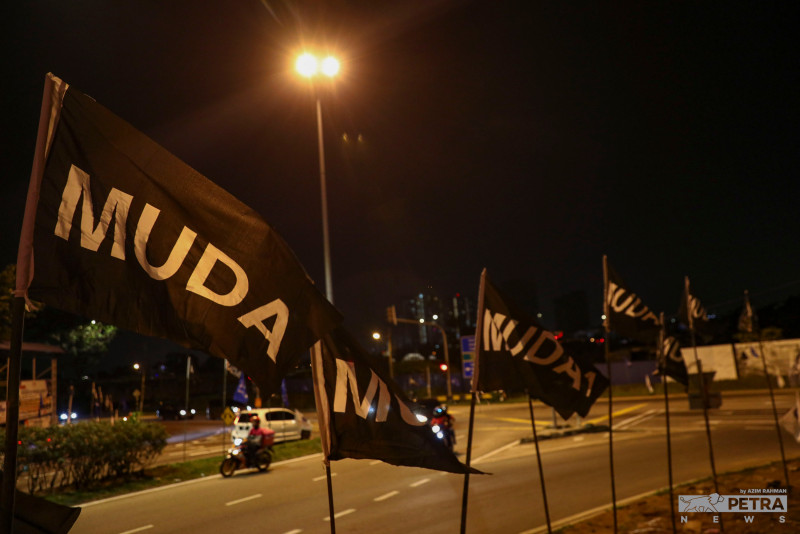

PETALING JAYA – The recent narrow defeat of Pakatan Harapan (PH) in the Sg Kandis constituency of Selangor has ignited discussion about the impact of Muda, the youth-based party, on the election outcome.
The loss, by a margin of 167 votes, has prompted a closer look at the role Muda played in the three-cornered contest.
Wan Dzahanurin Ahmad of Perikatan Nasional (PN) clinched victory with 28,926 votes, edging out his main contender and incumbent, Zawali Mughni of PH, who secured 28,759 votes.
Afriena Shaqira of Muda garnered 1,341 votes, a number significant enough to have swung the result in favour of PH if those votes had been cast differently.
The Sg Kandis seat, formerly known as Sri Muda, had been held by a PKR candidate since 2008. Muda’s decision to participate in the election added an intriguing dynamic, raising questions about the impact of vote-splitting on the final outcome.
In June, Muda president Syed Saddiq Syed Abdul Rahman dismissed concerns about the party’s potential to harm the PH-BN alliance by splitting votes.
However, the election results in Sg Kandis seem to have highlighted a different reality.
Interestingly, Kedah Barisan Nasional chairman Datuk Seri Mahdzir Khalid had earlier hinted at the possibility of vote-splitting after Muda’s decision to contest in the state polls. The unfolding scenario in Selangor has underscored the significance of strategic decision-making in politics.
The outcome of the Sg Kandis election serves as a reminder that in multi-cornered contests, every vote counts and even relatively small vote shares can have a substantial impact on the final result.
Muda’s entry into the race appears to have diluted the votes that could have otherwise bolstered PH’s position. As Malaysian politics evolves, coalition strategies and the calculus of vote-sharing will undoubtedly continue to play a crucial role in shaping electoral outcomes. – Bernama, August 12, 2023