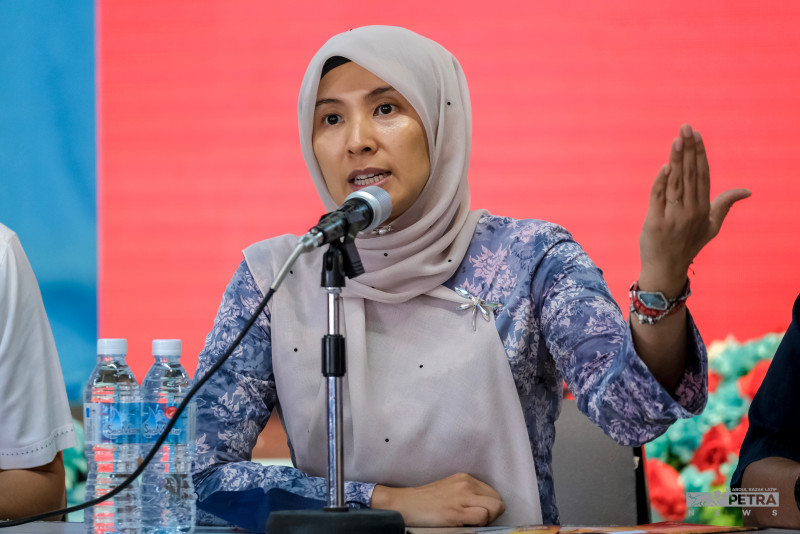

KUALA LUMPUR – Nurul Izzah Anwar has called all stakeholders to come together and play their role in eliminating cervical cancer.
Describing it as a cancer that no woman, mother, sister or daughter should face, she stressed that it was something that was preventable through vaccination.
Due to the commitment from the Health Ministry and related government agencies, she said 90% of girls aged between 12 to 15 years old received the human papillomavirus (HPV) vaccine from 2010 to 2020.
“Although the programme slowed during the Covid-19 pandemic, the government is renewing efforts to restart it and vaccinate those who missed their HPV vaccination during the pandemic,” she said in a statement in conjunction with the Global HPV Consortium here.
Cervical cancer is by far the most common HPV-related disease.
According to her, data from Universiti Malaya showed that collective efforts in the last 10 years in Malaysia resulted in a 90% reduction in vaccine-targeted HPV types 16 and 18.
The prime minister’s daughter also shared an encounter in 2019 that moved her to action when she began to work closely with Prof Woo Yin Ling, founder of the ROSE programme in Malaysia, on the adoption of HPV DNA self-sampling for cervical screening.
She said she visited a woman from a remote village in Borneo, Malaysia who was hospitalised after being diagnosed with advanced cervical cancer.
“The woman had been bleeding for months but was too embarrassed to seek help.
The cost and time needed to travel to the local district hospital, about three hours away, also weighed heavily on her.
“Due to these, she silently carried on, hiding her pain, bleeding and tiredness, walking hours each day with a small child on her back to tap rubber and provide for her family,” she said.
By the time she was diagnosed, Nurul Izzah said the woman’s cancer had advanced, and despite best efforts by her medical team to manage the cancer, she died a few months later.
“This encounter left a profound effect on me and my team, strengthening our resolve to contribute towards the elimination of cervical cancer in Malaysia and globally.
“As a mother, I know how important it is to protect children from preventable diseases, including HPV-related cancers, and have chosen to vaccinate both my children,” she said.
Nurul Izzah, a former MP and strong women’s health advocate, said it was time the global community began recognising HPV vaccination and HPV DNA self-sampling for cervical screening.
“Just one vaccination between the ages of 12 - 15 and two high-precision HPV DNA tests in a woman’s lifetime can spare them the pain and suffering of cervical cancer.
“The cost of these two simple interventions is about RM1,000, which is truly a worthy investment,” she said.
She also stressed that more needs to be done to ensure every child in Southeast Asia, Asia and Africa has access to HPV vaccination and all women have access to high-precision HPV DNA testing.
“It is my hope that discussions at the Global HPV Consortium will be impactful and enable policymakers, government representatives, clinicians and other experts to collectively ensure that cervical cancer is eliminated in our lifetime,” she added.
Among the countries participating in the Global HPV Consortium are Malaysia, Indonesia, Brunei, Egypt, Senegal, Nigeria, South Africa, Malawi, Brazil, Argentina, India and Singapore. – The Vibes, September 6, 2023