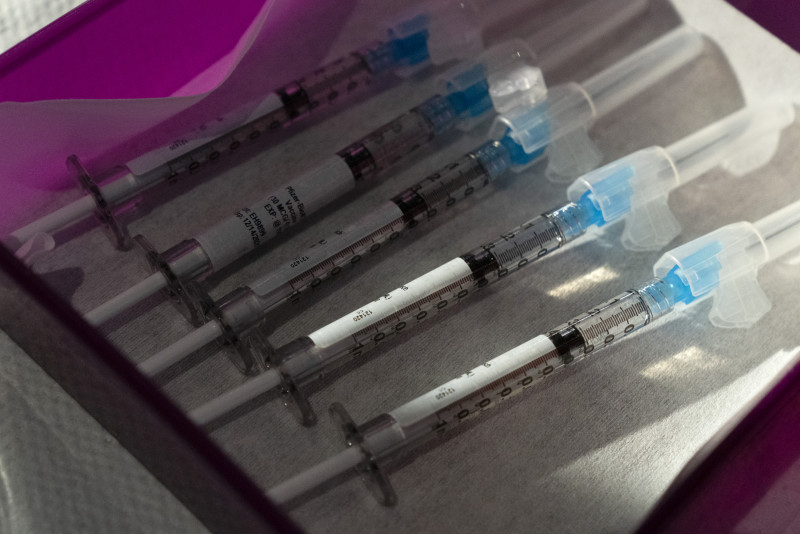

KUALA LUMPUR – The key to Malaysians receiving their Covid-19 vaccines in the safest and fastest way lies in the decisions taken by the National Pharmaceutical Regulatory Agency (NPRA).
As the issue of safety is paramount, said Galen Centre for Health and Social Policy chief executive Azrul Mohd Khalib, it is necessary for the Health Ministry agency to review and determine the matter.
“Although various drug agencies have approved and authorised the use of the Pfizer-BioNTech vaccine, ultimately, it is up to NPRA to make up its mind.”
Among those that have approved the vaccine are the US Food and Drug Administration, the UK’s Medicines and Healthcare Products Regulatory Agency, Health Canada, Bahrain’s National Health Regulatory Authority, and Saudi Arabia’s Food and Drug Authority.
“It is essential that this process and status determination be cleared as soon as possible. Delays will result in Malaysia slipping further down the list of countries that want the delivery of the vaccine for their population,” he told The Vibes.
He said NPRA’s decisions are one of three concerns over the government’s recently announced Covid-19 vaccination programme.
“Secondly, the logistical burden, specifically the cold chain involved in safeguarding the integrity of the vaccines, especially the Pfizer-BioNTech vaccine, will need to be addressed.”
He said experts must have an honest and open discussion on Malaysia’s capacity to meet such requirements.
“This is to inform not only the public, but also include the healthcare professionals who will be involved in this undertaking.”
He expressed doubt over Putrajaya’s ability to roll out and mobilise the programme at the required scale and level, should the vaccine be available today.
“This is on a scale and urgency that we have never experienced before in the history of not only this country, but any country in the world.
“As we are still in the midst of mitigating and managing the outbreak, the same people who might be needed to supervise and guide the deployment of the vaccine are currently preoccupied.”
He suggested that any plans by the government be shared with the public to promote confidence and erase doubt.
“If we depend solely on the public health system, we may not have enough manpower. Whatever it takes, we must also involve the private sector in a ‘holistic society’ approach.
“The government should not, and cannot, do it alone.”
Azrul dismissed issues raised by Gua Musang MP Tan Sri Tengku Razaleigh Hamzah over the programme, which will supposedly incur high costs.
“Many of the points raised by Ku Li (Tengku Razaleigh) in his alleged statement are, frankly, factually wrong, involve pseudoscience, and border on arguments used by anti-vaxxers (the anti-vaccine movement), who aim to discredit not just the Pfizer-BioNTech vaccine, but any vaccine developed through this international effort. They need to fact check.”
The Galen Centre’s own estimates put the cost of acquiring the vaccine at RM1 billion for 12.8 million doses, based on the publicly announced pricing of US$19.50 (RM79) per dose, he said.
“Interestingly, (Science, Technology and Innovation Minister) Khairy Jamaluddin’s recent statement indicated that the cost for Malaysia for the Pfizer-BioNTech vaccine is significantly less than RM100 per dose, which includes delivery to multiple points of vaccination.
“This would be the best cost-effective solution, as it means that the pharmaceutical company would also be responsible for the delivery of the vaccine to the vaccination sites.”
He expressed caution over which vaccine will be be acquired through the Covax initiative, and the logistical requirements that must be met.
“It can be presumed that the Pfizer-BioNTech vaccine represents the extreme. Based on what we currently know of the vaccine candidates under the initiative, existing cold-chain facilities are sufficient.”
The government needs to manage expectations once the programme begins its roll-out, he said, as it could take up to two years, under good circumstances, for 70% of the population to be protected.
“Vaccines are not magic bullets that can work in isolation. In order for them to work properly, we need to ensure that the right populations get vaccinated and protected first, and in sufficient quantities.
“We need to ensure that the people continue to follow existing SOPs and practices, and not be complacent.”
Khairy has assured the public that Putrajaya will not bulldoze through Covid-19 vaccination under the pretext of an emergency.
He tweeted that immunisation exercises will be approved only after getting the green light from NPRA.
Last month, the minister told the Dewan Rakyat that Malaysia will pay RM94 million upfront for access to vaccines procured through Covax.
As for the price tag of the Pfizer-BioNTech vaccine, he told the parliamentary sitting on Wednesday that it is estimated at RM3 billion.
Malaysia’s agreement with Pfizer – involving 12.8 million doses – made it the first country in Southeast Asia to announce a deal with the US drug maker.
Reservations have been expressed over storage of the vaccine, which must be kept in ultra-cold temperatures.
Pfizer is expected to deliver a million doses to Malaysia in the first quarter of 2021, followed by staggered batches of 1.7 million, 5.8 million and 4.3 million doses over the year. – The Vibes, December 15, 2020