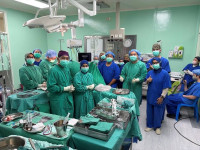
Transplantation represents one of the most profound expressions of modern medicine: the transfer of living tissue or organs to restore life where disease has destroyed it. It is science at its most human - the merging of surgical precision, immunological mastery, and moral generosity. Transplantation is not merely a medical procedure; it is a measure of a nation’s governance, compassion, and coordination.
Across the world, organ transplantation has become the gold standard for treating irreversible organ failure, whether of the kidney, liver, heart, lung, or bone marrow. Yet in Malaysia, despite five decades of medical expertise and broad moral consensus on the value of organ donation, our transplantation system remains adrift without a solid legislative and policy foundation.
Transplantation is not only a clinical achievement - it is a human contract between giver and receiver. For every successful transplant, there is a donor who gave selflessly and a family who said “yes” in a moment of profound loss.
The Realities
In high-income countries, organ transplantation has moved from miracle to routine. National donor registries, integrated transplant networks, and public awareness campaigns have made the “gift of life” a social norm. In Malaysia, however, transplantation remains largely hospital-based, driven by the dedication of individual clinicians rather than an aligned national framework.
Malaysia’s transplantation landscape continues to operate largely under the Human Tissues Act 1974, a law written before the era of modern transplantation. While the Act allows organ donation, it is outdated, vague, and ill-equipped to regulate the ethical, clinical, and logistical realities of 21st-century transplant medicine.
Unlike countries such as Singapore, the United Kingdom, and Australia - all of which have dedicated Transplantation Acts that clearly outline governance, consent, allocation, and accountability - Malaysia’s framework is fragmented across ministries, hospitals, and voluntary networks. This lack of legislative clarity translates into inconsistent practices, limited donor identification, and poor coordination between hospitals that could retrieve organs and those that wait for them.
More than half a decade after Malaysia enacted the Human Tissues Act to allow organ donation after death, deceased donor transplantation is still rare. The annual number of organ transplants across all organ types remains in the low hundreds, while thousands wait in vain. The contrast between need and delivery is both sobering and urgent.
Fragmented Oversight, Fractured Outcomes
At present, transplantation in Malaysia spans multiple jurisdictions:
• The Ministry of Health oversees clinical licensing.
• The National Transplant Resource Centre manages donor logistics.
• Individual hospitals conduct their own programmes.
However, coordination is limited. There is no unified national registry that tracks donor referrals, consent rates, waiting lists (except for kidney), or post-transplant outcomes across organ types.
A centralised governance model — as implemented in Spain’s Organización Nacional de Trasplantes or the UK’s NHS Blood and Transplant — has been shown to dramatically increase donation rates through accountability, data-driven policy, and continuous quality improvement. Malaysia needs a similar model tailored to its cultural and religious context.
Why Governance Matters
Transplantation is one of the most regulated medical fields globally because it straddles life, death, and morality. Effective governance ensures:
• Transparency in organ procurement and allocation
• Equity between private and public recipients
• Accountability to prevent coercion, commercialisation, or exploitation
• Public confidence, which is essential for donor consent
Without a dedicated transplant law and central authority, Malaysia’s system depends on ad hoc committees and hospital goodwill rather than enforceable policy. This weakens public trust, discourages donor registration, and leaves clinicians without clear legal protection when making difficult decisions about end-of-life organ retrieval.
The Need for a National Transplant Bill
Malaysia urgently needs a Transplantation Bill — not only to modernise legal definitions but to establish a national governance framework that integrates ethics, clinical standards, and accountability. Such a bill should:
1. Establish a National Transplant Authority (NTA) with regulatory and coordinating powers. 2. Define brain death and consent procedures clearly, harmonising with religious and cultural guidance.
3. Mandate transparent organ allocation systems based on clinical criteria and fairness, audited annually.
4. Protect living donors, including financial coverage, post-donation health monitoring, and legal representation.
5. Criminalise organ trafficking and commercialisation with clear prosecutorial powers.
6. Institutionalise public education and engagement to ensure sustained public trust.
This is not bureaucracy for its own sake; it is the infrastructure of ethical medicine. Without it, Malaysia’s transplant system will continue to rely on goodwill rather than governance
Ethics and Equity: A Balancing Act
In the absence of a national policy, disparities have emerged. Patients in major urban centres have better access to transplant programmes, while those in rural or East Malaysian regions remain disadvantaged. Meanwhile, living donors often face out-of-pocket expenses, employment disruption, and uncertainty about long-term health support.
A well-crafted transplant policy can bridge these inequities — ensuring that access to lifesaving therapy is determined by medical need, not geography or socioeconomic status.
Beyond Medicine: Building Trust and Transparency
No policy will succeed without societal trust. Malaysians must see transplantation as a national moral priority, not a technical issue confined to hospitals. This requires visible governance: a body that reports transparently on outcomes, audits donation processes, and engages with faith and community leaders to dispel misconceptions.
In many ways, Malaysia does not lack compassion — it lacks confidence in the system. Governance can restore that confidence.
Malaysia must do more to honour and support both donors and recipients. Living donors should receive comprehensive long-term follow-up and social protection. Deceased donors should be recognised through national remembrance programmes. These gestures are not symbolic; they reinforce a culture of respect that encourages others to give.
Building a National Transplant Vision
A sustainable transplant ecosystem requires coordinated governance, data transparency, and equitable access. A National Transplant Roadmap should articulate a 10-year vision to: • Expand transplant infrastructure across all major regions, not only selected tertiary or quaternary centres.
• Integrate organ donation pathways into Emergency Department, Intensive Care Unit, and end-of-life care protocols.
• Streamline national registries for matching, allocation, and post-transplant surveillance.
• Operationalise a robust National Organ Waiting List with preset criteria for normal and urgent listing.
• Invest in training and research in transplant surgery, immunology, and bioethics.
• Promote public–private partnerships to enhance access to technology, laboratory capacity, and immunosuppressive therapies. Such a roadmap would shift transplantation from a hospital initiative to a national health policy priority, aligning with Malaysia’s aspirations for equitable, high-quality universal healthcare.
Ethics, Innovation, and Equity
The transplant frontier is advancing rapidly - from living donor exchange networks to bioengineered tissues, xenotransplantation, and gene-edited organs. Malaysia has the expertise to participate in this frontier, but it must be anchored by strong ethical and legal frameworks. Policies must ensure fairness in allocation, transparency in procurement, and absolute prohibition of commercial exploitation or trafficking.
Technology can support these goals - through digital registries, blockchain-based allocation systems, and AI-assisted matching - but ethical vigilance must remain our compass
Changing the Narrative
Public perception is perhaps the most powerful determinant of progress. Organ donation should be reframed not as loss, but as legacy - the ultimate act of human continuity. Media, schools, and community organisations can help normalise the conversation about donation. Religious and cultural leaders can bridge understanding. Hospitals can lead by example by institutionalising donor awareness days, patient stories, and family support networks.
Every successful transplant tells a story not only of medical skill, but of collective humanity.
Conclusion: A National Call to Action
Transplantation in Malaysia is not merely a technical issue; it reflects national values — compassion, solidarity, and social justice. It demands not just clinical excellence, but political will and public participation.
The science exists. Malaysia’s clinicians have demonstrated both skill and compassion. What we now need is structural courage: a government-backed framework that enshrines ethics, transparency, and accountability into law. We must build a system that gives every Malaysian, regardless of wealth or geography, the chance at a new beginning.
If we truly believe in the sanctity of life, then transplantation must move from being a possibility to becoming national policy.
The time has come to shift from scattered effort to structured governance. A National Transplantation Act is not just paperwork - it is the legal embodiment of Malaysia’s commitment to save lives with integrity. – November 14, 2025
Dr. Rosnawati Yahya, Consultant Nephrologist and Transplant Physician