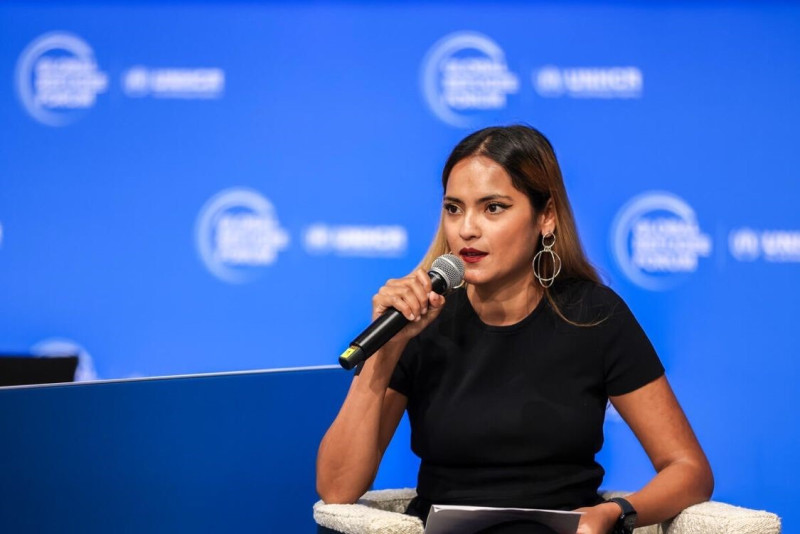
A SPEECH by Rohingya activist Noor Azizah (pic) at an international awards ceremony in Australia has triggered a broader public debate over the responsibilities of refugee advocates and the limits of criticism directed at countries that have provided shelter to displaced communities.
While Noor Azizah sought to highlight the continuing hardships faced by Rohingya refugees across Southeast Asia, including in Malaysia, many social media users viewed her remarks as an unfair portrayal of a country that has, for decades, accommodated thousands fleeing violence and persecution in Myanmar.
The controversy erupted after a clip of her acceptance speech for the Marie Claire Women of the Year 2025 award in the Voice of Now category resurfaced online and gained traction on social media platforms.
Addressing the audience, Noor Azizah drew attention to the situation of Rohingya children in Malaysia and broader challenges confronting the refugee community in the region.
“Today in Malaysia, more than 2,000 Rohingya children are confined in immigration detention centres, growing up behind bars instead of in classrooms.
“In Indonesia, hate speech, false information and disinformation flood social media, while in Thailand, human trafficking syndicates trade Rohingya bodies like currency,” she said.
Reflecting on the Rohingya experience after fleeing Myanmar, she added: “After we fled Myanmar, violence continued to follow us. You may know Malaysia, Indonesia and Thailand as holiday destinations for you and your family.”
While the speech was intended to spotlight ongoing humanitarian concerns, critics argued that it disproportionately focused on host countries rather than the Myanmar military regime, widely blamed for creating one of the world's most protracted refugee crises.
Many Malaysians responding online questioned why the activist had not used the international platform to condemn the Myanmar junta more forcefully.
Harian Metro cited one social media user, m.shuhaimisalleh, saying: “She should have used the platform given to her to condemn the brutality of the Myanmar junta rather than focusing criticism on ASEAN countries that have accepted Rohingya refugees.”
Others framed the issue as one of appreciation, arguing that Malaysia's long-standing willingness to host Rohingya refugees deserved greater recognition.
A user identified as doredeee wrote: “She sought refuge in Malaysia and was given a second chance, yet she chose to criticise the country that provided protection to her people.”
Another user, loveiskayla18, expressed a similar view, saying Noor Azizah should concentrate her advocacy efforts on securing justice and rights for the Rohingya in Myanmar rather than criticising countries that opened their doors to those fleeing persecution.
The episode underscores a recurring tension within refugee discourse: whether highlighting shortcomings in host countries strengthens the cause of vulnerable communities or risks alienating populations whose support remains essential to their protection.
As reactions continue to divide public opinion, the debate has evolved beyond a single speech into a wider discussion about gratitude, accountability and the complex realities facing refugees and the nations that receive them. - June 15, 2026