Professor Geoffrey Williams
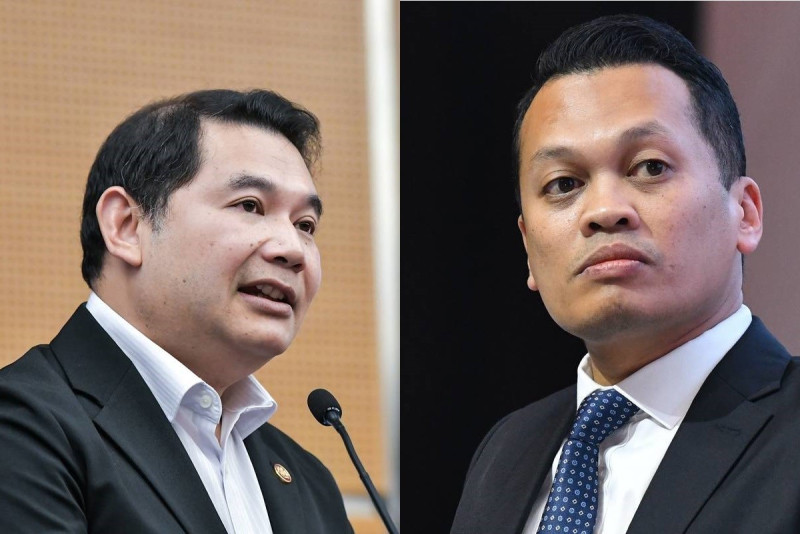
BELANJAWAN Bayangan Kancil 2027 from Parti BERSAMA Malaysia presents a comprehensive structural overhaul of Malaysia’s fiscal framework and has strong economic credentials, authored by former Economy Minister Datuk Seri Rafizi Ramli and economist Sum Dek Joe.
It sets aside traditional "firefighting" budget strategies and outlines a 10-year path to a balanced budget targeting a surplus by 2035. This is built upon sound forecasts and projections and is the first time I have seen a political party in Malaysia aim not just for a balanced budget but for a surplus.
The extra money saved will help to build a "Generational New Deal" that couples tax reform with direct, institutionalised social security and labour market restructuring. This means the aim of fiscal conservatism is clearly targeted at delivering social benefits.
BERSAMA projects 2026 GDP growth at 5.2%, which may be exceeded given current trajectories, and this will help deliver a fiscal deficit and federal debt of 3.5% of GDP each. While expecting GDP growth to moderate to 4.0% – 4.5% next year their plans still 2027 GDP Growth Forecast put the economy on track to reduce the fiscal deficit to 1.8% of GDP and federal debt to 56.4% of GDP by 2031. This will achieve a federal budget surplus by 2035 according to their projections.
They are realistic about diagnosing key economic issues. In particular, they point out that strong foreign-driven E&E exports have boosted GDP, but the widening gap with Real Gross National Income (GNI) shows that a significant share of economic gains accrues to foreign capital owners. This is correct.
They highlight wage compression and income stagnation as key concerns. Although labour productivity grew 9% between 2019 and 2025, real wages per employee fell by 1.7%, and Compensation of Employees (CE) sits at just 33.9%–34% of GDP. So, the benefits of economic growth are not translating into higher income for millions of people.
This leaves households financially vulnerable. The median household spends 79% of disposable income, but the bottom 40% (B40) spends 97.5%, leaving only about RM80 per month as a cash buffer. These are figures that voters will recognise as a day-to-day reality.
The primary pillars and policy recommendations are targeted at this economic scenario. To enhance government revenue, they propose to reintroduce Goods & Services Tax (GST) at 5% to generate RM76.1 billion (3.3% of GDP) compared to RM59.4 billion under expanded SST. This is an extra net increase of RM16.7 billion.
They give a binding condition to cap GST at 5% for 10 years and set the standard tax refund turnaround strictly to 30 days.
A new tax, which I have advocated, called the Retail Electronic Payment Tax (REPT), will expand tax revenue dynamically without raising income tax or GST rates. Following a 2-year administrative and technical study (2027–2029) with 0% tax, the REPT will be implemented in 2030 at a rate of 0.5% and is projected to raise RM9.1 billion annually.
A constitutional review of Articles 97 & 104 to allow ring-fenced tax revenue will be conducted. For example, 100% of tobacco excise duties of RM3 billion will be directly earmarked for the public health sector. Now all taxes go into the general fund.
On spending, they will phase out direct cash grant incentives exceeding RM50 million unless specifically approved by Cabinet and reported to Parliament, and establish mandatory, audited annual reporting on funds recovered from anti-corruption and economic crime enforcement.
A significant reform will replace bulk fuel subsidies with institutional social safety nets. Transitioning from the current BUDI MADANI fuel subsidy to market-floated prices for petrol and diesel will return RM19.9 billion in net annual fiscal savings, and the proceeds will directly fund a consolidated social security net.
Inefficient B40/M40/T20 categories will transition eligibility criteria from gross national income brackets to Net Disposable Income relative to Living Expenses (PAKW) adjusted for family size and geographic cost-of-living differences.
A new Ministry of Social Security will consolidate 189 fragmented social assistance programmes across 26 federal agencies under a single dedicated ministry.
Automatic, unconditional monthly cash payouts to B40, receiving 90% of the base support gap, and M40, receiving 65% of the base support gap, will replace fuel subsidies to households tied to global oil prices.
A Universal Child Allowance of direct payment of RM50 per month per child under 18 years old (capped at 5 children or RM250/month per household) will benefit around 8.3 million children at an annual cost of only RM5.3 billion.
A Cost-of-Living Allowance, or fixed, inflation-indexed payment of RM200 per month (RM2,400/year) for B60 households, will cost RM12 billion annually and benefit 5 million households, or 20 million people.
Most importantly, a new Two-Tier Senior Social Pension will provide universal income security for seniors aged 60 and over. Tier 1 will be RM600/month for seniors with no EPF savings or public pension. Tier 2 will top up payouts on a sliding scale for seniors with low EPF balances up to an RM390,000 threshold. This will benefit 3.1 million seniors at RM18.1 billion per year.
Strict fiscal rules and debt management governance will make it mandatory to permanently redeem and retire at least 2% of maturing government debt principal annually, rather than rolling over 100% via debt reissuance. Yields around RM7 billion in cumulative debt service cost savings by 2030.
A new independent Public Finance Commission (PFC) will be a constitutional fiscal watchdog modelled with SPR-level constitutional protections and SUHAKAM reporting mandates. The PFC will independently audit budget assumptions, verify mega-procurements, calculate long-term liabilities of Public-Private Partnerships (PPPs) and cost electoral manifestos.
Comprehensive labour market reforms based on Rafizi’s legacy Progressive Wage Policy (PWP) will rise to RM1.8 billion per year for 5 years and target 2.5 million low-to-mid wage workers to reverse wage compression.
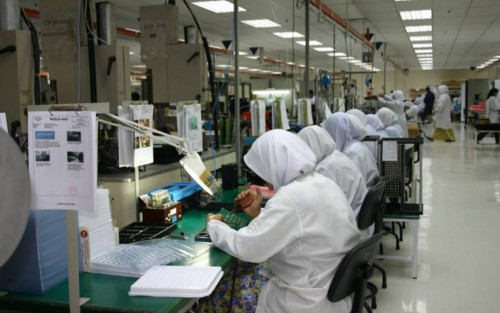
Low-skilled foreign labour will be capped under the foreign worker Temporary Employment Pass (PLKS) to a maximum non-renewable duration of 5 years and limit foreign workers to 8% of total employment by 2030.
A new Multi-Tier Foreign Worker Levy earmarks 100% of multi-tier levy revenue directly into an Automation Fund to co-fund SME technology adoption, and a Local Qualifying Salary (LQS) baseline starting at RM2,200/month will determine local-to-foreign hiring quotas.
The Gig Workers Act 2025 will be strengthened by requiring platform companies to make direct statutory social security contributions matching employee contributions for full-time platform workers. Mandatory algorithmic transparency and limits on platform commission rates will be introduced.
To help SMEs and address rent-seeking, a new Anti-Ali Baba Act omnibus law will define, criminalise and prohibit economic rent-seeking, nominee arrangements, and sub-leasing of government licenses, subsidies and quotas.
The Malaysian Competition Commission (MyCC) will serve as the lead agency prosecuting commercial Ali Baba practices and bid-rigging cartels. Local councils will be given powers to revoke licenses of local proxies sub-leasing premises to illegal foreign operators.
Debtor-in-Possession (DIP) and Rescue Financing will establish a functional DIP rescue financing market under Section 368B of the Companies Act. This protects viable SMEs from premature liquidation and reduces personal bankruptcy traps tied to personal guarantees.
Healthcare, education and long-term care will also be upgraded with a new Industrialised Education Infrastructure, establishing a state-backed IBS Corporation to standardise modular construction (using IBS and DfMA) to roll out universal preschool facilities within 3–4 years.
Long-Term Care (LTC) Insurance will introduce a mandatory LTC insurance contribution of 1% of salary (0.5% employee / 0.5% employer) starting at age 40 to fund eldercare tiers from RM600 to RM3,200/month.
A new independent Health Service Commission will centralise public healthcare workforce management, recruitment, career pathways, and deployment. An immediate RM2 billion Health System Stabilisation Fund in 2027 will address critical staffing burnouts and facility maintenance.
EPF withdrawals will be gradually aligned with the penalty-free EPF withdrawal age and the statutory minimum retirement age (60 years old) to prevent premature fund exhaustion.
To balance and share Federal-State revenues, BERSAMA proposes returning 5% of total GST collections directly to the state of origin based on economic activity. This automatically transfers around RM3.8 billion annually directly from the Federal Treasury to State Governments. It gives states a direct financial incentive to expand their local formal economy while granting greater fiscal autonomy for regional infrastructure development.
To assure voters that the transition from bulk fuel subsidies and SST to GST will not trigger a net decline in living standards, BERSAMA presents a calculated net-benefit ledger for 80% of Malaysian households.
For a B40 household, removing fuel subsidies and phasing out STR-SARA would cost them RM215 per month, but the new fuel allowance, cost of living allowance, child allowance and social pension will give them RM582 per month. This is a net gain of RM367 or an income increase of 11.2% on average.
Median and M40 households get net gains of RM557/month and RM539/month respectively, primarily boosted by the institutionalisation of senior social pensions.
Taken together, this is a comprehensive and fully funded Shadow Budget, unseen before in Malaysia, which sets out a clear economic agenda for BERSAMA and puts them well ahead of other political parties in the run-up to GE16, expected next year.
Professor Geoffrey Williams is an economist and policy specialist. The views expressed are his own.