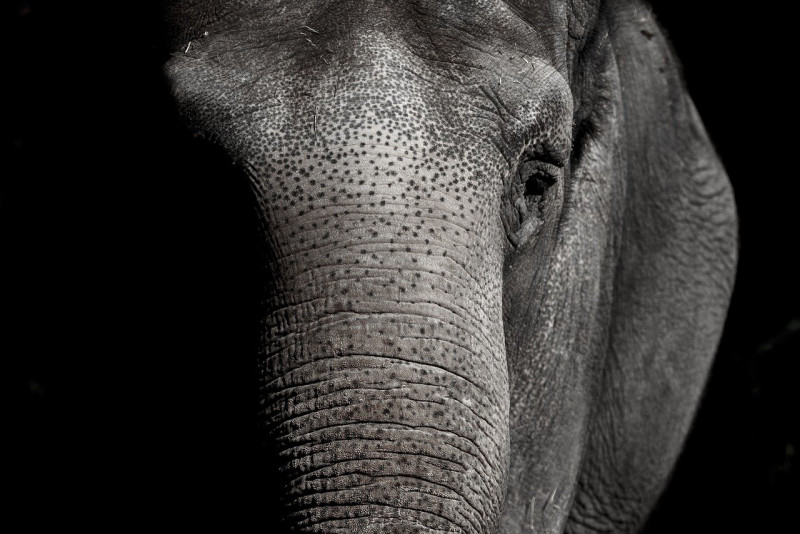

FOUR days ago, an elephant calf was found dead with bullet wounds in Kinabatangan, in Sabah’s east coast.
Earlier this month, two elephants were found dead in the same district, likely poisoned, according to wildlife authorities.
Yesterday, another elephant calf drowned... in the same district.
It is clear that Borneo pygmy elephants are dying at a faster rate, with cases suggesting the deaths to be of unnatural causes.
Sabah conservationist Alexander Yee said the deaths of local jumbos are a clear sign that these animals will go extinct before the end of the decade. The last count in 2006 estimated about 2,000 elephants left.
This terrible notion comes after Sabah lost the last Sumatran rhino in 2019.
Sabahans cannot help but speculate that there is a larger power at play, as cases involving pygmy elephant deaths often go unresolved.
The protection of elephants in Sabah falls under the state Wildlife Department, while the state Forestry Department is responsible for Sabah’s large tracts of forests.
However, the Wildlife Department has pointed to its shortage of manpower, including field enforcement officers, to check on the species’ welfare.
Unlike police, who would usually call a press conference on crimes and arrests, the Wildlife Department would only confirm an elephant’s death.
It doesn’t notify the media unless approached, while the details shared with the public are either bare or confusing.
For instance, several elephants were killed by snare traps in 2019, and their bodies were found either near a plantation or in a forest reserve.
In 2013, some 10 elephants from the same herd were found dead by the roadside near the Gunung Rara forest reserve.
Three years later, a pygmy elephant herd lost seven members, which were found in a mud pool near a timber camp in Rinukut, Tawau.
Between 2018 and last year, some 80 pygmy elephants were found dead of various causes, such as poisoning and poaching.
However, no concrete actions were taken against the perpetrators.
The number of human-elephant conflicts in Sabah has been increasing, as land clearing is carried out in many areas for the cultivation of cash crops like palm oil.
As revenue from these cash crops grows, it seems that Sabah wildlife is paying the price.
Conservation groups are also often silent on elephant deaths. Is it due to fear of repercussions?
There needs to be strong political will by the government of the day to end these deaths.
The state government attempted to impose stricter laws in 2016, such as amending the Sabah Wildlife Enactment 1997 to increase liability enforcement.
Strict liability makes it the responsibility of landowners to prove their innocence whenever an elephant or other species is found dead on or near their land.
The Parti Warisan Sabah-led state government attempted to introduce a 10-year action plan to address the issue, but it was ousted in the state polls last September.
So far, the Gabungan Rakyat Sabah administration has yet to comment on plans to protect the state’s wildlife. – The Vibes, January 25, 2021