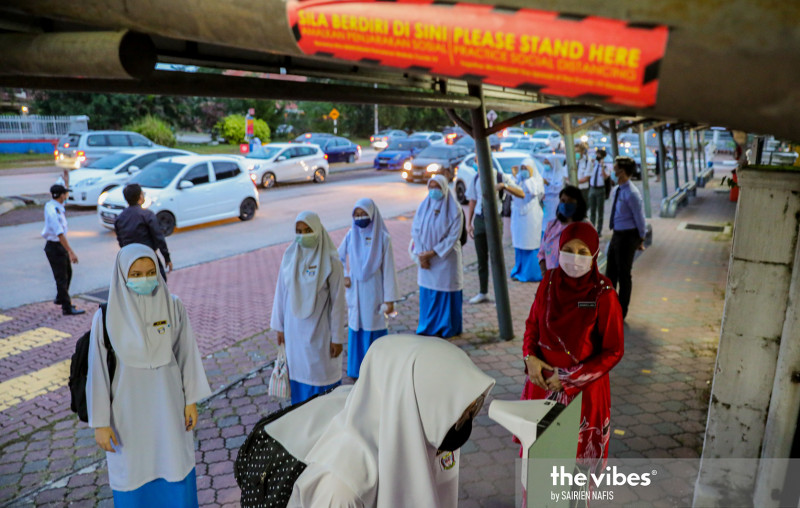
WHEN the news broke on Twitter on April 16, 2021 that female schoolchildren were being physically examined or required to furnish physical proof to verify if they were menstruating, one of the more shocking revelations was that this had in fact been going on for decades unchecked.
The justification by religious teachers, hostel supervisors, and dorm monitors for this invasive and degrading practise is that this is a “necessary” means to ensure that schoolgirls were not lying to get out religious obligations or – in some cases – physical education classes.
Following these allegations of “period checks”, there was much discussion on social media of harassment and humiliation by male students sometimes abetted by teachers, as girls spoke about their bodies being scrutinised, commented on, and in some cases prodded with rulers and other instruments and inappropriate spot checks that require girls to remove their bras to ensure they were not hiding “contraband” in their cleavage. Girls also spoke of being singled out for inappropriate attention by male teachers.
Girls experiencing puberty have to deal with physical changes, the caprice of menstrual cycles, and the discomfort of an adapting and growing body. It is documented that at this age, both boys and girls can experience fatigue, mood swings, and growing pains.
Any of these might be reason enough for a child to feel too unwell to be forced into participating in religious and cultural practises – and therein also looms the larger question of why they have to be forced to participate. Can there be any justification for this kind of molestation?
Girls, it would appear, live in a double bind. Culture and religion may require them to be compliant, submissive, pious, and modest. This enforced standard of modesty then puts them in a position where they are subject to scrutiny, which results in an utter disregard for their dignity, privacy, and respect for their bodies.
The result is that any person in authority can, under the guise of enforcing said piety and modesty, violate them in the most degrading and humiliating manner without fear of retribution.
In 2017, the Sexual Offences Against Children 2017 (Act 792 @ “SOACA”) was passed. It specifically provides for enhanced punishment of any person who commits a sexual offence against a child who is in a position of trust. This has been defined as a teacher, lecturer, or warden of a kindergarten, school, public institution of higher learning, or private institution of higher learning.
Section 14 of SOACA provides:
Any person who, for sexual purposes:
- (a) touches any part of the body of a child;
- (b) makes a child touch any part of the body of such person or of any other person;
- (c) makes a child touch any part of the child's own body; or
- (d) does any other acts that involve physical contact with a child without sexual intercourse,
commits an offence and shall, on conviction, be punished with imprisonment for a term not exceeding twenty years and shall also be liable to whipping.
The Act contains a further explanation that “In determining what constitutes sexual purposes, the court may take into consideration, among others, the part of the body that is touched, the nature and extent of the act of touching or the physical contact, and all other circumstances surrounding the conduct.”
Section 354 of the Penal Code further provides that “whoever assaults or uses criminal force to any person, intending to outrage or knowing it to be likely that he will thereby outrage the modesty of that person, shall be punished with imprisonment for a term which may extend to ten years or with fine or with whipping or with any two of such punishments”.
If the harassment extends online or on social media, then a perpetrator can be charged pursuant to Section 233(a) of the Communications and Multimedia Act which makes it an offence for “any person to knowingly make, create, solicit or initiate a communication which is obscene, indecent, false, menacing, or offensive with the intent to annoy, abuse, threaten, or harass another person, and this carries a penalty of up to RM50,000 or one year’s imprisonment”.
For any of these laws to operate though, there needs to be a commitment to actively pursue and investigate these complaints. As things stand, a total of 1,721 cases of sexual crimes against children were recorded from January to June 2020. Based on statistics from the police, there were 651 rape cases, 344 molest cases, 106 incest cases, 106 unnatural sex cases, and 514 cases under SOACA in that period. It is a number that should cause some degree of concern given that there may be many more cases that go unreported.
What are girls to understand about their worth and their bodies when teachers can make jokes about rape as part of a dialogue on sexual harassment? How do we expect girls to speak up about harassment when their complaints are dismissed as symptom of “girls being over sensitive”.
When explicit rape-threats to a female student by her classmate in retaliation against perceived outspokenness are classified as “teasing and jokes”, the message being sent out to girls everywhere is that their complaints will not be taken seriously; that their safety doesn’t matter; that their dignity doesn’t matter; that their bodies don’t matter.
If we can’t or won’t believe girls when they say they are unable to fulfil their religious obligations or take part in physical activity, without the need for invasive and humiliating checks to ensure they are not lying, then can we expect girls to believe that we will take their word for anything else?
For things to change, we first need to recognise the effects of institutional misogyny and sexism. As Covid-19 numbers continue rise yet again, let’s hope it’s not used as excuse to sweep the long-term systemic harassment and humiliation of girls under the carpet. The girls of Malaysia deserve better, the question is will we fail them yet again? – The Vibes, April 27, 2021
Sheena Gurbakhash is the president of the Association of Women Lawyers, a non-governmental organisation for the promotion of the rights, welfare, and professional development of women lawyers and law graduates in Malaysia