THE rulings of the Hague Court of Appeal in the Netherlands and the Paris Court of Appeal in dismissing the Sulu claimants’ application for recognition and enforcement of a purported arbitral award of US$14.9 billion (RM62.59 billion) have been hailed as landmarks.
However, let’s not forget that the rulings of both courts are consistent with the rulings of the Malaysian judge who had years earlier heard the Malaysian government’s application in 2019 for a number of declarations, including that there was no arbitration agreement in the 1878 agreement. (See Government of Malaysia v Nurhima Kiram Fornan & Ors [2020] MLJU 425).
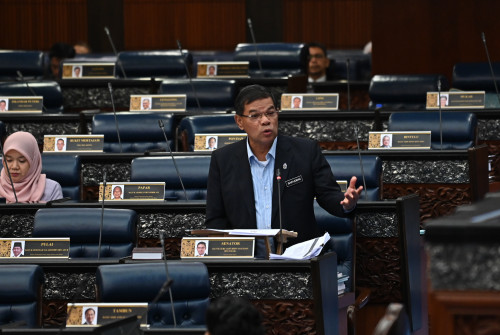
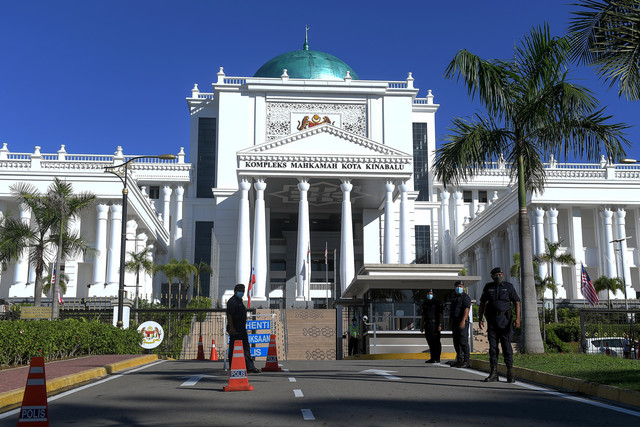
Kota Kinabalu High Court Judge Mairin Bin Idang had ruled that there was no provision in the 1878 agreement that could be construed either expressly or impliedly indicating the parties’ consent or intention to refer disputes arising from the agreement to arbitration.
In his judgement, the learned high court judge said:
“There is no provision in the agreement to indicate the parties’ agreement to submit their dispute to arbitration. There is also no provision to show that arbitration is the exclusive forum in which disputes between parties are to be resolved.
“Furthermore, it has been clearly and expressly provided for in the agreement that any dispute that arises between the parties to the 1878 agreement shall be submitted to Her Britannic Majesty’s Consul-General for Borneo.
“I found that such submission of disputes to Her Britannic Majesty’s Consul-General for Borneo could not be regarded as an actual reference to arbitration. There is not an iota of evidence to infer that such reference ipso facto means a reference to that entity to act as an arbitrator.”
The learned judge then referred to a 1939 civil suit between Dayang-Dayang Haji Piandao Kiram of Jolo, Philippines & eight others and the government of North Borneo & others where the plaintiffs, who were ostensibly the Sulu heirs, had applied to the then high court of the state of North Borneo for a declaration that they were entitled to receive the cession monies payable by the government of North Borneo under the 1878 agreement.
The chief justice of the state of North Borneo at that time, C.F.C. Macaskie in his ruling allowed the relief sought by the plaintiffs. Of the chief justice’s ruling, Justice Mairin said:
“Such ruling is of great significance. It shows that even the heirs and successors of the sultan of Sulu have recognised and acknowledged that there is no arbitration provision in the 1878 agreement.
“The act of the heirs and successors of the late sultan of Sulu in bringing their cause before the high court of the state of North Borneo must be deemed as waiver of any form of arbitration under the agreement.
“In addition,...if the dispute settlement provision is to be regarded as an arbitration agreement, such provision would be rendered inoperative and incapable of being performed as the position of Her Britannic Majesty’s Consul-General for Borneo no longer exists.”
So, in saluting the rulings of the French and Dutch judges, let’s also celebrate and take pride in the acute judgement of the country’s own Justice Mairin.
It must be remembered as well that the learned judge was well aided by two senior federal counsels (SFCs) who submitted with authorities on the law and principles of arbitration before the judge.
Both SFCs, Alice Loke Yee Ching and Narkunavathy Sundareson, are now respectively a high court judge and a judicial commissioner respectively. – The Vibes, June 28, 2023
Hafiz Hassan reads The Vibes