CLIMATE CHANGE has disastrous health impacts.
As a medical humanitarian organisation, Medecins Sans Frontieres / Doctors Without Borders (MSF) is already seeing these impacts on the people we treat in over 70 countries around the world.
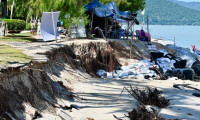
This year, powerful Cyclone Mocha hit Myanmar and Bangladesh and destroyed not only communities, but refugee camps. In years past, we have seen strong typhoons such as Haiyan in 2013, which laid waste to central Philippines and caused widespread flooding in Indonesia which have submerged homes and destroyed properties.
But it is not just cyclones and super typhoons. July 2023 was recorded as the planet’s hottest month in 174 years, resulting in Canadian wildfires, major heatwaves in France, Spain, Germany, Poland and Italy, and marine heatwaves along coastlines from Florida to Australia.
In short, these weather events are happening all over the globe with greater frequency and impact.
Disease and malnutrition
While these are the most obvious, climate change has other impacts on health, particularly on disease. MSF is responding to high levels of vector-borne, food-borne, and water-borne diseases in our projects which is worrying, as this is projected to increase as the climate crisis accelerates. It is predicted that there will be 15 million more cases of malaria yearly, with 30,000 deaths linked to that, in addition to what we are already seeing now.
One billion more people are expected to be exposed to dengue, not only in Asia Pacific, where it is much more prevalent, but across the world. European Union officials recently warned that there is a growing risk of mosquito-borne viral diseases such as dengue and chikungunya in Europe due to climate change. We have seen cholera outbreaks in at least 30 countries. While this is due to multiple factors, climate change is most definitely one of them.
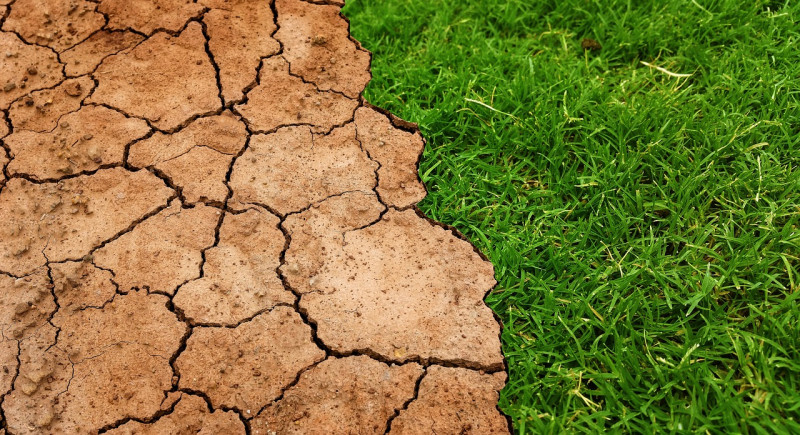
Climate change is also linked to food insecurity and malnutrition. With extreme weather events such as heat waves and increased rainfall come droughts and floods that impact farming and fishing communities, affecting everything from the yield of crops grown, to the animals that till the soil, to the number of fish caught in nets.
It does not end there. Other impacts of climate change include the spread of non-communicable diseases; forced displacement and migration; and the emergence of conflicts, among others.
And all of these are expected to intensify over time – unless we take urgent action.
Humanitarian organisations like MSF are already seeing these impacts and treating patients in the most vulnerable communities. But we can only do so much.
We are seeing huge needs everywhere we go, from Asia-Pacific to the Middle East, and the African nations. Countries with limited resources are enduring the worst of the devastation brought by the climate crisis.
Countries need to be responsible
Our Rohingya patients in Cox’s Bazar, Bangladesh – who have endured decades of persecution and are already burdened by being contained in the world’s largest refugee camps – are repeatedly threatened by floodings and cyclones that come their way. Our patients in the island nation of Kiribati face climate and environmental changes that threaten their livelihoods and exacerbate their disease risks.
We have been sounding the alarm. We see these huge needs brought about by the climate crisis, and we fear that these needs are outstripping our capacity to respond.
We need the countries most responsible for this global warming of 1.2 degrees above pre-industrial levels to help those who are most affected, to take responsibility, and to provide financial and technical support to those most vulnerable. Governments of the most affected countries, including in Asia Pacific, must not only compel the top polluters to help them mitigate and manage the impacts of climate change, but also put in place policies and affirmative climate actions in addressing and reversing the impact of these issues.
Already we are seeing commitments from world leaders. At their recent meeting, G20 nations have committed to a greener and more climate-resilient health system. The Association of Southeast Asian Nations (Asean) – which has five of the world’s 20 most at-risk countries located in the region – has announced an ambitious strategy to work towards carbon neutrality. The COP28 agenda in November has an increased focus on health, relief and disaster response.
This is an important and critically urgent moment. These commitments are ambitious, but member states of these regional blocs must see them through and take real action. Today, we are dangerously off track and urgent action needs to be taken now.
The climate crisis requires a whole-of-society approach. People and organisations must also understand that our own behaviours are a part of the problem. We need to respond together, in solidarity with all, for the health of all. – The Vibes, September 30, 2023
Dr. Maria Guevara is the current international medical secretary for Doctors Without Borders.