THE United Arab Emirates declared on Tuesday that it would withdraw its remaining forces from Yemen, bringing an end to what it described as counterterrorism operations in the country, in the wake of rising tensions with Saudi Arabia and the separatist Southern Transition Council (STC).
Aljazeera cite today that the announcement followed demands from Yemen’s internationally recognised government for the UAE to pull its troops within 24 hours, a call backed by Riyadh.
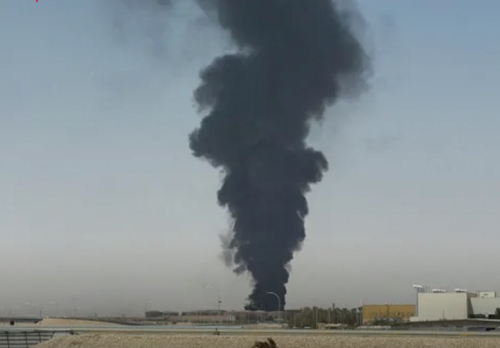
Hours earlier, Saudi-led coalition forces struck the southern port of Mukalla, targeting what the kingdom said was a UAE-linked weapons shipment intended for the STC.
The STC, which initially supported the government against Houthi rebels, has launched an offensive this month to secure an independent southern state.
Its advances have seized broad swathes of southern Yemen, including Hadramout and Mahara provinces, challenging both the Saudi-backed government and warnings from Riyadh.
Saudi Arabia has accused the UAE of supporting the STC, allegations Abu Dhabi denies. In a statement, the UAE Ministry of Defence said it had conducted a “comprehensive assessment” of its role in Yemen and would end its mission in a manner that prioritises the safety of its personnel.
“In light of recent developments and their potential implications for the safety and effectiveness of counterterrorism missions, the Ministry of Defence announces the termination of the remaining counterterrorism personnel in Yemen of its own volition, in a manner that ensures the safety of its personnel,” the statement said.
The withdrawal highlights a growing rift between the UAE and Saudi Arabia, once close allies in the coalition against the Houthi movement. Emirati forces first entered Yemen in 2015 but had already reduced their presence in 2019, leaving only a limited deployment in the south.
Following the Mukalla strike, Rashad al-Alimi, head of Yemen’s Saudi-backed presidential council, dissolved a defence pact with the UAE and ordered its forces to leave within 24 hours.
Al-Alimi said that it had been “definitively confirmed that the UAE pressured and directed the STC to undermine and rebel against the authority of the state through military escalation,” according to Yemen’s state news agency.
Saudi Arabia issued a strong statement criticising Abu Dhabi, warning that the STC’s military actions in Hadramout and Mahara near the kingdom’s borders posed a direct threat to its national security.
“In this context, the kingdom stresses that any threat to its national security is a red line, and the Kingdom will not hesitate to take all necessary steps and measures to confront and neutralise any such threat,” Riyadh said.
The UAE expressed surprise at the strike, insisting that the shipments did not contain weapons and were intended for its forces, but called for a solution “that prevents escalation, based on reliable facts and existing coordination.”
Despite the mounting pressure, the STC has remained defiant. “It is unreasonable for the landowner to be asked to leave his own land. The situation requires staying and reinforcing,” STC spokesman Anwar al-Tamimi told AFP. “We are in a defensive position, and any movement toward our forces will be responded to by our forces.”
In response to the escalating situation, Yemeni authorities declared a 72-hour no-fly zone and imposed sea and land blockades on all ports and crossings.
The rapid developments mark a significant deterioration in relations between the UAE and Saudi Arabia and signal a new phase of uncertainty in southern Yemen. - December 31, 2025