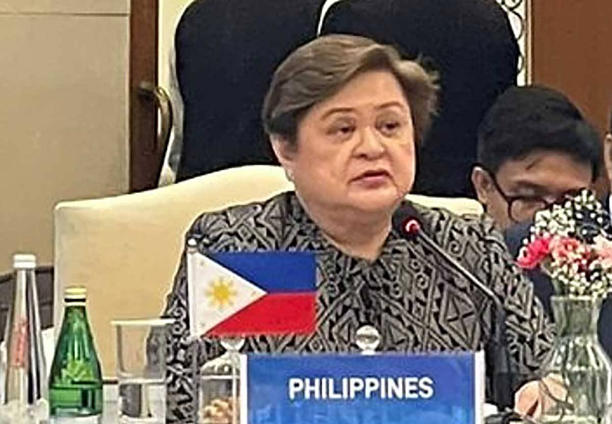
THE Association of Southeast Asian Nations (ASEAN) has formally declined to recognise the results of Myanmar’s latest elections, the first since the army seized power in 2021, Philippine Foreign Secretary Theresa Lazaro announced on Thursday.
AP cited that the military-backed Union Solidarity and Development Party claimed victory in the vote, but the bloc’s refusal marks a significant setback for the junta’s bid for legitimacy on the international stage.
“Yes, as of now,” Lazaro said when asked whether ASEAN recognised the Myanmar elections, adding that the bloc “has not endorsed the three phases of the elections that were held.”
She did not elaborate on whether the stance could change in the future.
Lazaro made the remarks after hosting ASEAN’s first major ministerial meetings of the year in Cebu, where the Myanmar crisis featured prominently on the agenda.
The elections, widely criticised as neither free nor fair, saw major opposition parties excluded and dissent strictly controlled. In addition, a quarter of parliamentary seats are automatically reserved for the military, ensuring continued dominance by the armed forces and its favoured political party.
Critics have described the polls as an effort to legitimise military rule following the coup that ousted the elected government of Aung San Suu Kyi in 2021, plunging Myanmar into a protracted civil war.
The Philippines, which holds ASEAN’s rotating chair this year, assumed the role after Myanmar was suspended from chairing the bloc due to the coup.
Lazaro highlighted the challenges of ASEAN’s diverse membership, which spans vibrant democracies such as the Philippines to authoritarian states like Laos and Cambodia, both of which maintain close ties with Beijing.
The minister warned that regional unity remains fragile, citing past conflicts such as the deadly border clashes between Thailand and Cambodia last year, which were only resolved through a US-backed ceasefire.
She also stressed the urgency of ongoing negotiations with China on a South China Sea “code of conduct,” aimed at addressing overlapping territorial claims involving the Philippines, Malaysia, Vietnam, and Brunei.
“Across our region, we continue to see tensions at sea, protracted internal conflicts and unresolved border and humanitarian concerns,” Lazaro said in her opening address to ASEAN counterparts.
She cautioned that “developments beyond Southeast Asia, including unilateral actions that carry cross-regional implications, continue to affect regional stability and erode multilateral institutions and the rules-based international order.”
ASEAN’s refusal to recognise Myanmar’s elections reflects both the bloc’s commitment to a rules-based approach and the broader diplomatic tightrope its members face, balancing relations with the United States and China while attempting to maintain regional stability amid internal and external pressures. - January 30, 2026