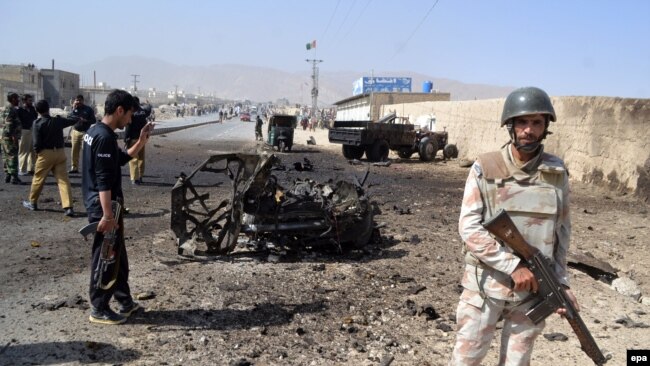
PAKISTANI security forces have killed 145 militants over a 40-hour period after coordinated assaults across Balochistan, the southwestern province’s chief minister, Sarfaraz Bugti, announced on Sunday, marking one of the deadliest escalations in years.
The attacks highlight the ongoing threat posed by insurgents in the resource-rich province, which borders Iran and Afghanistan. Separatist militant groups have increasingly targeted security personnel, civilians, and infrastructure.
Reuters, on Sunday, cited Bugti telling a press conference in Quetta that the death toll includes militants killed in raids on Friday and Saturday, as well as additional casualties during ongoing clearance operations.
He added that 17 law enforcement personnel and 31 civilians also lost their lives in the attacks.
He described the figure of 145 militant deaths as the highest recorded in such a short span since the insurgency intensified, without providing detailed comparative statistics. Earlier, the military had reported 92 militants killed on Saturday alone.
The banned separatist group Baloch Liberation Army claimed responsibility for the assaults, saying it had launched a coordinated operation dubbed Herof, or "black storm," targeting security forces across the province.
Pakistan’s military alleged on Saturday that the attacks were carried out by "Indian-sponsored militants." India denied the claims on Sunday, accusing Islamabad of attempting to deflect attention from domestic issues.
"We categorically reject the baseless allegations made by Pakistan," Indian Foreign Ministry spokesperson Randhir Jaiswal said. "Pakistan should instead address long-standing demands of its people in the region."
The violence erupted simultaneously across several districts, including Quetta, Gwadar, Mastung, and Noshki, prompting large-scale operations by the army, police, and counterterrorism units. Hospitals in affected areas were placed on emergency footing.
Authorities confirmed that security forces successfully repelled attempts by militants to seize control of any city or strategic installation. Balochistan, Pakistan’s largest and poorest province, has faced a decades-long insurgency led by ethnic Baloch separatists seeking greater autonomy and a larger share of its natural resources.
Pakistan has also confronted periodic attacks by Islamist militants elsewhere in the country, including factions linked to the Pakistani Taliban. - February 1, 2026