THE United States and Russia have agreed to resume high-level military dialogue, the first such engagement in more than four years, in a move signalling a cautious thaw in relations since President Donald Trump returned to office and pursued efforts to end the war in Ukraine.
AP reported on Saturday that the military communication channel, suspended in late 2021 amid rising tensions prior to Russia’s full-scale invasion of Ukraine in February 2022, is intended to provide “a consistent military-to-military contact as the parties continue to work towards a lasting peace,” according to a statement from U.S. European Command.
The agreement emerged from meetings between senior American and Russian military officials in Abu Dhabi, the capital of the United Arab Emirates.
U.S. General Alexus Grynkewich, commander of both U.S. and NATO forces in Europe, was present in Abu Dhabi as talks between American, Russian, and Ukrainian representatives entered a second day.
The meetings also included U.S. special envoy Steve Witkoff and Trump’s son-in-law Jared Kushner. Ukrainian National Security and Defense Council chief Rustem Umerov confirmed their presence.
The discussions coincided with continued hostilities on Ukraine’s front lines and an escalation of attacks on the country’s power grid, with Russian forces aiming to disrupt civilian life and undermine public support for the war.
Overnight, the Ukrainian Air Force reported 183 drone strikes and two ballistic missile attacks by Russia, resulting in three injuries, while Moscow claimed its air defences intercepted 95 drones.
Following the talks, Russia and Ukraine conducted a significant prisoner exchange. Moscow released 157 Russian servicemen and three Russian nationals captured in Ukraine, while Kyiv freed 150 Ukrainian soldiers and seven civilians held in Russian captivity.
Ukrainian human rights ombudsman Dmytro Lubinets said 18 of the returning Ukrainian service members had been “illegally sentenced by Russia” and many were in poor physical and psychological condition.
President Volodymyr Zelenskyy reported that 55,000 Ukrainian troops have died since the Russian invasion, up from 46,000 earlier in 2025.
He warned that Ukraine needs robust security guarantees from the U.S. and European partners to prevent future Russian aggression.
“Ukrainians must feel that there is genuine progress toward peace and not toward a scenario in which the Russians exploit everything to their advantage and continue their strikes,” Zelenskyy stated.
Civilian casualties have also risen sharply. Human Rights Watch reported a 31 percent increase in Ukrainian civilian deaths in 2025 compared with the previous year.
According to the United Nations Human Rights Monitoring Mission in Ukraine, nearly 15,000 civilians have been killed and just over 40,000 wounded since the conflict began.
Meanwhile, Ukrainian forces have disabled Russian access to Starlink satellite terminals on the front line, disrupting Moscow’s command, control, and drone navigation capabilities.
Ukrainian Defence Minister Mykhailo Fedorov confirmed that assaults in several sectors have paused as a result. A civilian and military database now regulates Starlink use in Ukraine.
Regional cooperation is also advancing. Polish Prime Minister Donald Tusk, visiting Kyiv, announced agreements with Ukraine on joint ammunition production, increased liquefied natural gas supplies, and potential exchanges of military equipment, including Polish MiG fighter jets for Ukrainian drones.
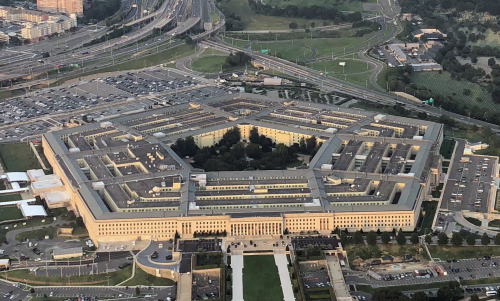
The resumption of military-to-military dialogue aims to reduce the risk of direct incidents between Russian and U.S. forces.
In March 2023, a U.S. MQ-9 Reaper drone was damaged in the Black Sea after Russian jets allegedly released fuel on it, highlighting the dangers of the conflict extending to NATO territories.
Russian officials have criticised U.S. surveillance flights over the Black Sea and described NATO intercepts of Russian drones in Poland and warplanes in Estonia as tests of the alliance’s responses.
The restored hotline and ongoing Abu Dhabi talks reflect a strategic effort to manage tensions and advance negotiations, even as fighting continues on multiple fronts and diplomatic progress remains tentative. - February7, 2026