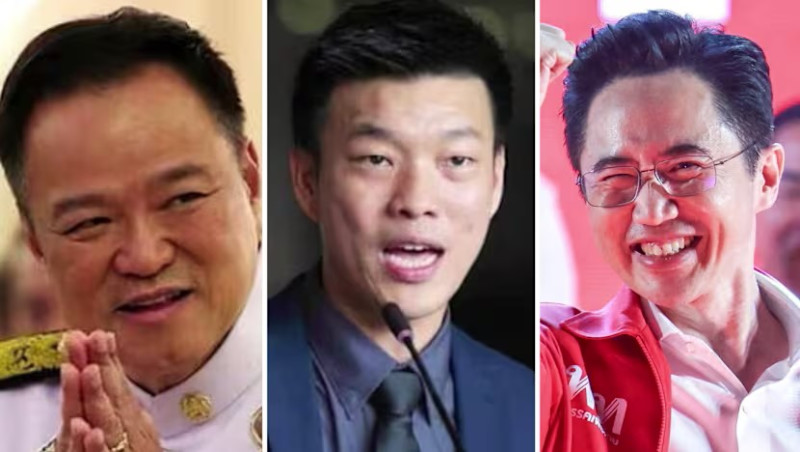
AS polling stations opened across Thailand this morning, voters faced a contest remarkably similar to the one held three years ago, with the progressive People’s Party, the conservative Bhumjaithai Party led by incumbent Prime Minister Anutin Charnvirakul, and the Shinawatra-aligned Pheu Thai party vying for control of the 500-seat lower house of parliament.
The youthful reformist People’s Party continues to push for far-reaching changes to Thailand’s political and economic structures, and opinion polls have largely placed it ahead of its rivals.
Yet it faces persistent obstacles from conservative institutions, including the Constitutional Court, which has in the past dissolved two incarnations of the party and banned its leaders from politics, despite electoral victories.
“The biggest question hanging over this election is how well the People’s Party performs. If it exceeds the 151 seats it won in 2023, it may prove difficult to bar it from forming a government, despite great unease about its radical agenda in conservative and royalist circles,” BBC cited analysts saying.
Anutin’s Bhumjaithai Party, once a small provincial outfit, has grown into the main vessel for conservative voters.
If it can match or surpass the reformists in seat count, backed by the establishment, Anutin is expected to remain prime minister.
Meanwhile, Pheu Thai, historically dominant under the Shinawatra family with well-marketed populist policies, is predicted to lose significant support following criticisms of its handling of a border dispute with Cambodia during its last coalition administration.
Polling stations opened at 08:00 local time (01:00 GMT) and will remain open until 17:00 (10:00 GMT). Early reports showed voters queuing under white tents, with Thai authorities in beige uniforms maintaining order.
The path to today’s election has been shaped by political turbulence over the past year. In May 2025, tensions with Cambodia escalated after the death of a Cambodian soldier at the border.
A phone call between then-Prime Minister Paetongtarn Shinawatra and Cambodian leader Hun Sen, in which she referred to him as “uncle” and appeared to criticise Thailand’s military, provoked public outrage.
Following the incident, Bhumjaithai withdrew from the coalition in June 2025, leaving Pheu Thai with a slim majority.
Paetongtarn was removed from office by the Constitutional Court in August, with Anutin Charnvirakul assuming the premiership in a minority government allied conditionally with the People’s Party. In December 2025, Anutin dissolved parliament, triggering the snap election being held today.
Observers note that no single party is expected to secure a majority of the 500 seats, making coalition-building inevitable.
While the People’s Party aims to capitalise on its reformist appeal, conservative and royalist forces remain poised to use institutional checks to curb its influence, continuing Thailand’s ongoing tension between popular mandate and judicial oversight.
Voters’ decisions today will not only determine the composition of parliament but also test the resilience of Thailand’s democratic processes amid a recurring pattern of judicial interventions and political volatility. - February 8, 2026