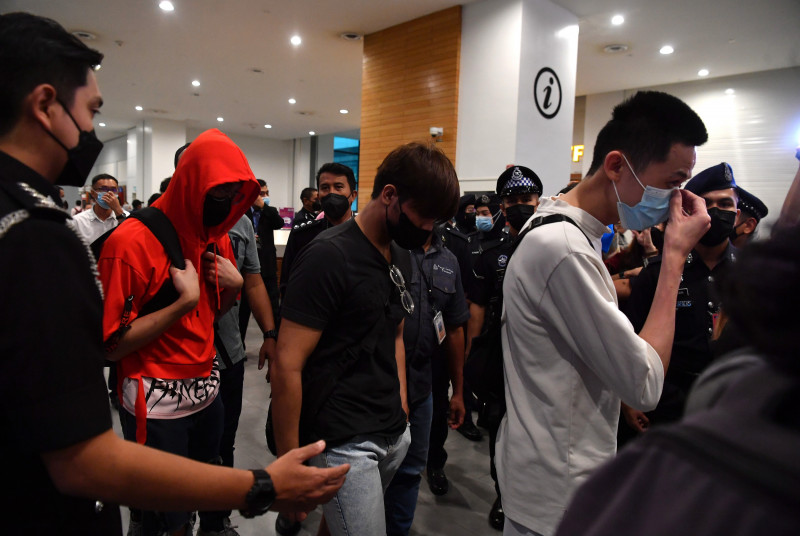
A HUMANITARIAN crisis is unfolding in Cambodia as hundreds of workers fleeing online scam compounds arrive in Phnom Penh with little more than the clothes on their backs, overwhelming the country’s sole dedicated shelter for victims.
Among them is Youga, an African man who spent two nights sleeping on the streets after escaping a scam operation in O’Smach near the Thai border, before being taken in by the Caritas shelter.
For Youga, even a bed without a pillow or blanket felt like a luxury.
The Associated Press cited on Thursday that the shelter, previously funded by the United States, now operates with a third of its former staff and a fraction of its prior budget, forcing it to turn away over 300 people in need.
Mark Taylor, a specialist in human trafficking issues in Cambodia, described the situation bluntly: “It’s become triage.”
The surge follows months of mass releases from scam compounds across northern Cambodia, accelerated after Cambodian authorities extradited a prominent alleged kingpin to China in January.
Amnesty International has documented chaotic and dangerous conditions as survivors leave, often with little oversight or assistance from local authorities.
Montse Ferrer, regional research director for Amnesty International, said, “The departures from scamming compounds have created a humanitarian crisis on the streets that, activists say, is being ignored by the Cambodian government.
In scenes of chaos and suffering, thousands of traumatised survivors are being left to fend for themselves with no state support.”
Cambodia’s government has rejected these claims. Minister of Information Neth Pheaktra said, “All individuals are screened to separate victims from perpetrators, with victims receiving protection, shelter, medical care, and assistance for safe return.”
Yet those on the ground say resources are insufficient to meet the scale of need.
Rescuers report hundreds of people from countries including Uganda and Kenya seeking help, many of whom rely on personal funds to provide food and shelter. Li Ling, a rescuer, said, “We cannot sustain that beyond another week.”
Youga, from the Banyamulenge ethnic group, described his ordeal. Beaten repeatedly in the compound for refusing to work, he fled as mass releases began. He cannot return home safely and lacks an embassy in the region to assist him.
“I want to rebuild my life with dignity,” he said, reflecting the desperate hopes of many trapped in similar circumstances.
The compounds themselves are highly organised operations, with soundproofed phone booths, multilingual scripts, and even mock police stations to coerce and control workers.
In 2023 alone, the United Nations estimated up to 100,000 people were trapped in such facilities across Cambodia, Myanmar, and Laos.
The crisis is compounded by dwindling funding. The Caritas shelter had relied on support from USAID and Winrock International, but U.S. foreign assistance was suspended in early 2025, leaving the facility “hand to mouth,” according to Taylor.
Meanwhile, embassies and international agencies struggle to provide clear pathways for survivors, leaving many with no option but to return to the compounds or sleep on the streets.
Experts warn that systemic failures, government pressure on independent media, and a lack of formal organisations willing to act have created an environment in which victims of online scams face extraordinary risks.
Jacob Daniel Sims, a Harvard visiting fellow, said, “There are an extremely small number of formal organisations willing to respond to the issue on the ground.”
As Cambodia confronts this unprecedented surge of scam compound survivors, the stories of individuals like Youga highlight both the resilience of victims and the urgent need for coordinated humanitarian support. Many arrive with little hope, seeking only safety and the chance to rebuild their lives. - February 12, 2026