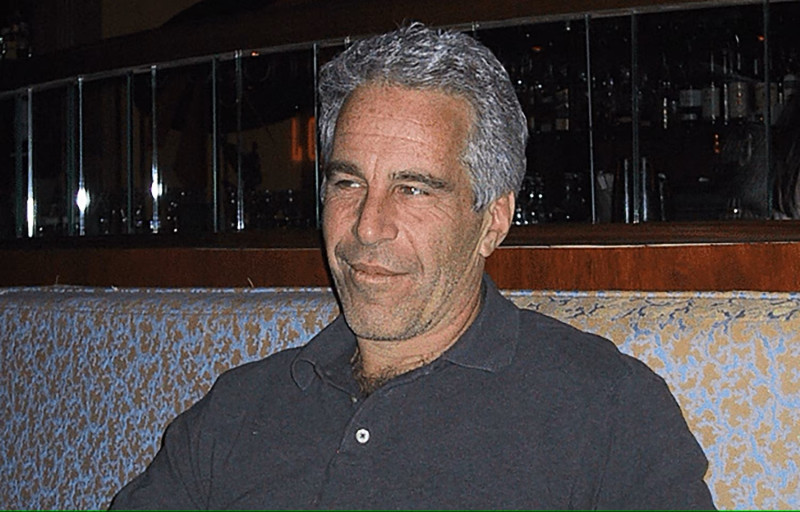
NEWLY disclosed emails suggest that financier and convicted sex offender Jeffrey Epstein retained a team in the Philippines as early as 2010 to cleanse the internet of search results linking him to his criminal past, shedding light on a little-known segment of the global outsourcing industry.
The emails, released by the US Department of Justice, detail how the late illusionist and science entrepreneur Al Seckel, a friend of Epstein’s, coordinated the operation before his own death in 2015.
Seckel, who was found dead at the bottom of a cliff near his home in southern France, was the brother-in-law of Epstein associate Ghislaine Maxwell, currently serving a 20-year prison sentence for her role in recruiting underage girls.
Documents obtained by The Philippine Star reveal that between October and December 2010, the Philippines-based team was tasked with pushing down negative online content, creating pseudo-sites portraying Epstein in a favourable light, and generating large volumes of backlinks to overshadow damaging search results.
In one email, Seckel wrote to Epstein: “Our group in the Philippines is building links and links to our sites, pseudo sites, and the other Jeffrey Epsteins of the world.”
He added that the approach was simple: “The old sites will just get moved out of the way. Poof. We just need more links than them.”
The team reportedly took two months of intensive work to suppress search results for terms such as “Jeffrey Epstein jail” and “Jeffrey Epstein pedophile,” achieving what Seckel described as a “big success.”
Epstein himself later complained about the cost, noting a fee of US$10,000 to US$20,000 per month—considered “insanely low” by industry standards, according to public relations expert Mori Rodriguez.
Experts note that the Philippines has long been a global hub for English-language digital outsourcing, with workers skilled in content creation, link-building, and search engine optimisation.
“Not because we were shady, but because we were good at it and we were affordable,” Rodriguez said, highlighting how foreign clients often provide strategy while Filipino teams handle execution.
While reputation management is not inherently unethical, observers warned that the Epstein case demonstrates how the same tools can be used for morally questionable ends.
Alan German, a Manila-based political strategist, said the lack of oversight in the Philippine public relations industry makes it easier for ethically dubious work to occur, especially when execution is far removed from client oversight.
“The Philippine team doing the work was probably processing it the same way they’d process a link-building project for a hotel chain or a real estate developer,” Rodriguez said.
“Work orders looked the same. Deliverables looked the same. The difference was the client.”
The revelations have prompted calls for the industry to reflect on its practices and maintain ethical standards. German warned that practitioners must recognise the moral dimension of their work: “Evil is evil. Good is good. It doesn’t matter what race, creed, culture you’re dealing with. If you’re helping to mask wrongdoing, there’s something wrong with what you’re doing.”
Ron Jabal, former president of the Public Relations Society of the Philippines, stressed that credibility hinges on transparency and truth: “Reputation management must always operate within the boundaries of truth, transparency, and the law.”
For experts, the Epstein emails are not an isolated scandal but a cautionary example of the hidden labour sustaining the online information ecosystem, and the ethical responsibilities that accompany it. - February 15, 2025