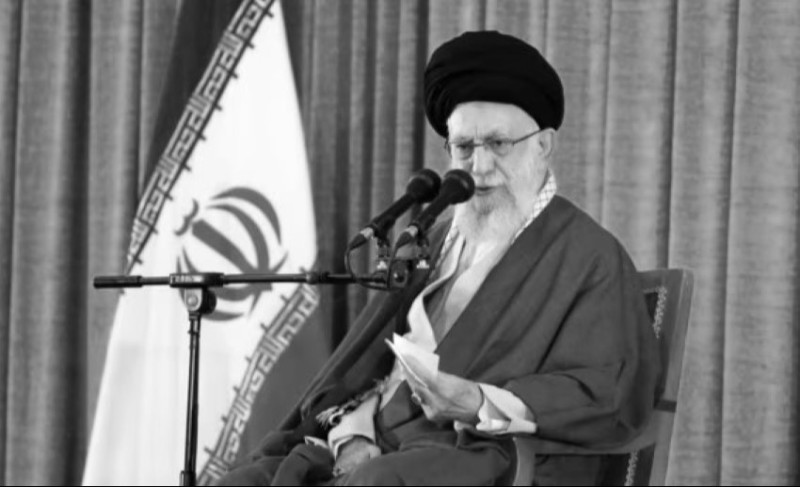
FOLLOWING the targeted killing of Iran’s Supreme Leader Ayatollah Ali Khamenei on Saturday, senior U.S. officials are expressing caution about the prospect of a rapid regime change in Tehran, even as President Donald Trump called on Iranians to “take back” their country.
“I call upon all Iranian patriots who yearn for freedom to seize this moment … and take back your country,” AP cited Trump saying in a video posted on his Truth Social platform on Sunday.
Despite the rhetoric, U.S. intelligence assessments suggest it is unlikely that Iran’s opposition, battered by repression and lacking defections from the Islamic Revolutionary Guard Corps (IRGC), could successfully overthrow the theocratic government in the near term.
Officials note that even with Khamenei’s death and the losses suffered by Iran’s leadership in U.S. and Israeli air strikes, the hardline elements of the IRGC and clerical establishment remain powerful and loyal, backed by extensive internal patronage networks.
“At the end of the day, once U.S. and Israeli strikes stop, if the Iranian people come out, their success in promoting the end of the regime will depend on the rank and file standing aside or aligning with them,” said Jonathan Panikoff, a former senior U.S. intelligence official now at the Atlantic Council.
“Otherwise, the remnants of the regime, those with the weapons, are likely to use them to keep power.”
Trump, however, has suggested that the U.S. may continue engagement with Iran even amid the offensive, indicating that Washington does not expect an immediate collapse of the government.
The U.S. administration has also debated the potential effects of Khamenei’s death on Iran’s nuclear negotiations, with no clear consensus among agencies on whether a new leadership would alter the country’s approach to its ballistic missile and nuclear programs.
The military operation has already claimed American lives.
On Sunday, U.S. Central Command announced that three American service members were killed and five others seriously wounded during the strikes, marking the first U.S. casualties in the campaign.
The soldiers, deployed to Kuwait as part of a logistics unit, were described by Trump as “true American patriots who have made the ultimate sacrifice for our nation.”
“We pray for the full recovery of the wounded and send our immense love and eternal gratitude to the families of the fallen,” Trump said.
“And sadly, there will likely be more before it ends. That’s the way it is. Likely be more, but we’ll do everything possible where that won’t be the case.”
He previously told the Daily Mail that he expects the conflict could last for “four weeks or so” and warned that additional casualties were possible.
Meanwhile, Iran’s leadership has moved to stabilise the situation. President Masoud Pezeshkian confirmed that a temporary council comprising himself, the judiciary chief, and a member of the powerful Guardian Council has assumed the duties of the Supreme Leader.
Security chief Ali Larijani condemned the U.S. and Israeli strikes as attempts to “plunder and disintegrate” Iran and warned that any secessionist action would be met with harsh retaliation.
Iran has conducted counterstrikes targeting U.S. and Israeli installations in the Gulf, including Bahrain and the United Arab Emirates.
The Revolutionary Guard has claimed it intends to carry out its “most intense offensive operation” ever. U.S. officials, however, denied Iranian claims that the aircraft carrier USS Abraham Lincoln was struck.
The operation forms part of a broader escalation in the Middle East, with Trump having previously deployed the largest U.S. naval and air force presence in the region in decades.
The offensive follows a series of military actions during his second term, including strikes on Islamic State targets in Syria and Nigeria, as well as the capture of Venezuelan leader Nicolás Maduro in January.
As the situation evolves, U.S. intelligence and military planners continue to grapple with the uncertain implications of Khamenei’s death, balancing the administration’s objectives of disabling Iran’s missile and nuclear programs with the recognition that a rapid regime change is far from assured. - March 2, 2026