MORE than 1,230 people have reportedly died in Iran since the outbreak of a joint United States and Israeli air campaign last Saturday, according to the country’s Foundation of Martyrs and Veterans Affairs.
The toll, confirmed in a statement published on Thursday, underscores the severity of the rapidly expanding conflict in the Middle East.
The Iranian Red Crescent Society has reported that numerous civilian sites have been struck, including 105 public facilities, 14 medical and pharmaceutical institutions, and at least one primary school in the southern city of Minab, where 175 schoolgirls and staff were killed on the first day of the campaign.
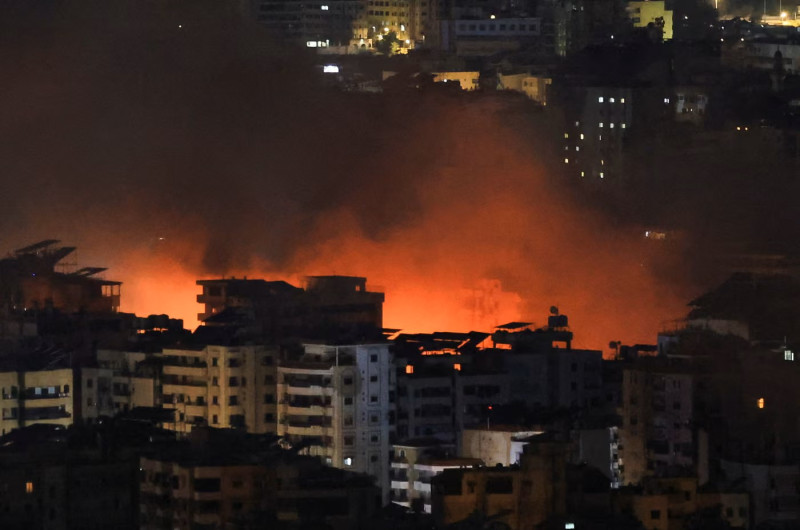
In Lebanon, the health ministry reported 77 deaths linked to the conflict, while thousands fled southern Beirut after Israeli authorities warned civilians to evacuate areas believed to house militant positions.
Israeli Prime Minister Benjamin Netanyahu, visiting an air force base in southern Israel, described the operation as having achieved “great” results but cautioned that “much work still lies ahead.”
In response, Iran’s foreign minister condemned the United States for sinking an Iranian naval vessel in international waters without warning, warning that Washington would “bitterly regret” its actions.
General Kioumars Heydari of the Iranian Revolutionary Guard Corps declared on state television that Iranian forces were prepared to strike US troops “wherever they are.”
The body of Ayatollah Ali Khamenei, killed in the first hours of the campaign—the first assassination of a sitting national leader by airstrike—was due to lie in state in Tehran before three days of mourning. However, the memorial was abruptly postponed amid ongoing air raids.
Military sources indicated that Israel plans to enter a second phase of operations targeting underground bunkers storing Iran’s ballistic missiles.
Iran’s leadership has retaliated with waves of missile and drone attacks targeting Israel and US assets across the region. The Iranian military claimed to have shot down an Israeli Hermes drone on the sixth day of fighting, while the IRGC stated it had downed a US F-15E Strike Eagle fighter jet near Iran’s southeastern border and launched Khorramshahr-4 ballistic missiles toward Tel Aviv, including targets near Ben Gurion Airport and Israeli air force facilities.
Internationally, Campaign Limited
U.S. President Donald Trump’s decision to launch the offensive alongside Israel has contrasted with previous US-led conflicts, such as the 1991 Gulf War and the 2003 invasion of Iraq, where broad coalitions were assembled.
Trump openly criticised allies, including the United Kingdom and Spain, for refusing to allow military access, while Australia and Canada offered limited support focused on preventing Iran from acquiring nuclear weapons.
Major European powers expressed opposition or caution; French President Emmanuel Macron argued the strikes contravened international law, and German Chancellor Friedrich Merz warned against a prolonged conflict despite expressing hope for the collapse of Iran’s regime.
Iran maintains close ties with Russia and China, though neither has intervened militarily to defend Tehran. Analysts suggest the conflict may indirectly benefit China, providing an opportunity to observe US military operations and temporarily drawing American resources away from hypothetical future confrontations in the Taiwan Strait.
Chinese strategists have previously described periods of heavy US military engagement as “windows of opportunity” to advance Beijing’s strategic interests, a calculation that may influence regional and global geopolitics as the conflict unfolds.
The crisis continues to evolve, with humanitarian groups warning of the severe toll on civilians and international observers closely monitoring the widening war, which now encompasses multiple countries and threatens to reshape global strategic alignments. - March 6, 2026