FEARS of a major global oil shock intensified on Wednesday after Iranian forces attacked merchant vessels in Gulf waters and warned that crude prices could surge to US$200 a barrel, as the conflict between Iran, the United States and Israel continues to disrupt energy markets and shipping routes.
Reuters reported on Thursday that the International Energy Agency responded by recommending the largest coordinated release of strategic petroleum reserves in history, proposing that 400 million barrels be released to stabilise prices following one of the most severe oil market disruptions since the 1970s.
The war, triggered by joint United States and Israeli airstrikes nearly two weeks ago, has killed around 2,000 people, most of them in Iran and Lebanon, while spreading into Lebanon and destabilising regional transport and energy networks.
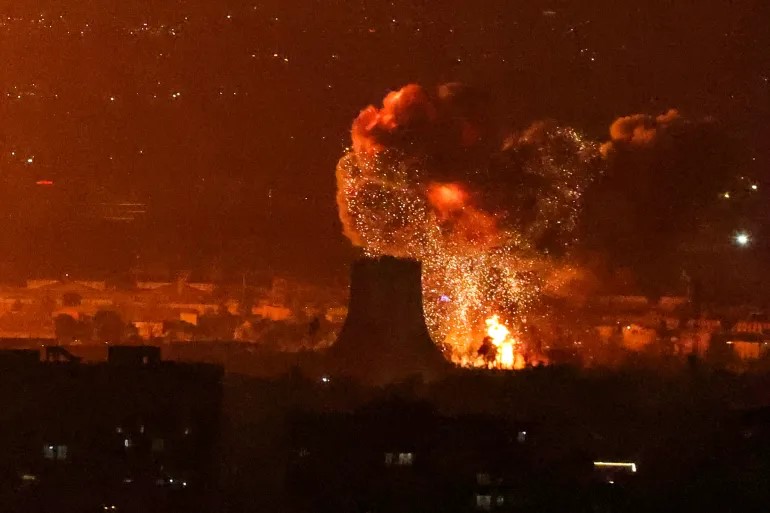
Despite what the Pentagon has described as the most intense air campaign since the conflict began, Iran continued to launch missiles and drones at Israel and targets across the Middle East on Wednesday, signalling that it retains the capability to retaliate.
Tensions escalated further at sea when three vessels were reportedly struck in Gulf waters after Iran’s Revolutionary Guards said their forces had fired on ships that ignored orders issued in the area.
A Thai-flagged bulk carrier was set ablaze during the incidents, forcing the evacuation of its crew. Three people were reported missing and believed to be trapped in the vessel’s engine room.
Two other ships, a Japanese-flagged container vessel and a Marshall Islands-flagged bulk carrier, also sustained damage from projectiles.
The latest attacks bring the total number of merchant ships hit since the war began to 14.
The escalation has deepened concerns over the safety of the Strait of Hormuz, a narrow maritime corridor along Iran’s coast through which roughly one-fifth of the world’s oil supply normally passes.
An Iranian military spokesperson said the strategic waterway was “undoubtedly” under Tehran’s control and there has so far been no indication that commercial shipping can safely transit through the channel.
The Group of Seven nations, comprising the United States, Canada, Japan, Italy, Britain, Germany and France, said they would examine options for providing naval escorts to ensure ships can navigate safely through the Gulf.
However, sources said Iran had deployed about a dozen naval mines in the strait, complicating efforts to reopen the route.
United States President Donald Trump suggested on Wednesday that the conflict was not yet nearing its conclusion.
Speaking at a rally in Kentucky, Trump declared victory but said the United States must ensure its objectives are fully achieved.
“We don't want to leave early, do we?” he said. “We've got to finish the job.”
Trump said United States forces had destroyed 58 naval vessels and insisted that oil prices would eventually fall.
At the same time, he dismissed concerns that Iran might retaliate with attacks on American territory after a United States television network reported that the Federal Bureau of Investigation had warned of potential Iranian drone strikes targeting the US West Coast.
The United States State Department also warned that Iran and allied militias may attempt to strike American-owned oil and energy infrastructure in Iraq, noting that such groups have previously targeted hotels frequented by Americans.
United States and Israeli officials say their military campaign aims to end Iran’s ability to project military force beyond its borders and dismantle its nuclear programme.
The conflict has already driven oil prices sharply higher. Crude briefly surged to nearly US$120 a barrel earlier in the week before easing to around US$90, although prices climbed again by nearly five per cent on Wednesday amid renewed fears of supply disruptions.
With petrol prices already rising in several countries and political pressure mounting ahead of United States midterm elections in November, the stability of oil markets has become a key strategic concern.
The International Energy Agency’s proposal to release 400 million barrels from global strategic reserves was swiftly endorsed by Washington.
Trump said the move would “substantially reduce oil prices as we end this threat to America and the world.”
United States Energy Secretary Chris Wright said Trump had authorised the release of 172 million barrels from the US Strategic Petroleum Reserve beginning next week, with the process expected to take around 120 days.
However, analysts note that even large releases from emergency stockpiles would represent only a fraction of the oil that normally flows daily through the Strait of Hormuz.
Iranian officials indicated they intend to maintain pressure on global markets.
“Get ready for oil to be US$200 a barrel, because the oil price depends on regional security, which you have destabilised,” said Ebrahim Zolfaqari, spokesperson for Iran’s military command, in remarks directed at Washington.
After airstrikes hit a bank building in Tehran overnight, Zolfaqari warned that Iran would respond by targeting financial institutions that conduct business with the United States or Israel.
He also warned civilians across the Middle East to remain at least 1,000 metres away from banks, suggesting they could become targets in further attacks.
Meanwhile, huge crowds gathered in Iran for funerals of senior commanders killed in airstrikes, carrying coffins and displaying flags and portraits of slain Supreme Leader Ayatollah Ali Khamenei and his son and successor, Mojtaba.
An Iranian official told Reuters that Mojtaba Khamenei was lightly wounded early in the conflict during the same airstrikes that killed his father, mother, wife and one of his sons. He has not appeared publicly or issued any direct statement since the war began.
Despite repeated calls from Trump for Iranians to rise up against their leadership, hopes in Washington and Tel Aviv that the country’s clerical system of government might collapse through mass protests have not materialised.
Iran’s police chief Ahmadreza Radan warned that any public demonstrations would be treated as hostile acts.
“Anyone taking to the streets will be treated as an enemy, not a protester. All our security forces have their fingers on the trigger,” he said.
Separately, Trump suggested the conflict might end soon because Iran had few remaining targets to strike.
“A little here and there ... Whenever I want to end it, it will end,” he said in a five-minute telephone interview with the online media outlet Axios.
However, United States and Israeli officials said preparations were under way for at least two more weeks of strikes inside Iran, with no internal directive issued so far on when the military operations might be halted.
Israel’s Defence Minister Israel Katz said the war would continue “without a time limit, as long as necessary until we achieve all objectives and win this campaign conclusively”.
The naval arm of Iran’s Islamic Revolutionary Guard Corps confirmed it had launched attacks on two ships in the Strait of Hormuz since Wednesday morning.
United States Central Command commander Brad Cooper said American forces struck a “major ballistic missile manufacturing facility” in Iran on Tuesday night as part of ongoing operations targeting the country’s missile and drone capabilities.
“We are systematically disabling them by targeting Iran’s missiles and drones while also striking their defence industrial base,” Cooper wrote on the social media platform X.
“Just last night alone, our bomber forces struck a major ballistic missile manufacturing facility as an example.”
Cooper added that United States forces have struck more than 5,500 targets across Iran, including more than 60 naval vessels, since Washington and Israel launched large-scale attacks on 28 February. - March 12, 2026