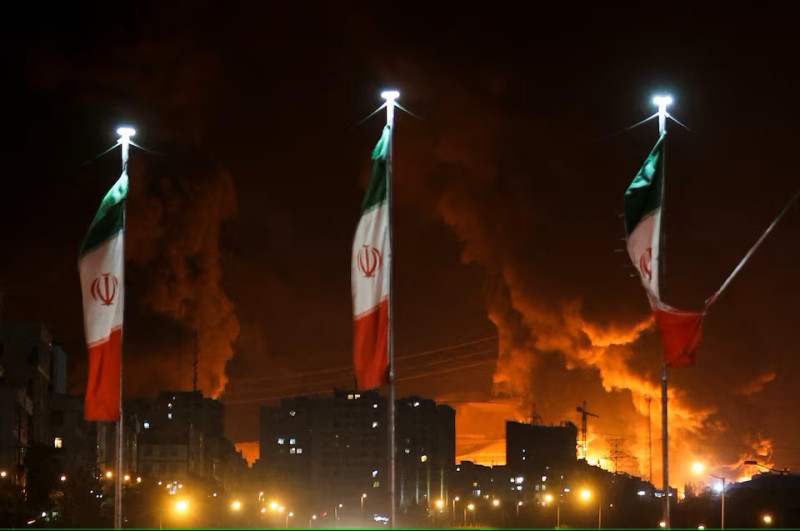
ISRAEL has launched additional strikes on targets in Tehran, marking a further escalation in a conflict that has spread across the region and increasingly affected global energy infrastructure and markets.
The Israeli military said the strikes were directed at what it described as “infrastructure of the Iranian terror regime”, although it did not provide further details.
Reuters reported on Friday that the latest action follows days of Iranian strikes on energy facilities across the Gulf, which have disrupted supply chains and heightened tensions between regional and global powers.
The escalation comes against the backdrop of a broader conflict that began with initial strikes by the United States and Israel on February 28, and has since expanded to involve attacks on energy assets, shipping routes and infrastructure in multiple countries.
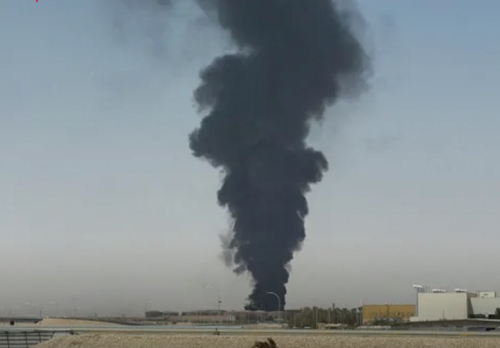
Iranian strikes have reportedly caused significant damage to key facilities, including Qatar’s Ras Laffan Industrial City, a major liquefied natural gas processing hub responsible for around a fifth of global LNG output.
Damage to the facility is expected to take years to repair. QatarEnergy’s chief executive told Reuters that the attacks had knocked out a sixth of Qatar’s LNG export capacity, prompting the company to declare force majeure and begin repairs estimated to take between three and five years.
Energy infrastructure in Saudi Arabia has also been targeted, including its main Red Sea port, which has been used as an alternative export route amid concerns over potential disruption to the Strait of Hormuz, a critical chokepoint for global oil supplies.
The widening conflict has also drawn in Gulf states. Bahrain, Kuwait and the United Arab Emirates said they were responding to missile attacks ahead of the start of Eid al-Fitr, underscoring the regional spillover of hostilities.
The economic impact has been immediate, with energy prices fluctuating amid concerns over supply disruptions.
While oil prices fell on Friday following assurances from Western nations and Japan to help secure shipping routes and moves by the United States to boost production, markets remain sensitive to developments in the conflict.
In a statement, a group of major economies including Britain, Canada, France, Germany, Italy, the Netherlands and Japan said they were ready to support efforts to ensure safe passage through the Strait of Hormuz and to help stabilise energy markets.
However, there has been little indication of immediate military involvement, with European leaders emphasising de-escalation.
French President Emmanuel Macron said that “defending international law and promoting de-escalation is the best we can do,” while German Chancellor Friedrich Merz indicated that any contribution to securing shipping routes would only come after hostilities had ended.
The United States has also faced questions over coordination with Israel. President Donald Trump said he had not been informed in advance of an Israeli strike on Iran’s gas infrastructure and warned against further attacks on energy assets.
He told reporters, “I told him, ‘Don’t do that’, and he won’t do that,” referring to Israeli Prime Minister Benjamin Netanyahu, although Netanyahu later said Israel had acted independently in striking Iran’s South Pars gas field.
The conflict has exposed differences in strategic priorities between the United States and Israel. U.S.
Director of National Intelligence Tulsi Gabbard told lawmakers that Washington’s objectives focus on degrading Iran’s missile capabilities, while Israel has prioritised targeting Iranian leadership and infrastructure.
Iran, meanwhile, has described the situation as entering “a new stage in the war,” warning of continued retaliation against energy assets linked to its adversaries.
Iranian military spokesperson Ebrahim Zolfaqari said that if further strikes occur on its energy infrastructure, attacks on the energy assets of its opponents and their allies would continue.
Analysts say the conflict has reshaped regional dynamics, strengthening Israel’s domestic political position while complicating the geopolitical standing of the United States, particularly as it faces pressure from rising energy prices and concerns among allies about deeper involvement.
With no clear path to de-escalation, the conflict has raised broader concerns over global energy security, the stability of maritime trade routes, and the potential for prolonged disruption to oil and gas supplies. - March 20, 2026