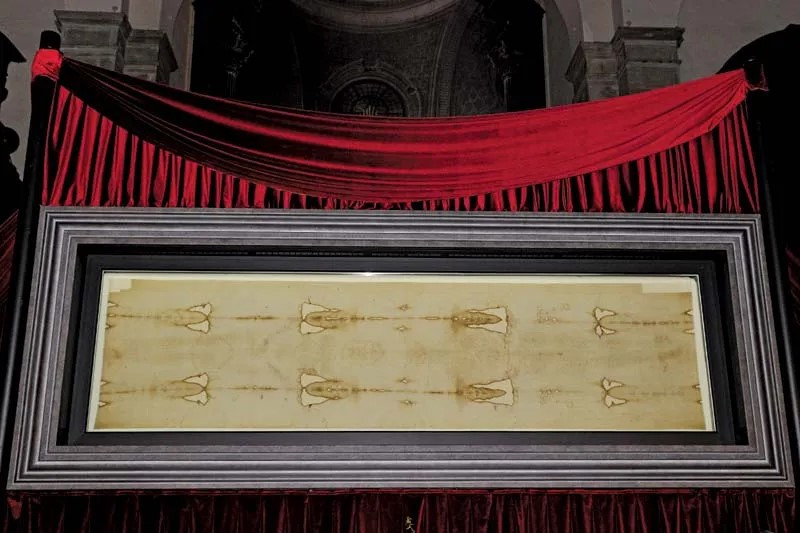
A RECENT DNA study on the Shroud of Turin has provided fresh insights into the potential origins of the centuries-old linen, suggesting that the yarn used to create the fabric may have been produced in ancient India’s Indus Valley region.
The findings also underscore the complex biological history of the relic, revealing centuries of interaction with humans, animals, and plants across multiple regions.
The shroud, measuring approximately 4.4 metres long and 1.1 metres wide, is one of Christianity’s most debated artefacts, believed by some to have wrapped the crucified body of Jesus. It was first documented in France in 1354 and is currently preserved at the Cathedral of Saint John the Baptist in Turin, Italy.
Independent reported on Wednesday that researchers, including Gianni Barcaccia from the University of Padova, analysed samples collected from the linen during scientific investigations in 1978.
Their yet-to-be peer-reviewed study, published on Bioarxiv, found traces of DNA pointing to the possibility that the yarn originated in the Indian subcontinent.
“Analysis of the DNA traces found on the Shroud of Turin suggests the potentially extensive exposure of the cloth in the Mediterranean region and the possibility that the yarn was produced in India,” the team wrote.
The genetic analysis revealed a diverse array of DNA, including that of domestic animals such as dogs, cats, chickens, cattle, goats, sheep, pigs, and horses, as well as wild species including deer and rabbits.
Plant DNA, including carrots, peppers, tomatoes, potatoes, and various wheat species, was also identified.
Human DNA accounted for a substantial portion of the findings, and notably, approximately 40 per cent of it corresponds to lineages of Indian origin.
“The presence of 38.7 per cent of the overall human genomic data from Indian lineages is unexpected and is potentially linked to historical interactions associated with importing linen or yarn from regions near the Indus Valley,” the researchers said.
They suggested that the finding could reflect either trade interactions in antiquity or the extensive handling of the relic over centuries.
The study also detected traces of skin bacteria, including Cutibacterium and Staphylococcus, confirming prolonged human contact with the cloth.
“Overall, our prior and present findings provide valuable insights into the geographic origins of individuals who interacted with the Shroud throughout its historical journey across various regions, populations, and eras,” the team wrote.
“Genetic and microbial evidence discloses a complex history of the Turin Shroud, reflecting interactions with a diverse array of individuals.”
While the analysis sheds light on the shroud’s biological and geographic history, it does not provide a definitive age for the fabric.
Nonetheless, the researchers emphasised the significance of their work, noting that it offers a new perspective on the relic’s journey through time and human society.
“Nevertheless, our findings constitute a novel and significant contribution to the field, thoroughly elucidating the biological traces left by centuries of social, cultural, and ecological engagement,” they concluded.
The study invites renewed reflection on the Shroud of Turin not only as a religious artefact but as a historical textile that has traversed continents, carried human and ecological imprints, and connected cultures over the centuries. - April 1, 2026