A FRAGILE two-week ceasefire between the United States and Iran is showing renewed strain, with disputes over maritime access in the Strait of Hormuz and fresh military exchanges in Lebanon casting doubt over the durability of the agreement ahead of planned talks in Pakistan.
Reuters reported on Friday that Washington has accused Tehran of failing to honour commitments related to the strategic waterway, while Israel has continued strikes in Lebanon, which Iran says are undermining the truce framework.
In a social media post late Thursday, US President Donald Trump said Iran was “doing a very poor job” of allowing oil shipments through the Strait of Hormuz.
“That is not the agreement we have!” he said, while separately adding that oil flows would resume, without specifying any US response.
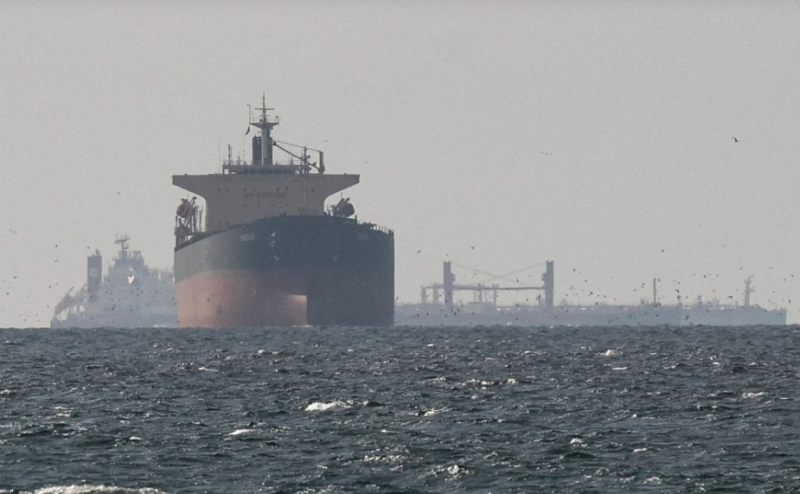
The Strait of Hormuz, a vital global energy corridor, has seen severely reduced traffic, with only one oil products tanker and five dry bulk carriers passing through during the first 24 hours of the ceasefire. The waterway typically carries around one-fifth of global oil and liquefied natural gas shipments.
Iranian authorities have maintained a near-total blockade of the strait, citing continued Israeli military operations in Lebanon as justification for their position.
Fresh violence has also been reported in Lebanon. The Israeli military said it struck 10 rocket launch sites late Thursday after projectiles were fired towards northern Israel.
It also reported that a missile launched by Hezbollah was intercepted, with sirens activated in response. Hezbollah said it had targeted Israeli military infrastructure in Haifa.
The United States and Israel maintain that the ceasefire does not extend to Lebanon, where Israeli forces have conducted a parallel military campaign against Hezbollah.
However, Iranian officials and Pakistani mediators argue that Lebanon was explicitly included in the agreement.
Iranian Parliament Speaker Mohammad Baqer Qalibaf, who is expected to lead Tehran’s delegation in talks with US Vice President JD Vance, said Lebanon and Iran’s wider regional network are inseparable from any ceasefire arrangement.
“The axis of resistance and its components are inseparable parts of any agreement,” he said on social media.
Iran’s Supreme Leader figure Mojtaba Khamenei issued a defiant statement saying Tehran would retaliate for the war and seek compensation for damages.
“We will certainly not leave unpunished the criminal aggressors who attacked our country. We will undoubtedly demand compensation for every single damage inflicted,” he said.
The ceasefire agreement, mediated by Pakistan, was reached shortly before an ultimatum issued by Trump, who had warned of potential strikes on Iranian infrastructure if hostilities continued.
Diplomatic preparations are now under way in Pakistan for the first round of US–Iran negotiations scheduled for Saturday, aimed at stabilising the conflict that escalated following joint US and Israeli strikes on Iran in late February.
Iran has also circulated a 10-point peace proposal calling for continued control of the Strait of Hormuz, recognition of its nuclear enrichment rights, lifting of sanctions, and an end to hostilities involving its regional allies, including Hezbollah in Lebanon.
While Israel has pledged to continue operations against Hezbollah, Prime Minister Benjamin Netanyahu said he had ordered preparations to begin peace talks, including discussions on the disarmament of Hezbollah.
“The negotiations will focus on disarming Hezbollah and establishing peaceful relations between Israel and Lebanon,” he said.
Lebanese officials said Beirut is seeking a temporary ceasefire as a precursor to broader negotiations, describing the effort as a parallel track to the US–Iran truce framework.
A senior Israeli official said military operations in Lebanon may be scaled down, while US media reported Trump had urged Netanyahu to adopt a lower profile in the conflict. A US State Department official confirmed Washington will host talks next week to continue ceasefire discussions.
However, Hezbollah lawmaker Ali Fayyad rejected direct negotiations with Israel, insisting that any further steps must be conditional on an immediate ceasefire. - April 10, 2026