THE United States has significantly widened its maritime enforcement campaign against Iran, authorising forces worldwide to intercept and seize vessels linked to Tehran or suspected of carrying materials deemed supportive of its government, in a marked escalation of pressure ahead of an imminent ceasefire deadline.
AP reported on Friday that the move extends beyond an existing blockade of Iranian ports, with military commanders confirming that operations now encompass global interdiction efforts targeting shipments ranging from weapons to oil, metals and electronics.
Chairman of the Joint Chiefs of Staff General Dan Caine said the expanded scope includes operations in regions as distant as the Pacific, with a focus on vessels that departed prior to the imposition of the blockade earlier this week near the strategically vital Strait of Hormuz.
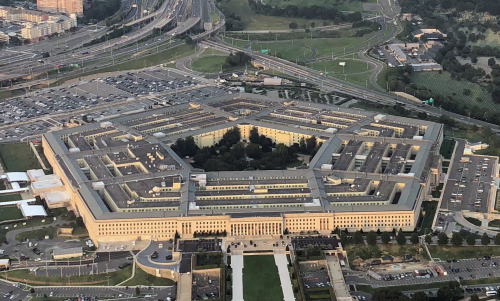
U.S. forces in multiple theatres “will actively pursue any Iranian-flagged vessel or any vessel attempting to provide material support to Iran,” he told reporters at the Pentagon.
Under newly published guidance, American forces are authorised to board, search and seize cargo from merchant vessels “regardless of location” if goods are deemed capable of contributing to armed conflict.
A formal notice issued on Thursday states that any “goods that are destined for an enemy and that may be susceptible to use in armed conflict” are “subject to capture at any place beyond neutral territory.”
The list of prohibited items spans both explicitly military and dual-use materials. Weapons, ammunition and military equipment are categorised as absolute contraband, while commodities such as oil, iron, steel and aluminium fall under conditional contraband due to their potential civilian and military applications.
The guidance further allows for the seizure of otherwise civilian goods, including electronics, power generation equipment and heavy machinery, where “circumstances indicate intended military end-use.”
More than 10,000 American troops are currently involved in enforcing the blockade. Although no vessels have yet been boarded, defence officials said ships linked to Iran are being warned that failure to comply could result in escalation, including warning shots or further use of force.
“Any ship that would cross the blockade would result in our sailors executing pre-planned tactics designed to bring the force to that ship — if need be, board the ship and take her over,” Caine said.
A radio broadcast released by U.S. Central Command reinforces the message, stating: “Vessels will be boarded for interdiction and seizure transiting to or from Iranian port.”
Early indicators suggest the strategy is already affecting maritime traffic. According to U.S. Central Command, at least 14 vessels altered course within the first three days of operations rather than challenge the blockade.
Shipping data firms have also observed Iran-linked ships slowing, disabling tracking systems or returning towards Iranian waters.
Defence Secretary Pete Hegseth said the operation currently involves “less than 10% of America’s naval power,” with 16 warships deployed in the Middle East, including destroyers, amphibious assault ships, an aircraft carrier and a littoral combat ship, supported by aircraft and extensive surveillance capabilities.
Military analysts note that the operation relies heavily on intelligence gathering, including satellite tracking, drones and historical shipping data, to identify and intercept suspect vessels.
Kevin Donegan, a retired vice admiral and former commander of the Navy’s Fifth Fleet, described the effort as highly complex.
“It’s a pretty complex operation to make work,” he said during a webinar hosted by the Middle East Institute. “Not just from the intelligence standpoint, but positioning all the ships in the right way to make the intercepts if you have to.”
He cautioned, however, that the blockade alone is unlikely to resolve the conflict.
“For it to be most effective, this military tool is added to the other operational tasks that were being done and paired with — hopefully, diplomacy,” Donegan said. “And if those two are scripted together in the right way, we can potentially get the outcomes we want.”
The escalation comes as international mediators push to extend a fragile ceasefire that has temporarily halted nearly seven weeks of fighting involving the United States, Israel and Iran, with the outcome of ongoing diplomatic efforts likely to determine whether tensions ease or intensify further.
Senior U.S. commanders have also highlighted the role of allied cooperation in the region. Admiral Brad Cooper, head of U.S. Central Command, said American and partner forces had operated in close coordination prior to the ceasefire.
“In creating the largest air defense umbrella in the world across the Middle East, we embedded specially trained U.S. military air defenders alongside our partner nation soldiers,” he said, adding that Bahrain’s leadership had developed close familiarity with U.S. personnel.
The broadened interdiction authority underscores Washington’s strategy of combining military pressure with diplomatic engagement, as it seeks to shape the next phase of the conflict with Iran. - April 17, 2026