NEGOTIATORS from Washington and Tehran are racing to salvage a proposed memorandum of understanding that could determine whether the Middle East moves towards peace or slips back into a devastating conflict that has already claimed thousands of lives and shaken global energy markets.
Although described as a relatively short document, the draft agreement has become the focus of intense negotiations, with every phrase, commitment and timeline carrying significant political and strategic consequences for both sides.
At the centre of the talks is a proposed 60-day framework designed to convert the current ceasefire into a more durable settlement. However, fundamental disagreements remain over how the process should unfold and what concessions must be made before either side takes further steps.
CNN reported on Sunday that the uncertainty comes as the United States has publicly reiterated its readiness to return to military operations should negotiations fail.
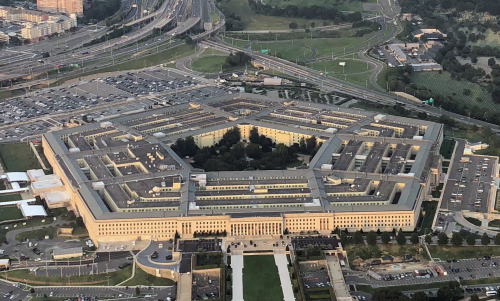
Speaking at the Shangri-La Dialogue in Singapore, US Defence Secretary Pete Hegseth delivered Washington's strongest warning yet that military force remains an option.
"Our ability to recommence if necessary...we are more than capable," Hegseth said.
"Our stockpiles are more than suited for that, both there and around the globe, so we're in a very good place," he added.
While emphasising American military preparedness, Hegseth insisted President Donald Trump remained committed to achieving a diplomatic breakthrough.
According to Hegseth, Trump is determined to secure an agreement that prevents Iran from acquiring nuclear weapons while avoiding a return to full-scale war.
The negotiations suffered a setback after Trump issued a fresh series of public demands concerning the reopening of the Strait of Hormuz, Iran's nuclear activities and access to frozen Iranian assets held overseas.
Iranian officials responded sharply, accusing Washington of attempting to dictate terms while portraying American demands as requests rather than conditions.
"The ‘musts’ that the Americans bring up are actually requests," Iranian Foreign Ministry spokesman Esmail Baghaei said.
The Strait of Hormuz remains one of the most contentious issues in the negotiations.
For nearly three months, disruptions in the strategic waterway have driven up global oil prices and heightened concerns over international energy security. Trump has demanded the immediate reopening of the route without restrictions.
"The Hormuz Strait must be immediately open, no tolls, for unrestricted shipping traffic, in both directions," Trump said.
The United States has indicated that the naval blockade of Iranian ports would be lifted once shipping routes are fully restored. Iran, however, insists it retains sovereign rights to manage maritime traffic through the strait in cooperation with Oman.
Ebrahim Azizi, chairman of the Iranian Parliament's National Security Commission, rejected suggestions that Tehran would surrender long-term control over the waterway.
"Iran’s control measures and arrangements in the Strait of Hormuz are permanent in nature and certainly not temporary," Azizi said.
The sequencing of these measures has emerged as a major obstacle. Tehran wants the immediate removal of the US naval blockade, while Washington insists the strait must first be reopened and functioning normally before sanctions relief or economic concessions can proceed.
Iranian officials have also expressed frustration over continued military pressure despite ongoing negotiations.
"By continuing the naval blockade and making excessive demands in negotiations, he has once again proven that he is not inclined toward negotiation and is pursuing other objectives," said Mohsen Rezaei, an adviser to Supreme Leader Mojtaba Khamenei.
The nuclear issue remains another major stumbling block.
Under proposals being discussed, formal negotiations on Iran's nuclear programme would begin only after the memorandum is signed. The talks would address the future of Tehran's highly enriched uranium stockpile and possible limits on future enrichment activities.
Trump has maintained an uncompromising position.
"Iran must agree that they will never have a Nuclear Weapon," he said.
The US president has also claimed that Iran's highly enriched uranium stockpiles would be recovered and destroyed through a joint operation, a proposal swiftly rejected by Iranian state media.
Iranian lawmakers have likewise ruled out transferring enriched uranium to a third country.
"Iran does not intend to transfer its enriched uranium to a third country," Azizi said.
Beyond security concerns, the negotiations are increasingly tied to economic recovery.
Iran is seeking access to billions of dollars in frozen assets and the eventual removal of sanctions that have severely weakened its economy. Tehran argues that reconstruction efforts following months of warfare cannot begin without substantial financial relief.
A purported message from Supreme Leader Mojtaba Khamenei reportedly urged lawmakers to focus on rebuilding damaged infrastructure and restoring economic stability.
However, Washington continues to link any financial concessions to progress on security issues.
Trump reinforced that position in a social media post, stating: "No money will be exchanged, until further notice."
Iranian media reports suggest that up to US$24 billion in frozen assets could be released if an agreement is finalised, with a portion becoming available immediately upon implementation.
The negotiations are further complicated by the ongoing conflict in Lebanon, where fighting between Israel and Hezbollah continues despite earlier ceasefire arrangements.
Iranian officials have argued that any final agreement should encompass all regional theatres of conflict, including Lebanon. Israel, however, has signalled no intention of limiting its military operations.
According to Israeli officials, Trump has reaffirmed support for Israel's ability to "maintain freedom of action against threats on all fronts, including Lebanon."
Despite progress in some areas, a deep trust deficit continues to overshadow the entire process.
Iranian leaders repeatedly point to previous attacks carried out while diplomatic discussions were underway and insist that tangible actions, rather than promises, must form the basis of any future agreement.
"We have no trust in guarantees or words—only actions are the measure. No action will be taken before the other side acts," senior Iranian negotiator Mohammad Bagheri Ghalibaf said.
As negotiations enter a decisive phase, diplomats face the challenge of bridging differences over security, economics and regional influence within a narrow timeframe. Success could pave the way for a broader settlement and stabilise one of the world's most volatile regions.
Failure, however, risks collapsing the ceasefire, reigniting hostilities and plunging the Middle East back into a conflict whose consequences would be felt far beyond the region's borders. - May 31, 2026