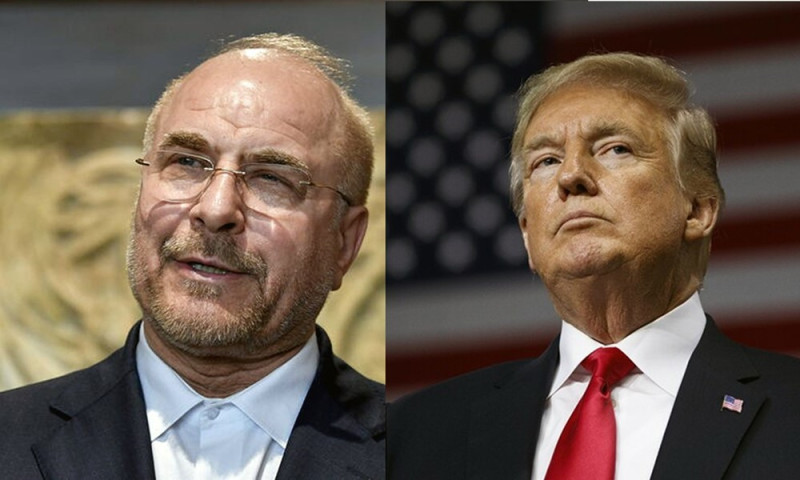
IRAN’S lead negotiator has issued a stark warning that the United States cannot be trusted in ongoing diplomatic efforts, insisting that Tehran will not accept any agreement with Washington unless its rights are fully protected, as tensions persist over a revised US-backed peace framework.
AFP cited Mohammad Bagher Ghalibaf saying Iran would refuse to endorse any deal that fails to guarantee its national interests, amid reports that US President Donald Trump has revived a more stringent version of a proposed agreement aimed at ending hostilities in the Middle East and addressing the disputed future of Iran’s nuclear programme.
The renewed diplomatic push has highlighted persistent and wide-ranging disagreements between the two sides, particularly over nuclear obligations, sanctions relief, and strategic access routes such as the Strait of Hormuz, one of the world’s most critical shipping corridors.
Any amendment to the draft framework is expected to further slow progress towards a formal agreement that could potentially end the wider regional conflict and reopen key maritime routes that have been disrupted during months of escalating tensions and intermittent violence.
Iran and the United States have already engaged in indirect discussions on the future of Tehran’s nuclear programme, with earlier rounds of talks taking place in February, during a period marked by heightened military activity and strikes involving US and Israeli forces.
While Iran maintains that its nuclear programme is strictly for civilian purposes, Western governments, including the United States and its allies, continue to suspect that it could be used to develop nuclear weapons capability.
Reports in The New York Times and Axios suggest that Trump has presented a revised and “more stringent” framework for consideration by Tehran, although details of the proposal remain unclear.
Trump has said his priority is to prevent Iran from acquiring nuclear weapons and to ensure the reopening of vital maritime routes, including the Strait of Hormuz.
“The only guarantee I need is no nuclear weapons. They have agreed to that, and it is very interesting,” Trump said in an interview with his daughter-in-law Lara Trump on Fox News.
However, Iranian officials have repeatedly questioned the credibility of US statements, with Tehran maintaining that significant gaps remain between both sides on key issues.
“We will not approve any agreement unless we are certain that the rights of the Iranian people are preserved,” Ghalibaf said in a televised address.
According to Iran’s Tasnim news agency, discussions over the draft text are still ongoing, with both sides continuing to propose amendments as negotiations remain fluid.
Iran’s Foreign Minister Abbas Araghchi said the situation remains highly uncertain and cautioned against drawing conclusions while talks are still underway.
“Until a clear conclusion is reached, everything being said at this stage is speculation,” Araghchi said, according to Iranian state television.
He added that dialogue and exchanges between Tehran and Washington are continuing, but stressed that no assessment should be made until a final outcome is achieved.
Iran has also indicated that it is seeking the release of approximately US$12 billion in frozen assets before entering substantive negotiations on its nuclear programme, while rejecting earlier US claims regarding the destruction of its enriched uranium stockpile as unfounded.
The ongoing diplomatic impasse has been further complicated by deep divisions over enforcement mechanisms, economic relief provisions, and maritime security guarantees, particularly in relation to the Strait of Hormuz.
With both sides maintaining firm and divergent positions, analysts say prospects for a near-term breakthrough remain uncertain, as geopolitical tensions continue to shape one of the world’s most sensitive and strategically significant negotiations. - June 1, 2026