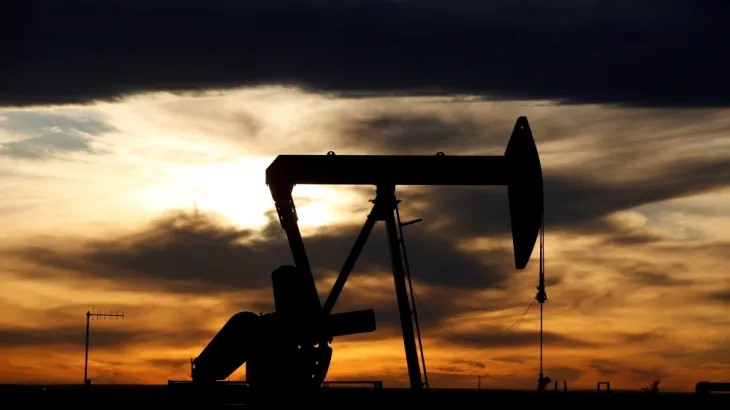
GLOBAL oil markets opened sharply higher on Monday after Israel ordered additional troop deployments into Lebanon, raising concerns that the conflict involving the Iranian-backed Hezbollah movement could widen despite a ceasefire announced more than six weeks ago.
The renewed escalation prompted investors to reassess expectations of a sustained reduction in geopolitical risk across the Middle East, sending both benchmark crude contracts higher in early trading.
US West Texas Intermediate (WTI) crude futures rose US$2.37, or 2.71 per cent, to US$89.73 a barrel, while Brent crude futures gained US$2.16, or 2.37 per cent, to US$93.28 a barrel.
The latest military developments have cast doubt over hopes that the United States and Iran are close to securing an extension of their existing ceasefire arrangement, which had previously supported gains in energy markets at the end of last week.
Market sentiment had improved after reports emerged that Washington was exploring a continuation of the truce framework announced in April.
However, renewed fighting along the Israel-Lebanon border has complicated those expectations and reignited concerns over potential disruptions to oil supplies from one of the world's most strategically important regions.
The Israel-Hezbollah confrontation has become one of the most significant spillovers of the broader Iran conflict. Hostilities intensified in March when Hezbollah began launching rockets and drones into northern Israel in support of Tehran.
Although both sides agreed to a ceasefire in April, intermittent exchanges of fire have continued, raising doubts about the durability of the arrangement.
US President Donald Trump said on Friday that a decision on a proposed extension of the ceasefire with Iran would be made soon, with negotiations aimed at securing a longer-term settlement to the conflict and addressing longstanding disputes surrounding Iran's nuclear programme.
Any comprehensive agreement is expected to require Israeli participation, while Tehran has repeatedly maintained that Hezbollah's position must also be considered as part of a broader regional settlement.
At the same time, growing concerns over maritime security in the Strait of Hormuz are adding further pressure to energy markets.
Analysts warn that the discovery and potential deployment of additional sea mines in the strategic waterway could significantly delay efforts to fully restore shipping traffic, even if diplomatic progress is achieved.
The Strait of Hormuz remains one of the world's most critical energy corridors, handling approximately one-fifth of global oil and natural gas flows. The route has effectively remained disrupted since the outbreak of conflict earlier this year following US and Israeli military strikes against Iranian targets.
IG market analyst Tony Sycamore said supply concerns are likely to remain elevated even if a diplomatic breakthrough is achieved.
"Even if an agreement is reached, it won't deliver a flood of supply," Sycamore said.
Further uncertainty emerged after reports that Iran had deployed additional mines in the Strait earlier in the week. The allegation surfaced shortly after US Defence Secretary Pete Hegseth warned that any further attempts to mine the waterway would constitute a violation of existing ceasefire arrangements.
The geopolitical risks outweighed weaker economic signals from China, where recent data indicated that manufacturing activity remains sluggish amid weakening exports and persistent cost pressures.
Ordinarily, signs of slowing growth in the world's second-largest economy would weigh on oil demand expectations and place downward pressure on prices. However, traders largely discounted the data as supply security concerns dominated market sentiment.
With tensions escalating across multiple fronts in the Middle East and uncertainty surrounding the future of ceasefire negotiations, energy markets are expected to remain highly sensitive to military developments, diplomatic initiatives and any signs of disruption to critical oil transportation routes in the weeks ahead. - June 1, 2026