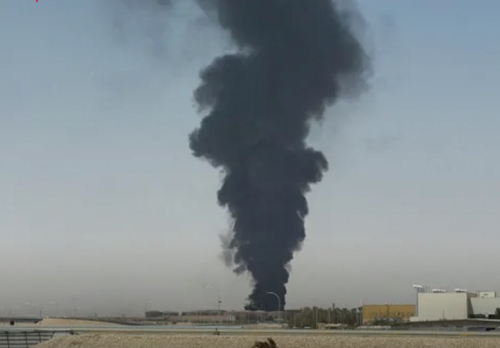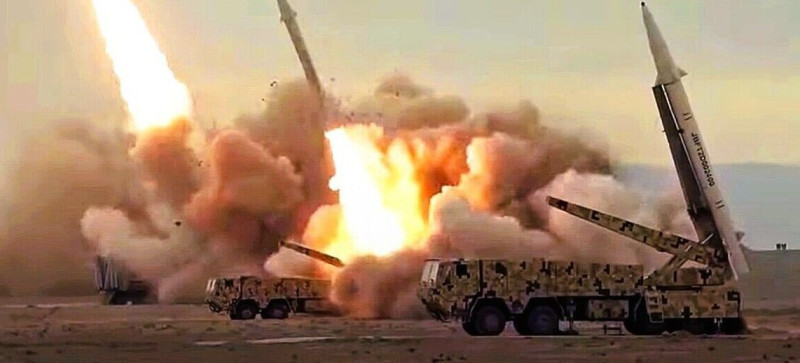
HOPES of a diplomatic breakthrough in the Iran-United States conflict suffered a fresh setback on Wednesday as missile and drone attacks targeted Kuwait, highlighting the precarious security situation across the Gulf despite ongoing claims of negotiations between Washington and Tehran.
Reuters reported on Wednesday, Kuwait's military saying its air defence systems were actively intercepting hostile missiles and drones, while neighbouring Bahrain activated warning sirens and urged residents to seek immediate shelter.
The latest escalation came as reports emerged of explosions near Qeshm Island, a strategically located Iranian territory close to the Strait of Hormuz, one of the world's most critical maritime trade routes.
The United States separately reported engaging a tanker heading towards Iran, further illustrating the volatile security environment that continues to threaten regional stability and international shipping.
More than three months after the United States and Israel launched military strikes against Iran, the conflict remains deadlocked. Although both Tehran and Washington announced last week that they had reached a tentative framework agreement aimed at ending hostilities, no formal accord has been concluded.
The uncertainty has fuelled concerns that any progress towards a durable ceasefire could quickly unravel amid recurring military confrontations.
Iranian media reported that direct communication between Tehran and Washington had stalled in recent days. However, U.S. President Donald Trump insisted that dialogue remains active.
"The conversations between us have been going on continuously, including four days ago, three days ago, two days ago, one day ago, and today," he said in a social media post.
Nuclear Talks Remain Major Sticking Point
At the centre of the negotiations is the future of Iran's nuclear programme, an issue that continues to divide the two sides despite repeated claims that a settlement is within reach.
Trump has consistently maintained that preventing Iran from acquiring nuclear weapons remains Washington's overriding objective. Tehran, meanwhile, continues to deny pursuing a nuclear bomb, insisting that its atomic activities are intended solely for peaceful civilian purposes.
Iran is reportedly seeking access to billions of dollars in frozen oil revenues, relief from restrictions on crude exports, an end to U.S. pressure on its ports and the preservation of strategic influence over the Strait of Hormuz.
U.S. Secretary of State Marco Rubio told lawmakers that sanctions relief would only be considered if Iran agreed to abandon its nuclear activities.
During a tense exchange with Senator Cory Booker, Rubio asserted, "The war is over," a claim that was immediately challenged by the Democratic lawmaker.
Lebanon Front Remains Active Despite Ceasefire
While negotiations continue, military operations have persisted elsewhere in the region, particularly in Lebanon, where tensions between Israel and Hezbollah remain high.
The wider conflict, which erupted on February 28, has claimed thousands of lives, predominantly in Iran and Lebanon, while triggering significant disruption to global energy markets. The effective closure of the Strait of Hormuz has driven up transport and energy costs worldwide, affecting supplies of oil and liquefied natural gas.
The crisis has also reignited hostilities between Israel and Hezbollah, prompting Israel's deepest military incursion into Lebanon in a quarter of a century.
Lebanese security sources reported that Israeli forces carried out strikes on several towns in southern Lebanon on Tuesday despite a partial ceasefire brokered by the United States earlier this week.
The ceasefire announcement has done little to reassure civilians. Approximately 1.2 million people have been displaced by the fighting, while continued Israeli drone activity over Beirut has heightened public anxiety.
"Every time we return to our homes, there is a warning for us to be displaced again," said Faten Al Chehime, who fled to a displacement camp after returning to her home in Beirut's southern suburbs only two weeks earlier.
Global Supply Chains Feel The Impact
The repercussions of the conflict are increasingly being felt beyond the battlefield.
Shipping giant, MSC Mediterranean Shipping Company, reported that one of its vessels was struck by two projectiles while docked at Iraq's Umm Qasr port on Monday.
Iran's Revolutionary Guards claimed responsibility, describing the strike as retaliation for a reported U.S. attack on an Iranian vessel in the Gulf of Oman.
The wider humanitarian consequences were highlighted by UNICEF which warned that soaring transport costs and supply chain disruptions are hindering the delivery of life-saving assistance to vulnerable populations in Gaza, Lebanon, the Democratic Republic of the Congo, Mali, Somalia, South Sudan, Nigeria and other crisis-hit regions.
With military incidents continuing across multiple fronts and negotiations yet to produce a binding agreement, fears are growing that the Gulf conflict could enter a prolonged phase of instability despite repeated declarations that peace remains within reach. - June 3, 2026