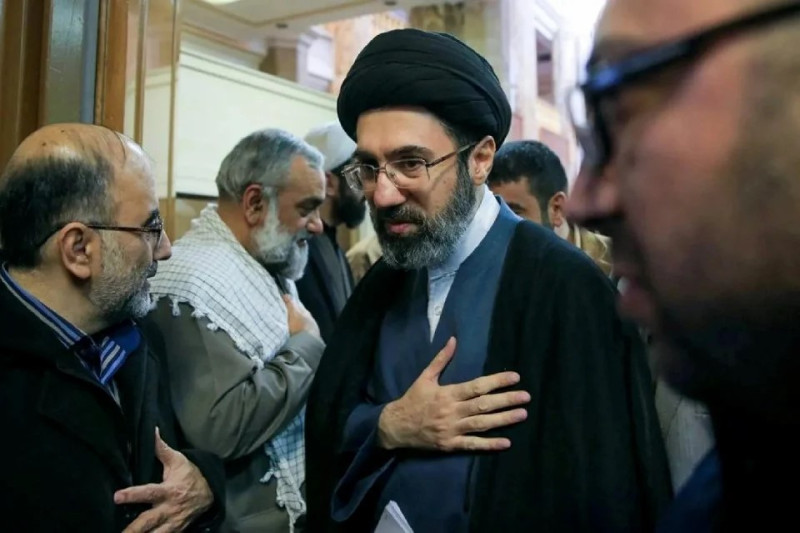
IRAN'S post-war leadership structure is coming under increasing scrutiny as questions persist over the health, visibility and political authority of Supreme Leader Mojtaba Khamenei, who has not appeared publicly since assuming the country's highest office following the death of his father, Ayatollah Ali Khamenei.
Despite occupying the most powerful constitutional position in the Islamic Republic, Mojtaba Khamenei has remained conspicuously absent from public life for more than three months, prompting growing debate among analysts over whether real authority now rests elsewhere within Iran's political and military establishment.
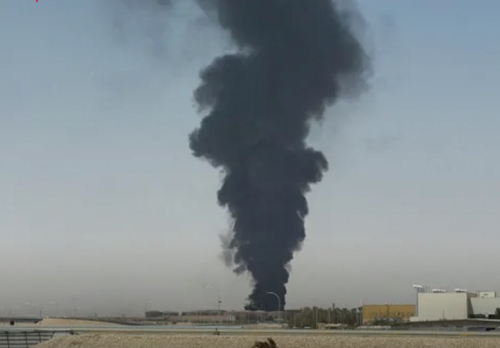
The uncertainty follows the outbreak of the US-Israeli war against Iran, during which Ali Khamenei was killed in an air strike that dramatically reshaped the country's political landscape and triggered an unprecedented leadership transition.
AFP reported that while Mojtaba has yet to make a public appearance, senior international and Iranian figures have indicated that he remains actively involved in state affairs behind the scenes.
US President Donald Trump said on Wednesday that Khamenei was “involved, absolutely”, while Secretary of State Marco Rubio said there were “indications out there that he is increasingly engaging at some level”.
Within Iran, President Masoud Pezeshkian and General Ali Abdollah, chief of the armed forces' joint operational command, have both reportedly held meetings with the new supreme leader, although no photographs or official footage have been released.
His presence has instead been communicated through a series of written statements issued in his name.
The most recent message, strongly critical of what it described as a “malicious enemy”, was delivered publicly during commemorations marking the 37th anniversary of the death of Islamic Republic founder Ayatollah Ruhollah Khomeini.
The absence of visual proof has done little to quell speculation, particularly after multiple Iranian officials confirmed that Mojtaba Khamenei sustained injuries during a US-Israeli strike.
However, conflicting accounts remain over the severity of his wounds and whether they were inflicted during the same attack that killed his father.
According to analysts, these factors may help explain his limited public engagement during the critical months following his appointment.
Farzan Sabet, an Iran specialist at the Geneva Graduate Institute, believes Mojtaba is exercising influence but in a far more constrained manner than his predecessor.
“Mojtaba, likely with the assistance of his office, probably plays a role overseeing the general direction of policy, including topline positions for negotiations with the US.
“But his level of personal engagement with policy is probably far below that of his father” due to the security situation and his health.
Sabet suggested that the new supreme leader's influence could expand as conditions stabilise.
“As the security condition normalises, and his health improves, I would expect him to play a bigger role,” he said.
Political observers increasingly believe that Iran's governing structure has shifted from a highly centralised model under Ali Khamenei towards a more collective arrangement in which military and political elites wield greater influence.
Thomas Juneau, professor at the University of Ottawa, said Mojtaba has yet to establish the authority once enjoyed by his father.
“The role of Mojtaba Khamenei is unclear. It is very unlikely at this point that he has the degree of influence that his father used to have,” he said.
Nevertheless, Juneau noted that Mojtaba remains closely connected to influential figures within the Islamic Revolutionary Guard Corps (IRGC), which many analysts view as the dominant force in Iran's post-war political order.
According to Juneau, power increasingly appears to be concentrated within an informal network comprising senior IRGC commanders and a small group of political leaders, including parliamentary speaker Mohammed Bagher Ghalibaf, himself a former IRGC commander.
The symbolism surrounding the leadership transition was on full display during this year's commemoration of Khomeini's death.
For the first time since 1989, the event proceeded without the presence of the supreme leader. Instead, an empty chair bearing Ali Khamenei's portrait was placed prominently at the mausoleum, underscoring both continuity and absence.
Mojtaba's latest message was read aloud by Tehran Friday prayer leader Mohammad Javad Haj Ali Akbari, continuing a pattern in which official statements are conveyed through intermediaries rather than by the supreme leader himself.
At the same time, authorities have sought to reinforce public perceptions of leadership continuity. Large billboards erected across Tehran since March feature portraits of Ayatollah Khomeini, Ali Khamenei and Mojtaba Khamenei, presenting a visual narrative of succession and institutional stability.
Yet analysts caution that beneath those symbols, the mechanics of power may be evolving.
Rather than inheriting the highly personalised authority exercised by his father for more than three decades, Mojtaba appears to be operating within a more fragmented system in which power is shared among multiple centres of influence.
“A formal hierarchy still remains in Tehran, but in practice, power and authority are likely exercised in a more fragmented and diffuse manner,” said Sabet.
Juneau similarly expects a mixture of continuity and transformation within Iran's political system.
He argued that while the Islamic Republic's ideological foundations remain intact, the methods through which authority is exercised are likely to change significantly.
“Mojtaba does not have his father’s authority,” he said.
“He does not appear to have the ability to play the role of balancer-in-chief and final arbiter of the system to the extent that his father did.”
As Iran navigates the aftermath of war, the emergence of Mojtaba Khamenei's leadership may ultimately be defined less by personal dominance and more by his ability to manage competing power centres within a system undergoing one of the most consequential transitions in its modern history. - June 6, 2026