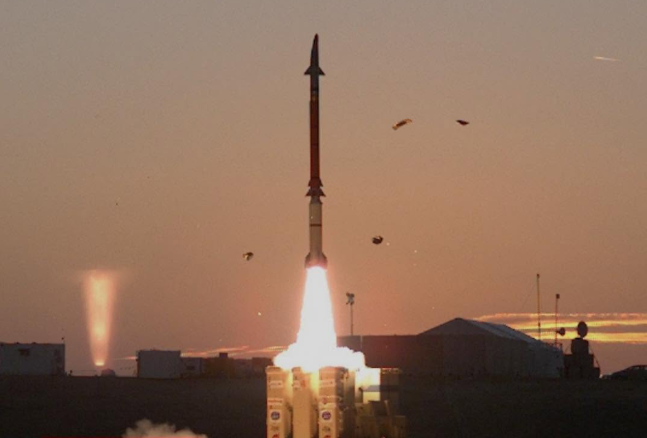
THE fragile ceasefire that briefly halted direct hostilities between the United States and Iran now appears increasingly at risk of collapse after Washington launched a fresh round of overnight strikes and President Donald Trump openly threatened a much wider military campaign against Tehran.
The latest attacks targeted multiple sites in Iran shortly after midnight local time, according to the U.S. military, marking one of the most significant escalations since the conflict was temporarily paused in April.
"The strikes are in response to Iran's unwarranted and continued aggression," U.S. Central Command said in a statement.
Reuters reported on Thursday that the operation immediately triggered a sharp response from Tehran, with Iran's top joint military command warning that vessels attempting to navigate the Strait of Hormuz could face military action.
The strategic waterway has become the central flashpoint of the conflict, with both sides accusing one another of threatening international shipping routes and global energy supplies.
Iranian media reported that two vessels were fired upon, while U.S. Central Command disputed claims that the strait had been effectively closed, maintaining that commercial shipping continued despite Iranian threats.
The military confrontation comes as both governments intensify efforts to gain leverage in stalled negotiations aimed at ending the war.
Trump delivered his strongest warning yet, indicating that further military action would depend entirely on Tehran's willingness to accept U.S. demands.
According to Fox News correspondent Trey Yingst, the president said the strikes would soon cease but warned that he would "bomb the shit out of them" if Iran's leadership failed to sign an agreement immediately.
Explosions were subsequently reported across several locations in southern Iran, including Sirik, Kangan, Bandar Abbas and Minab, underscoring the widening geographic scope of the conflict.
U.S. Defence Secretary Pete Hegseth framed the attacks as part of a broader strategy designed to strengthen Washington's negotiating position rather than merely punish Iran militarily.
"We will strike them hard tonight, and hopefully Iran makes a good decision," he said.
"If we need to negotiate with bombs, we'll negotiate with bombs."
The latest strikes followed the downing of a U.S. attack helicopter near the Strait of Hormuz earlier this week, prompting Washington to target Iranian air defence and radar installations around the waterway.
Iran retaliated with missile and drone attacks against U.S. military facilities in Jordan, Kuwait and Bahrain, although American officials said the strikes caused no significant damage.
Tehran also accused Washington of attacking civilian infrastructure, claiming reservoirs supplying drinking water to 10 villages had been struck during the operation.
"This is not collateral damage -- it is a calculated war crime and a flagrant violation of human rights," said Iranian Foreign Ministry spokesman Esmaeil Baghei.
The escalating confrontation is reverberating far beyond the battlefield.
Global oil markets reacted sharply to Trump's threat of further military action, with crude prices surging close to US$94 per barrel amid fears of prolonged disruption to energy supplies passing through the Gulf.
The conflict has already disrupted a substantial share of global oil and natural gas trade, placing additional pressure on governments and consumers worldwide.
At home, the war is emerging as a growing political challenge for the White House. Rising fuel prices and prolonged military engagement have fuelled public concern, while some Republican figures have privately expressed fears that voter dissatisfaction could affect the party's prospects in the forthcoming congressional midterm elections.
Adding a further layer of intrigue, Trump claimed that vessels carrying approximately 100 million barrels of oil had successfully crossed the Strait of Hormuz as part of what he described as a covert U.S.-protected mission.
Hegseth echoed that assertion, saying commercial vessels had continued operating despite Iranian attempts to exert control over the route.
"Ships have been transiting the strait in the middle of the night, protected by the United States in a way that Iran can't stop, they can't see it."
Despite the increasingly hostile rhetoric, diplomatic activity continues behind the scenes.
A Qatari delegation arrived in Tehran on Wednesday to pursue mediation efforts and explore options for reducing tensions between Washington and Tehran.
Iran's negotiating position remains unchanged, with demands including an end to Israeli military operations against Hezbollah in Lebanon, the removal of economic sanctions, access to frozen Iranian assets and recognition of its authority over the Strait of Hormuz.
Washington, meanwhile, insists that Iran must cease interference with international shipping and accept restrictions preventing the development of a nuclear weapon.
Iran continues to reject allegations that it seeks nuclear arms.
In a further setback for Tehran, the United Nations nuclear watchdog's Board of Governors approved a U.S.-backed resolution calling on Iran to disclose remaining enriched uranium stockpiles and permit verification by international inspectors.
Iran condemned the move, describing the resolution as "political".
With military operations intensifying, energy markets on edge and diplomatic efforts struggling to gain traction, the confrontation between Washington and Tehran is once again edging towards a broader regional crisis with potentially far-reaching global consequences. - June 11, 2026