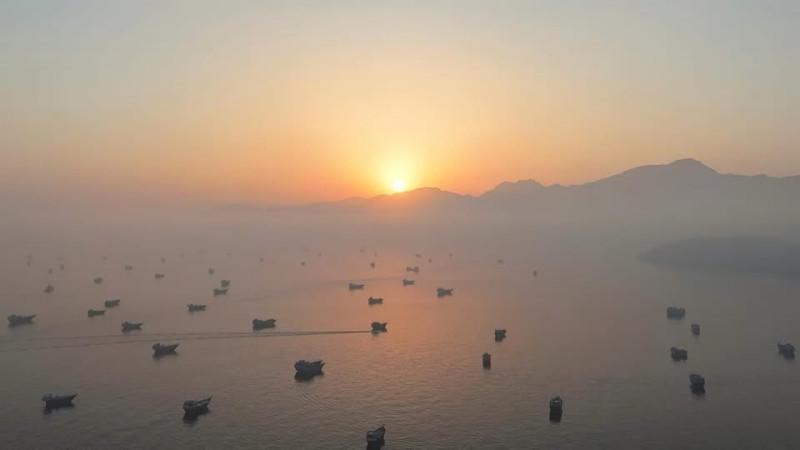
COMMERCIAL vessels have resumed transiting the Strait of Hormuz, signalling the beginning of a recovery for one of the world's most strategically important maritime trade routes, after the United States and Iran reached a peace agreement aimed at ending months of conflict that disrupted global energy supplies.
US President Donald Trump said oil tankers and cargo ships had already begun sailing through the vital waterway, adding that the Strait of Hormuz is expected to be fully reopened by Friday under the terms of the agreement brokered with Pakistan acting as mediator.
"The captains of ships have already started moving. Many are carrying oil out of the Strait of Hormuz," AFP cited Trump saying, adding that he did not expect significant intervention would be required to keep the route open.
The reopening marks a major step towards restoring confidence in global energy markets after months of military confrontation triggered maritime restrictions, disrupted shipping traffic and fuelled sharp increases in international oil prices.
Iranian media reported that at least three oil tankers and two cargo vessels had successfully passed through the strait, which had previously been subject to strict restrictions and US naval enforcement operations.
The strategic waterway became a focal point of escalating tensions after Washington and Tehran imposed competing maritime restrictions following the outbreak of conflict in February, causing severe disruption to global oil flows.
The peace agreement between the United States and Iran, facilitated by Pakistan, is expected to be formally signed in Switzerland on Friday. However, senior White House officials said the document has already been electronically signed by Trump, Vice-President JD Vance and Iranian Parliament Speaker Mohammad Bagher Ghalibaf.
Trump said he wanted the agreement to be published as soon as possible because it represented "a very important document" for global stability.
Meanwhile, Iranian Deputy Foreign Minister Kazem Gharibabadi described the agreement as marking the end of the conflict while paving the way for a further two months of negotiations to finalise a comprehensive settlement.
Iranian Foreign Minister Abbas Araghchi adopted a more cautious tone, stressing that Tehran remained wary after previous agreements had failed to be fully honoured.
Iran also insisted that the United States must ensure Israel halts its military operations in Lebanon as part of its obligations under the agreement.
However, Israeli Prime Minister Benjamin Netanyahu maintained that Israeli forces would remain in Lebanon, Syria and Gaza "for as long as necessary", raising fresh questions over the full implementation of the peace accord and the broader prospects for regional stability.
Lebanese President Joseph Aoun welcomed the agreement, describing it as a positive step towards reducing tensions across the Middle East, although reports of continuing attacks in southern Lebanon underscored the fragile security situation.
Financial markets reacted immediately to the announcement, with global oil prices falling by nearly five per cent while major stock markets rallied on expectations that energy supplies would normalise as shipping resumes through the Strait of Hormuz, which carries approximately one-fifth of the world's traded oil.
The agreement also launches a new 60-day negotiating phase between Washington and Tehran to finalise a comprehensive framework, including unresolved issues surrounding Iran's nuclear programme.
Analysts said the reopening of the Strait of Hormuz would significantly reduce the risk of further global economic disruption, particularly by stabilising international energy supply chains and easing pressure on worldwide shipping and logistics costs. - June 17, 2026