IRANIAN officials have said no high-level meetings are planned with senior US envoys who arrived in Qatar for discussions aimed at stabilising tensions, casting doubt over prospects for a breakthrough in efforts to consolidate a fragile ceasefire framework.
US envoys Jared Kushner and Steve Witkoff travelled to Doha for what Washington described as high-level talks, but both Iran and Qatar confirmed that discussions would take place with mediators rather than direct engagement with Iranian officials.
"No meeting at any level with the American side has been scheduled for the coming days," Reuters cited Iranian Foreign Ministry spokesperson Esmaeil Baghaei saying.
Qatar said Prime Minister Sheikh Mohammed bin Abdulrahman al-Thani would meet the US delegation as part of mediation efforts, while technical-level discussions were expected to continue separately.
Iranian officials said outstanding issues from an initial ceasefire agreement signed two weeks earlier must first be resolved before negotiations can move forward to more complex matters, including potential limits on Tehran’s nuclear programme.
The early framework reportedly includes provisions linking Iran’s position on the Strait of Hormuz to financial incentives, alongside a 60-day window for broader negotiations on a permanent settlement.
Iranian officials reiterated their claim that the country, alongside Oman, retains authority over maritime arrangements in the strategic waterway.
"The sovereignty of the Strait of Hormuz lies with Iran and Oman, and traffic in the Strait is subject to arrangements determined by Iran," senior Iranian negotiator Mohammed Baqer Qalibaf said on state television.
However, US Vice President JD Vance rejected the idea of Iran imposing tolls on shipping through the strait, describing it as unacceptable in comments to The Michael Knowles Show.
"This is not going to end in a place where the Iranians are collecting tolls on ships going through the Strait of Hormuz," Vance said.
He also said oil flows through the waterway had largely returned to pre-conflict levels, although he did not provide supporting data.
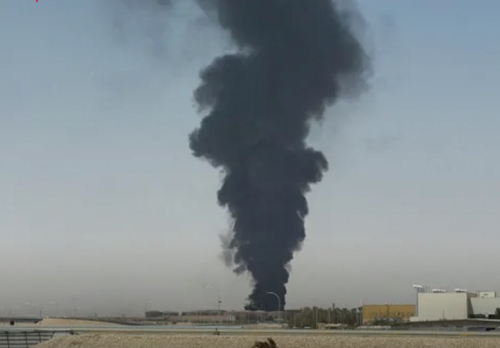
The diplomatic uncertainty comes despite a partial easing in global energy markets, with oil prices retreating following recent military exchanges involving US strikes on Iranian facilities and retaliatory attacks on US-linked positions in the Gulf region.
Shipping through the Strait of Hormuz, which handles roughly one-fifth of global oil and liquefied natural gas flows, has partially resumed, though concerns remain over long-term security and potential disruptions.
The wider conflict continues to have regional and economic implications, with analysts warning that inflationary pressures could persist in vulnerable economies even as energy markets stabilise. - July 1, 2026