A POWERFUL Typhoon Bavi has disrupted regional air travel, forcing the cancellation of at least 20 flights between Singapore and north-east Asia as the storm moved towards Japan, Taiwan and eastern China.
Changi Airport Group (CAG) confirmed that multiple airlines and destinations were affected by the cancellations on July 11 and 12, with passengers advised to monitor updates as further changes could be announced.
SIA also announced that return flights SQ831, SQ833, SQ835 and SQ825 from Shanghai to Singapore scheduled for July 11 and 12 had been cancelled, while two other services between Singapore and Shanghai were rescheduled.
Flights operated by China Airlines, EVA Air, XiamenAir, Juneyao Airlines and Air China between Singapore and destinations including Taipei and Shanghai were also cancelled.
Earlier in the week, SIA and Scoot had cancelled at least 18 flights linking Singapore with Tokyo, Sapporo, Seoul and Taipei due to the storm’s impact.
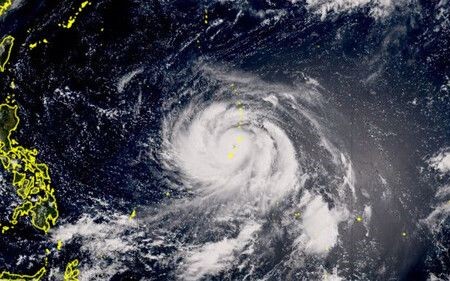
Typhoon Bavi struck Japan’s southern Okinawa region on July 11, bringing winds exceeding 200kmh and prompting weather authorities to warn of possible landslides and flooding.
The Japan Meteorological Agency said the storm was carrying violent winds, dangerous waves and the risk of flooding in coastal and low-lying areas.
As of early July 11, Bavi was moving at around 20kmh east-south-east of Miyako Island in Okinawa, with maximum sustained winds reaching up to 216kmh.
The typhoon was expected to move away from Japan before heading towards eastern China, where it was forecast to make landfall near Wenzhou late on July 11 or early on July 12.
Taiwan also stepped up emergency preparations, evacuating more than 14,000 people from mainly mountainous areas as the storm approached.
Although Bavi was not expected to make direct landfall in Taiwan, authorities took precautionary measures amid forecasts of extreme rainfall, with some areas facing the possibility of receiving nearly one metre of rain.
The storm forced the cancellation of 917 international flights and all 274 domestic flights in Taiwan.
Almost all cities and counties across the island declared a typhoon holiday on July 11, closing offices and schools, while Taiwan’s main north-south high-speed rail service continued operating with reduced frequency.
In Taipei, heavy rain and strong winds affected daily activities, although some residents said conditions remained manageable.
"It's ok; it’s not that serious," said Taipei resident Yeh Mao-hsiung, 68, while taking his dog for a morning walk. "It’s just a little bit more wind."
Meanwhile, northern China began preparing for the arrival of Bavi as authorities warned of prolonged heavy rainfall and possible flooding.
The storm’s moisture system was expected to affect provinces and regions including Hebei, Beijing, Shaanxi and Liaoning, with officials closing parks, tourist sites and outdoor facilities as a safety precaution.
In Beijing, nearly 100,000 people had been evacuated by July 10 ahead of forecasts for intense rainfall.
Authorities also increased water releases from the Miyun Reservoir to create additional flood-control capacity, raising discharge levels to 205 cubic metres per second from around 135 cubic metres per second.
Fishing communities in parts of eastern China suspended operations, while local governments urged residents to avoid unnecessary travel as Bavi approached.
Weather agencies across the region warned that Typhoon Bavi could become one of the strongest storms to affect China in recent years, raising concerns over potential damage to homes, infrastructure and transport networks. - July 11, 2026